




Introduction
The evolution of digital health is expanding the frontier of medical-grade wearables, moving beyond the wrist to more intimate monitoring applications such as continuous glucose sensing, cardiac patches, and smart analgesic systems. Central to these advancements is the Medical wearable PCB, which must maintain safe, direct, and often continuous contact with the user’s skin. For millions of individuals with sensitive skin, this introduces risks of allergic reactions, redness, and discomfort. Thus, the role of the Medical wearable PCB has transcended electrical performance—its biocompatibility now determines whether a device is perceived as a trusted health aid or a source of irritation. This article explores how integrated design and advanced materials can create an imperceptible yet reliable layer of safety between sophisticated electronics and delicate skin, delivering on the promise of “technology that protects, without being felt.”

Core Design Philosophy: From “Usable” to “Imperceptible”
While traditional PCB design focuses primarily on electrical performance and reliability, medical wearable devices—especially those worn directly on the skin—must elevate biocompatibility to a priority equal to, or even higher than, electrical performance. The core principles include:
- Prevention-First Approach: Eliminate all potential sources of irritation at the design stage, rather than resorting to post-hoc remedies.
- User-Centric Mindset: Deeply understand the vulnerability of sensitive skin, which is easily irritated by chemicals, physical friction, and allergens.
- Full-Process Control: Ensure that the entire manufacturing chain—from substrates and solder to coatings and enclosures—complies with biocompatibility requirements.
Source Control: PCB Substrates and Components
This constitutes the first line of defense in biocompatibility.
Substrate Selection:
- Limitations of Standard FR-4: Conventional FR-4 substrates often contain brominated flame retardants and other chemicals that may leach out, making them unsuitable for long-term direct skin contact.
- Preferred Materials:
- Halogen-Free High-Tg FR-4: Utilizes phosphorus or nitrogen-based flame retardants, offering greater chemical stability and significantly reduced risk of harmful substance leaching.
- Polyimide: Excellent flexibility, high chemical stability, and good biocompatibility, making it ideal for flexible/stretchable PCBs.
- Ceramic Substrates (e.g., Alumina): Exhibit exceptional inertness and biocompatibility, though higher cost and rigidity limit their use to specific high-end medical devices.
Components and Solder:
- Components: Prioritize those compliant with RoHS and halogen-free standards, avoiding heavy metals such as lead, cadmium, and mercury.
- Solder: Use lead-free solder and ensure thorough cleaning to remove flux residues, as leftover rosin or activators are common allergens.
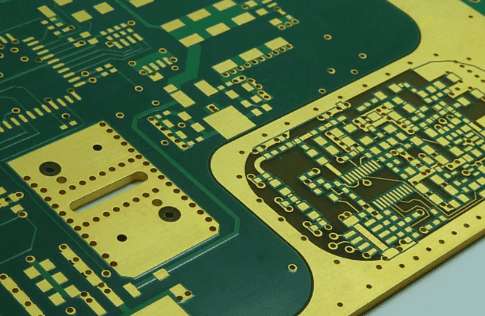
Structural and Mechanical Design: Mitigating Physical Irritation
Physical friction and pressure are significant contributors to skin discomfort.
Flexible and Stretchable Design:
- Flexible Circuits: Allow the device to conform better to body contours, reducing localized pressure points and shear forces.
- Island-Bridge Design: Distributes rigid chips across a flexible substrate, achieving a “rigid-flex” structure that maximizes comfort without compromising circuit functionality.
Edge and Surface Treatment:
- Smooth Edge Fillets: PCB edges must be smoothly finished to prevent sharp corners from scratching the skin.
- Planarization: Strive for uniform component height and employ underfill or potting compounds to encapsulate components, creating a smooth contact surface.
Biocompatible Coatings: The Critical Barrier Technology
This represents the most direct and effective barrier for protecting sensitive skin. A biocompatible coating is applied to the skin-facing side of the assembled PCB.
Coating Material Types:
- Medical-Grade Parylene: Particularly Parylene C and N. Applied via vapor deposition, these form ultra-thin, pinhole-free, transparent, and perfectly conformal protective films. They offer excellent biocompatibility, barrier properties, and insulation, meeting standards for medical implants.
- Medical-Grade Silicone: Soft, inert, and hypoallergenic, providing a comfortable skin feel and good cushioning. Often applied via liquid silicone rubber (LSR) injection molding to encapsulate the PCB.
- Medical Polyurethane: Known for good toughness and abrasion resistance, offering reliable protection.
- Biocompatible Epoxy Potting Compounds: Must be medical-grade and pass biocompatibility tests, used for filling and sealing the entire PCB assembly.
Key Functions of Coatings:
- Physical Isolation: Separates the skin from all chemicals and hard surfaces on the PCB.
- Moisture Sealing: Protects the circuitry from corrosion by sweat and sebum, while preventing the leaching of any internal substances.
- Enhanced Comfort: Soft coatings like silicone provide a skin-friendly feel.
Rigorous Testing and Validation
All designs must be validated through stringent testing to confirm biocompatibility.
International Standard Certifications:
- ISO 10993: The cornerstone standard for biocompatibility evaluation of medical devices. Requires a series of tests (e.g., cytotoxicity, skin sensitization, intracutaneous reactivity) to ensure materials do not cause adverse reactions even with long-term contact.
- USP Class VI: A high-level certification for plastic materials per the U.S. Pharmacopeia.
Real-World Application Testing:
- Simulated Sweat Testing: Immerses coated PCBs in artificial sweat to evaluate tolerance and potential substance leaching.
- Abrasion/Flex Testing: Simulates long-term use to assess coating durability and check for cracks that could compromise protection.
- User Trials: Recruit volunteers, including those with sensitive skin, for extended wear tests to collect subjective comfort feedback and objective skin reaction data.
Conclusion: A Systematic Protection Strategy
Designing medical wearable PCBs for sensitive skin is not achievable through a single technology but requires an interconnected, systematic engineering approach:
| Design Phase | Core Consideration | Specific Measures |
|---|---|---|
| Philosophy & Planning | Preventive, User-Centric | Establish biocompatibility as a core KPI; adhere to ISO 10993 and related standards. |
| Material Selection | Source Control, Low Allergenicity | Use halogen-free substrates, lead-free solder, and RoHS-compliant components. |
| Structural Design | Physical Comfort, Imperceptible Wear | Employ flexible/stretchable circuits, smooth edges, and surface planarization. |
| Barrier Technology | Ultimate Isolation, Active Protection | Apply medical-grade coatings (e.g., Parylene C, biocompatible silicone). |
| Verification Loop | Data-Driven, Fail-Safe | Pass ISO 10993 series tests, durability testing, and real-user trials. |
The ultimate goal is to make the technology truly “invisible,” enabling users—especially those with sensitive skin—to benefit from continuous, accurate health monitoring and management in a state of imperceptibility, comfort, and peace of mind.
0 Comments