




The turnkey PCB assembly process for hardware startups works best when one released file package, named decision owners and an agreed test plan travel together. A supplier can coordinate board fabrication, component purchasing and assembly. Your team still needs to define what to build, approve consequential changes and decide whether the resulting evidence supports the next batch.
This guide focuses on the handoff from a small hardware team to its assembly partner. The objective is not simply to receive populated boards. It is to receive boards whose revision, parts, firmware and verification status are known well enough to make the next engineering decision.
What must a startup still own in a turnkey build?
The startup must retain ownership of design intent and product acceptance, even when the manufacturer manages the supply chain. Turnkey is a purchasing and delivery arrangement, not permission to make unreviewed design changes.
If you need the basic service definition, start with the turnkey PCB assembly overview. For a first build, go further and write down the scope: bare boards, parts, assembly, programming, inspection, functional testing and packaging. Mark each item included, excluded or awaiting clarification. A quotation saying only “assembly and test” leaves too much room for different interpretations.
Assign one person to approve the released design, one to approve component substitutions and one to accept the test results. A small team may give all three roles to the same engineer. What matters is that the supplier knows whose written decision is authoritative.
Early review does not require a frozen design. Send preliminary files for feasibility feedback, but label them clearly as not released for manufacture. Separate permission to investigate availability from permission to buy parts or start fabrication. This lets the supplier help early without turning an unfinished attachment into a production instruction.
What belongs in one released build package?
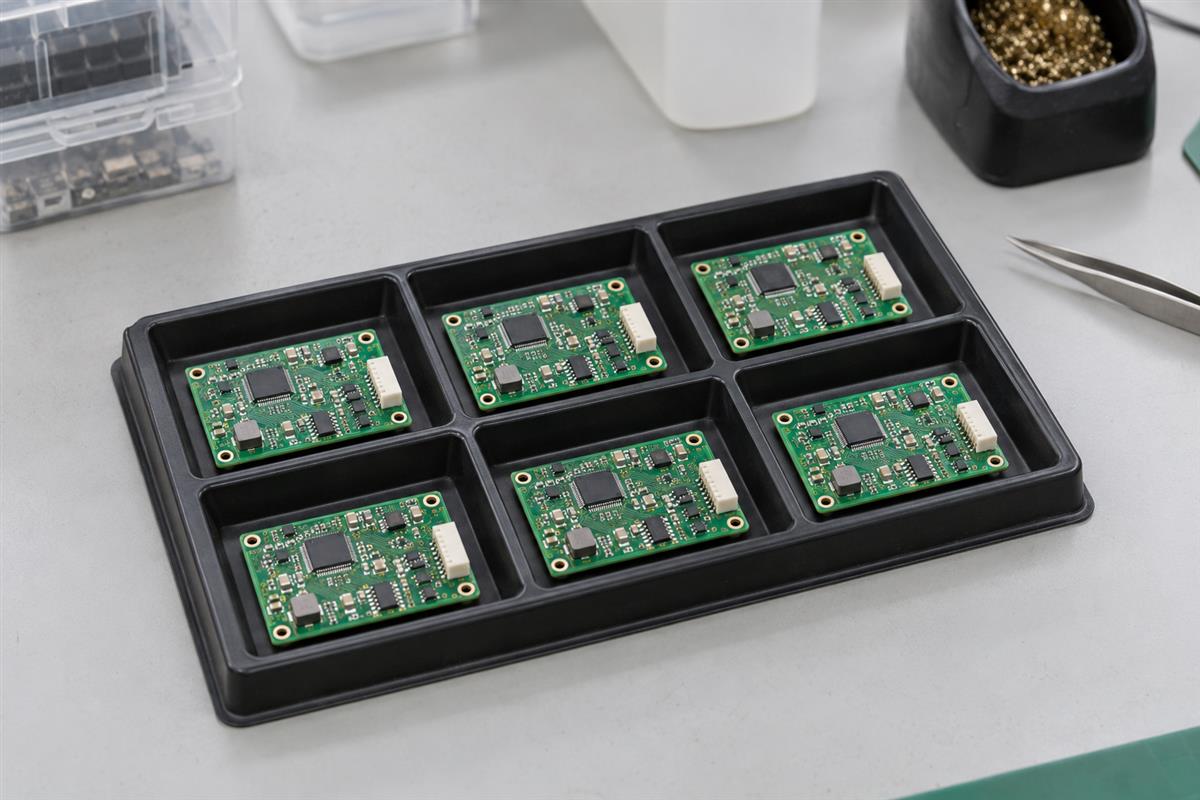
A released package must identify the exact board variant and keep fabrication, placement, purchasing and test information consistent. Think of it as one edition of a book: individual files can have different revision codes, but the manifest must say which editions belong together.
| Package item | What the startup supplies | Cross-check before release |
|---|---|---|
| Release manifest | Build ID, board revision, variant, file list, owners and approval date | Every attachment is listed; no ambiguous “latest” folder |
| Fabrication data | Supplier-accepted board outputs, drill information and fabrication requirements | Outline, layer construction and revision agree with the assembly |
| BOM | Manufacturer part numbers, designators, quantities and approved alternatives | Fitted and do-not-populate items match the selected variant |
| Placement and assembly data | Centroid/CPL output, assembly drawing, polarity and special notes | Positions, side and orientation match the board and BOM |
| Programming and test | Released firmware identifier, programming instructions and acceptance procedure | Correct hardware compatibility, version check and expected results |
| Delivery requirements | Quantity, identification, packaging and required reports | The shipment can be traced back to the approved build |
A BOM tells purchasing which parts are required; placement data tells assembly where they go. JLCPCB’s CPL documentation identifies reference designators, coordinates, board side and rotation as placement information. Confirm the receiving supplier’s units, origin and rotation conventions rather than assuming one export setting works everywhere.
For example, suppose R17 is deliberately omitted on a low-power variant. The BOM, assembly drawing and placement instructions must all communicate that omission in the supplier’s accepted way. If R17 is absent only because one file came from an older design, that is a data error, not a variant instruction. JLCPCB’s matching guidance distinguishes intended unplaced items from reference-designator mismatches that require correction.
A practical manifest can be as simple as: Build B03; PCB revision C; BOM revision C2; assembly variant LP; firmware 0.8.3; test procedure T04. These are illustrative identifiers, not required naming rules. Add file hashes when your release system supports them so an unchanged filename cannot hide a changed binary.
How does the turnkey process move from quote to pilot?
Use a continuous sequence of review, approval, procurement, assembly and evidence review, with a clear hold point before each irreversible commitment. The factory’s detailed manufacturing route depends on the actual assembly; the sequence below describes the startup’s control points.
Step 1: Review feasibility and build scope
Send the preliminary package and explain what the batch must prove. Ask for unresolved fabrication, assembly and test questions in a single list. Close footprint, polarity and interface questions before release. A manufacturability review does not certify that the circuit performs its intended function.
Step 2: Approve the release and procurement boundaries
Issue the manifest and explicitly identify any pending decisions. Authorize only the work that can safely proceed. If a long-lead component must be ordered before the full design is frozen, document that limited approval, the quantity and the risk owner separately.
Step 3: Resolve shortages and proposed substitutions
Require a proposed alternative to identify the original part, replacement part and reason for the change. The design owner should review package, pinout, electrical behavior, ratings and any firmware implications. Availability alone is not evidence of equivalence. Keep the approved change linked to the build package, and agree what happens to unused purchased inventory.
Step 4: Build the agreed pilot configuration
The supplier fabricates or procures the bare boards, prepares its process, places and solders components, and performs the agreed inspections. Agree in advance whether an initial assembly or first-article review pauses the remaining work. Do not assume that a request for photographs automatically creates a production hold.
Step 5: Program and test against the released procedure
Confirm the firmware version on the board, not just the filename sent by email. Record which tests were run, under which conditions, and with what result. Where a test needs your fixture, software or credentials, settle the handoff before the build reaches that station. Share only the access required for the agreed programming or test task.
Step 6: Review results before scaling the next order
Collect inspection findings, functional results, deviations and rework records. Decide whether to accept, hold, investigate or revise. MacroFab’s prototype-to-production guide discusses freezing the BOM and functional test as development progresses. Use that control principle, not another supplier’s example batch sizes or historical lead times, to plan your own release.
If a defect requires a design change, create a new approved configuration. Do not silently replace one file in the released package and leave purchasing or test working from the previous version.
What evidence allows the next batch to proceed?
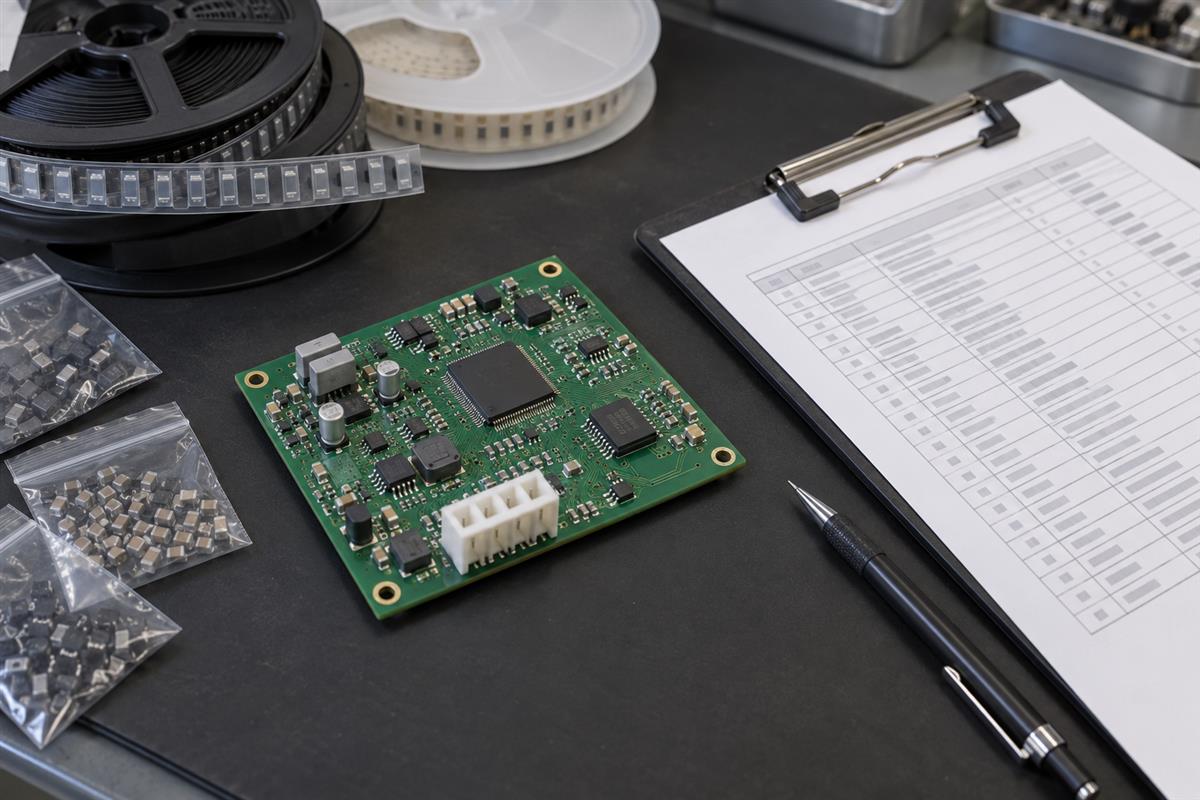
Proceed when the evidence answers the purpose of the build and all unresolved risks have an explicit disposition. A visually acceptable assembly is not automatically a validated product, and “not tested” must not be recorded as “pass.”
| Observation | Decision before the next batch | Evidence to retain |
|---|---|---|
| Agreed checks pass on the released configuration | Review against the build objective and approve only the justified next stage | Results, sample identities, revisions and approval |
| Boards look correct, but a required functional check was omitted | Hold that acceptance decision until the check is completed or the requirement is formally changed | Missing-test list and responsible owner |
| One symptom repeats across multiple boards | Investigate a possible shared design, material, programming or process issue | Failure pattern and corrective-action verification |
| A replacement component was used without documented approval | Review the affected configuration before accepting it | Part identity, affected units and engineering disposition |
| Reworked boards pass | Assess the rework and cause; do not erase the initial failures | Before/after results and repair traceability |
Consider a hypothetical ten-board pilot: eight pass the agreed functional checks and two have not been tested. The record is eight passes and two pending, not a ten-board pass and not an 80% failure-free production forecast. If the two later fail, investigate why before extrapolating the results to a larger lot. The example is bookkeeping logic, not a recommended sample size or acceptance threshold.
Keep board-level inspection, circuit function and product-level validation separate. A board may pass the assembly checks yet still need enclosure, application or environmental evaluation. Choose the necessary checks from the product requirements and risk, not from a generic list of machines on a supplier website.
A useful release note fits on one page: build objective; exact configuration; units evaluated; completed checks; failures and deviations; open risks; decision; decision owner. This becomes a reusable record for the next revision instead of a conversation that disappears into email.
How should a startup compare quotes and request a review?
Compare the same deliverable and separate one-time preparation from recurring unit cost. A lower board-assembly price may exclude programming, fixtures, purchased excess material or the reports your team needs.
| Quote line | Question to settle | Why it matters |
|---|---|---|
| Components | What is purchased, what is assembled, and who owns leftovers? | Order minimums and excess stock can affect a small build |
| Setup and tooling | Which items are reusable on the next revision or repeat order? | One-time charges should not be confused with unit pricing |
| Programming and test | Which procedure, firmware and reports are included? | “Tested” must describe an agreed scope |
| Schedule | When does the clock start, and what approvals or materials are still missing? | Assembly time alone is not end-to-end delivery time |
| Changes | What happens if files or parts change after release? | Already committed work may need review or replacement |
PCBtry describes prototype and production PCB assembly services. Request confirmation of the scope for your design rather than assuming every optional inspection, fixture or programming activity is included.
Send PCBtry your release package for an assembly review, or contact sales@pcbtry.com. Include the board files, BOM, placement data, target quantity and build objective. Identify incomplete items openly and ask for a response separating confirmed scope, engineering questions, material risks and the proposed test deliverables.
Startup turnkey assembly questions
Can we ask for a quote before the design is frozen?
Yes. Label preliminary data clearly and expect the quote to change when its assumptions change. A feasibility discussion should not be mistaken for authorization to fabricate or purchase.
Does turnkey include redesigning our circuit?
Not automatically. Agree any design work separately. Manufacturing feedback can identify a problem without making the supplier responsible for the product’s design requirements.
Can we supply a few components ourselves?
Ask whether the supplier accepts a mixed sourcing arrangement. List those parts, quantities, packaging, delivery dates and shortage responsibilities so the rest of the build is not planned around missing material.
How many boards should the first build contain?
Choose the quantity from the learning objective, test needs, likely rework and budget. There is no universal startup pilot quantity; a demonstration board and a production-process validation batch answer different questions.
Is a golden sample enough to define a test?
It can help illustrate expected behavior, but it should not replace written conditions and acceptance limits. Identify its revision and known limitations, and agree how differences will be judged.
Can firmware change while boards are being assembled?
It can, but control the change. Agree which units receive which version, whether the test procedure changes, and how the final programmed version is verified before shipment.
Does a successful pilot prove the product is ready to sell?
No. It supports only the objectives and conditions actually evaluated. Product-level requirements, deployment readiness and any applicable external approvals need their own evidence.
What is the most useful document to keep after delivery?
Keep the approved configuration and the build acceptance record together. They show what was built, what was checked, what changed and why the team approved or held the next order.


0 Comments