



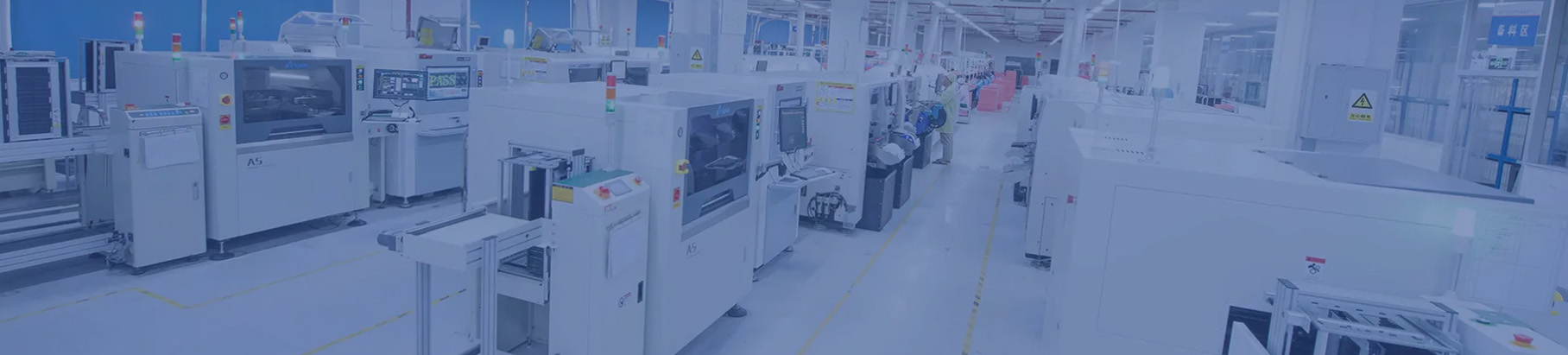
5G technology is defined by its high speed, low latency, and massive capacity—but operating in high-frequency bands like millimeter waves and Sub-6GHz poses unique challenges: signals are prone to attenuation and distortion during transmission. High-frequency/hybrid laminates act as the “signal highways” for 5G base stations and end devices, directly determining communication stability. Meanwhile, the precision manufacturing processes of 6-layer PCB factories are key to addressing core user concerns such as signal loss and interference.
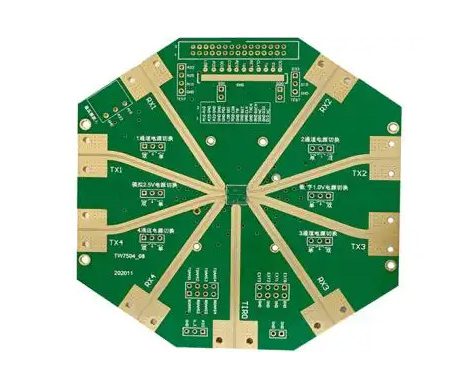
Performance Advantages of High-Frequency/Hybrid Laminates: Paving the Way for 5G Signals
he core difference between high-frequency/hybrid laminates and traditional PCB materials lies in their precise control over high-frequency signal transmission.
- Stable dielectric constant (Dk): High-frequency laminates typically maintain a Dk of 3.0–3.8, with a variation of less than 0.2 across frequencies from 1GHz to 100GHz. This ensures signal speed deviations stay within 5%, preventing delays caused by fluctuating Dk.
- Cost-effective hybrid designs: Hybrid laminates combine high-frequency materials with standard FR-4 in layered structures. This balances performance and economy: critical signal paths use low-loss high-frequency materials, while other areas rely on FR-4, reducing overall costs without sacrificing key functionality.
Minimizing Signal Loss: A Game-Changer for 5G
High-frequency laminates excel in reducing signal loss, with a dissipation factor (Df) as low as 0.002 at 10GHz—1/10 that of traditional FR-4 (Df≈0.02). This translates to an 80% reduction in per-meter signal attenuation in 5G base station links, extending millimeter wave transmission ranges.
Real-world testing highlights this impact: At 28GHz, a PCB using high-frequency laminates retains 25dB more signal strength after 10 meters compared to standard materials—equivalent to a 300x boost in signal power.
Thermal Stability for Harsh Environments
High-frequency/hybrid laminates also offer better thermal expansion (CTE) matching with copper foils. In temperatures ranging from -55°C to 125°C, their Z-axis CTE stays below 50ppm/°C, significantly reducing the risk of circuit breakage due to temperature fluctuations. This is critical for outdoor 5G base stations and other environments with extreme temperature swings.
Key 5G Applications: Full-Link Protection from Base Stations to Devices
5G Macro Base Stations: Optimizing RF Units
The Radio Remote Unit (RRU) is the core of 5G macro base stations, handling multi-channel, high-frequency signals. 6-layer PCB factories design high-frequency/hybrid PCBs to separate RF and digital control paths:
- RF sections use high-frequency laminates (Dk=3.4, Df=0.0018) for low-loss transmission.
- Digital sections use standard FR-4 to cut material costs by 30%.
Testing shows this hybrid design improves RRU spurious signal suppression by 15dB, ensuring cleaner base station signals.
Small Cells: Enhancing Indoor Coverage
Small cells are vital for 5G indoor coverage, requiring high signal efficiency in compact designs. High-frequency laminates are essential here:
- At 3.5GHz, small cells with high-frequency PCBs see 20% better signal transmission efficiency and 15% wider coverage, eliminating frustrating indoor dead zones.
- 6-layer PCB factories optimize laminate stacking, tightly coupling signal layers with ground layers to boost interference resistance. In busy office environments with multiple devices, this reduces communication interruptions to below 0.1%.
5G End Devices: Balancing Performance and Size
5G devices like smartphones and industrial modules need high-speed signal transmission in limited space—where hybrid laminates shine:
- In 5G smartphone motherboards, 6-layer PCB factories use high-frequency laminates (Dk=3.2) for millimeter wave antenna paths, while other links use standard materials. This keeps millimeter wave loss below 0.5dB/cm and reduces motherboard thickness by 0.2mm, supporting slimmer device designs.
- Testing confirms: Phones with this design achieve 12% faster millimeter wave download speeds and 8ms lower latency compared to those using standard materials.
Critical Manufacturing Processes in 6-Layer PCB Factories
The performance of high-frequency/hybrid laminates depends on precision manufacturing. 6-layer PCB factories employ advanced techniques to maximize their potential:
- Laser cutting: Replacing mechanical cutting avoids burrs and stress damage on laminate edges, keeping local Dk fluctuations within 0.05.
- Vacuum lamination: This process reduces interlayer bubble rates to below 0.01%, minimizing signal reflection and loss.
- High-precision circuit fabrication: Using advanced exposure machines, line width tolerances are controlled within ±3μm, ensuring impedance matching (error ≤5%) for high-frequency signals.
- Special surface treatment for hybrids: Interfaces between different materials in hybrid laminates undergo specialized treatment, achieving peel strength above 1.5N/mm to prevent delamination during temperature cycles—critical for long-term 5G device reliability.
Rigorous Signal Integrity Testing
Every PCB undergoes testing with vector network analyzers, verifying insertion loss, return loss, and other parameters at up to 100GHz. Data from a leading 5G equipment manufacturer shows that high-frequency/hybrid PCBs from precision 6-layer factories achieve 98% consistency in signal transmission performance—far exceeding the industry average of 90%.
For end-users, reliable 5G experiences hinge on seamless signal transmission at every step. With high-frequency/hybrid laminates and precision manufacturing from 6-layer PCB factories, these PCBs act as the “superhighways” of 5G—powering everything from long-distance base station links to instant smartphone connections. They quietly ensure every data transfer is fast, reliable, and ready to bring 5G’s full potential to life.
0 Comments