



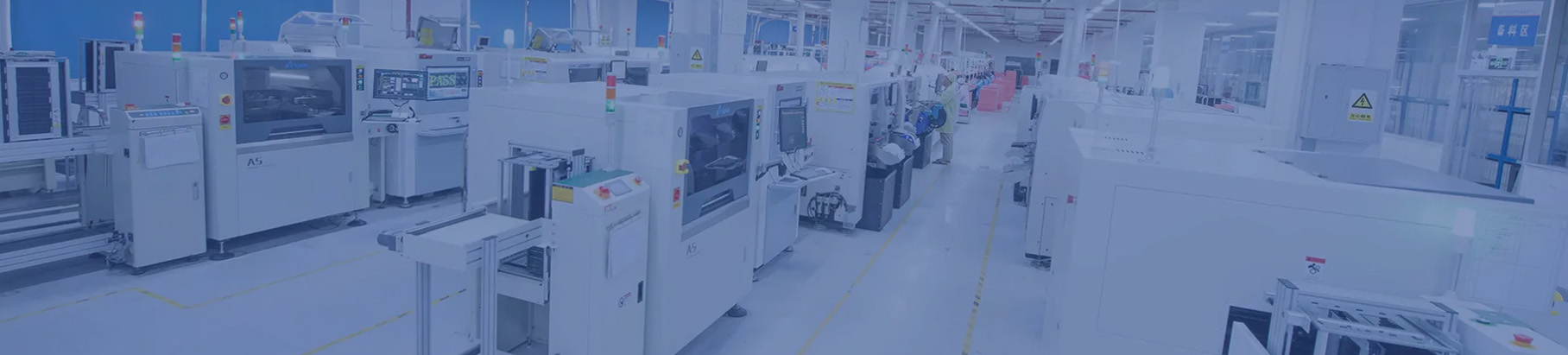
What Industrial PCB Production Really Means
Industrial PCB production is not the same as making a one-off prototype. A prototype only needs to work once. Production needs to work every time, at volume, with the same result.
That is where most projects get judged. Not by whether the first board powers up, but by whether the design can be built cleanly, tested fast, and shipped without drama.
If a board is hard to build, the cost shows up later. In rework. In scrap. In missed delivery dates.
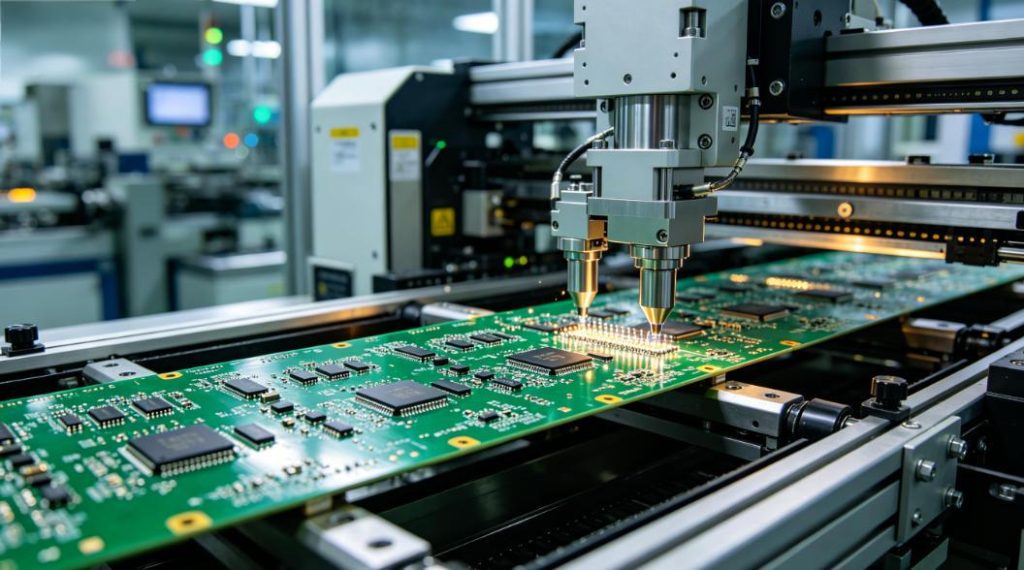
Why Manufacturing-Friendliness Matters More Than You Think
A board can look fine in CAD and still fail in production. That happens all the time.
A slightly wrong footprint can create solder problems. A tight layout can make assembly harder. A weak BOM can slow down purchasing. A missing test point can turn a simple check into a long debug session.
This is why industrial PCB production starts long before the factory. It starts in the design file.
The Design Choices That Affect Yield
Footprints Must Match Real Assembly, Not Just the Datasheet
A footprint that looks correct on screen may still be wrong for assembly. Pad size, solder mask opening, and paste area all matter.
If the pad is too small, joints get weak. If it is too large, bridges start showing up. If the mask clearance is off, the board becomes harder to assemble cleanly.
That is not a theory issue. That is a yield issue.
Trace Width and Spacing Should Be Practical
Do not push trace geometry just to save space. A compact layout is not always a better layout.
In production, practical spacing gives you fewer shorts, fewer impedance surprises, and fewer questions from the fab. The same logic applies to copper balance. Uneven copper can lead to warpage and reflow trouble.
Via Strategy Should Be Chosen Early
Vias are cheap until they are not.
Standard vias are easy. Blind vias, buried vias, and via-in-pad designs can solve real problems, but they also add process complexity and cost. If you do not need them, do not use them.
A good engineer chooses the simplest structure that still meets the spec.
Component Selection Can Make or Break the Build
Avoid Parts That Create Supply Risk
One of the fastest ways to delay a project is to lock in a part that nobody can buy reliably.
Industrial PCB production depends on supply stability. If a key IC has poor lead time or weak availability, the whole build becomes fragile.
The safer move is to choose parts with stable sourcing and enough market depth.
Keep Alternate Parts in Mind
Even if you do not plan to substitute, you should know whether substitution is possible.
If a part has a clean alternate, purchasing has room to move. If it does not, every shortage becomes a project problem.
That matters more in volume than in prototype work.
Choose Packages That Are Easy to Assemble
Some packages are fine for performance but painful for assembly. Others are boring, but they work.
Boring usually wins in production. Standard packages are easier to place, inspect, and rework. That lowers risk.
Assembly Problems Usually Come from Small Mistakes
Tombstoning, Bridging, and Offset Placement
These are classic production issues. They are also avoidable in many cases.
Tombstoning often points to uneven heating or pad imbalance. Bridging usually means solder volume or spacing needs attention. Misalignment can come from placement tolerance, board warpage, or poor paste control.
These issues are not rare. They are the everyday cost of weak design choices.
Reflow Behavior Depends on Layout
A board does not heat evenly just because the oven profile is correct.
Copper density, thermal mass, and component distribution all affect reflow. If the board is not balanced, you can get inconsistent solder joints even when the process looks fine.
That is why layout and assembly cannot be separated.
Test Access Should Be Built In
A production board should be easy to test.
If test points are hidden, too small, or missing, debug slows down fast. The team ends up wasting time chasing issues that should have been easy to isolate.
Good test access saves money. Simple as that.
How to Control Cost Without Cutting Reliability
The cheapest unit price is not always the cheapest project.
A low-cost board that needs two extra spins is expensive. A cheaper BOM that causes supply headaches is expensive. A board that is hard to inspect is expensive.
Better cost control comes from fewer revisions and fewer surprises.
What Usually Saves Money
- simpler BOM
- stable component sourcing
- standard packages
- clear test access
- DFM review before release
That is where the real savings are. Not in shaving a few cents off one line item.
What to Check Before You Release to Production
Before any industrial PCB production run, check these items:
DFM Review
Look for issues in footprint, solder mask, pad geometry, drill size, and spacing.
BOM Review
Confirm availability, lifecycle status, and alternates.
Assembly Review
Check paste, placement, polarity marking, and thermal balance.
Test Review
Make sure the board can be verified without slow manual work.
Stackup Review
Confirm impedance, thickness, and copper weight before the order is placed.
If these are wrong, the project pays for it later.
FAQ: Common Questions About Industrial PCB Production
What is the difference between PCB prototyping and production?
Prototyping proves the circuit works. Production proves the design can be built repeatedly with stable quality and cost.
Why do boards pass prototype testing but fail in volume?
Because volume exposes problems that small runs hide. Footprint issues, solder defects, thermal imbalance, and supply variation show up fast.
What causes the most assembly failures?
Poor pad design, bad solder mask clearance, weak paste control, and parts that are hard to place or reflow cleanly.
How can I reduce supply risk?
Use parts with stable lead times, avoid single-source dependencies where possible, and check alternates early.
Do I need a DFM report before mass production?
Yes, if you want fewer surprises. A DFM check catches problems before they become scrap, delay, or rework.
Why Custom Support and a Free DFM Report Matter
Every board is different. Some need tighter control on stackup. Some need special assembly rules. Some need supply-side flexibility. Industrial PCB production gets easier when the design is checked against the real build process.
That is why support for custom requirements matters. And a free DFM report is useful because it shows the risks before money is wasted on the wrong batch.
Final Call to Action
If you need PCB or PCBA support, feel free to contact Thindry. We support custom requirements and can provide a free DFM report.
Send your inquiry to sales@pcbtry.com.
0 Comments