




What Is PCB Board Testing & How Do You Test a PCB Board Properly?
Learning how to test a PCB board is a core skill for validating circuit board performance and eliminating hidden defects. Proper PCB board testing stops design flaws and assembly errors before products reach mass deployment.
Every printed circuit board, whether a bare PCB or a fully assembled PCBA, requires standardized testing workflows. Basic manual tests and advanced automated checks work together to ensure long-term operational stability across commercial and industrial applications.
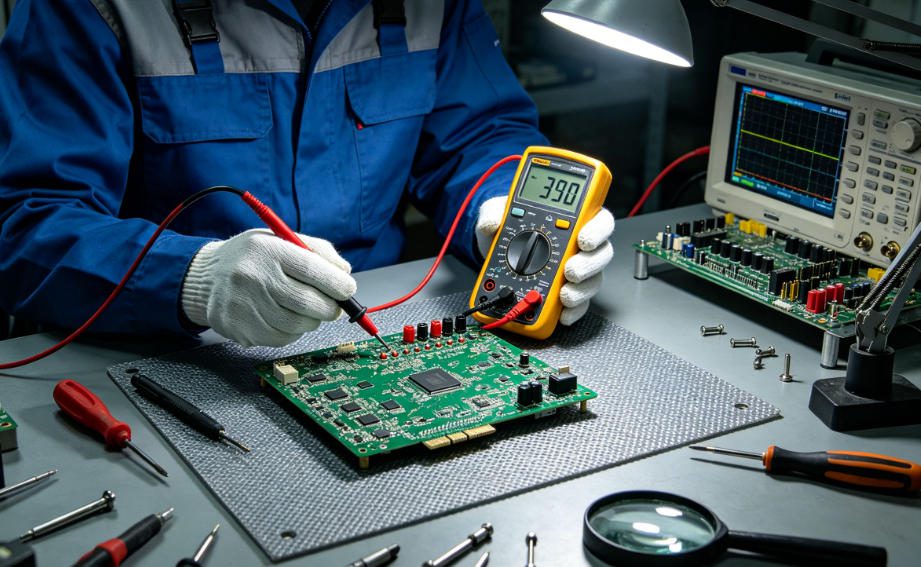
How to Complete a Basic Visual PCB Board Test for Beginners
Visual inspection is the simplest first step when you want to know how to test a PCB board without professional electronic tools. It quickly exposes visible assembly damage and soldering issues in minutes.
Use a magnifying lens and neutral white lighting to scan the entire board surface. Check for cracked traces, lifted solder pads, misaligned surface-mount components, and unwanted solder bridges between copper nets.
This low-effort test filters out over 40% of common PCB failures. It fits fast prototype validation for hardware designers and quick quality checks for supply chain and procurement teams.
How to Test PCB Continuity and Short Circuits With a Multimeter
Testing continuity and short circuits is the most practical method to test a PCB board for hidden electrical connection faults. This offline testing method requires no power input, preventing component burnout.
Switch your multimeter to continuity mode, then probe the power and ground layers first to rule out critical short circuits. Test both ends of key traces to confirm complete circuit conduction and identify open trace issues.
Hardware designers rely on this step to verify layout rationality. Technical researchers use continuity data to analyze the causes of circuit failures in modified or custom circuit boards.
How to Test Power Rails and Voltage Stability on a Finished PCB
Stable voltage output determines overall product reliability, making power rail testing a necessary step when testing a PCB board after full assembly. Controlled low-current power input ensures safe detection.
Measure regulator output voltage, main power node values, and IC power pin voltage data. Record voltage changes under light and heavy load conditions to spot unstable power supply fluctuations.
Industrial and automotive electronic products have strict power tolerance requirements. Accurate voltage testing helps avoid frequent crashes and hardware damage during long-cycle operation.
What Advanced PCB Board Testing Methods Work for Mass Production?
High-volume manufacturing requires high-efficiency solutions to test a PCB board with high fault coverage and stable detection accuracy. Advanced automated testing addresses the limitations of manual inspection.
| Testing Method | Core Application Scene | Main Technical Advantage |
|---|---|---|
| AOI Automated Optical Inspection | Post-soldering appearance detection | Fast batch scanning; identifies solder defects and component offset |
| Flying Probe Testing | Small-batch and prototype PCB verification | No custom fixture needed; flexible for custom board projects |
| ICT In-Circuit Testing | Large-scale standardized PCBA production | Fast single-board testing; high repeatability |
| AXI X-Ray Testing | BGA and hidden solder joint inspection | Detects internal solder voids and invisible welding failures |
These professional testing processes support high-reliability production for medical electronics and aerospace-grade circuit boards.
How to Select Suitable Testing Tools to Test a PCB Board
Choosing the right testing tools directly improves efficiency and accuracy when testing a PCB board for different project types, from small prototypes to industrial mass orders.
Basic prototype testing only requires a digital multimeter, magnifier, and current-limited power supply. Small-batch customization adds portable oscilloscopes for simple signal detection.
Large manufacturers integrate automatic inspection equipment to meet continuous production demands. Reasonable tool selection balances testing costs and detection depth for different project requirements.
What Key Industry Applications Require Strict PCB Board Testing?
Standardized PCB board testing is mandatory across mainstream industries, and tailored testing standards help solve targeted application pain points in each field. Four high-demand industries are listed below.
Automotive Electronics: Vehicle control PCBs and sensor circuit boards require anti-vibration and temperature resistance testing. Strict PCB testing avoids driving safety risks caused by harsh vehicle working environments.
Industrial Control & Automation: PLC main control boards and drive PCBs need anti-interference and long-term stability testing. Effective PCB testing reduces factory equipment downtime and maintenance frequency.
Medical Electronics: Monitoring device PCBAs and diagnostic equipment circuit boards adopt high-precision testing standards. Reliable PCB board testing ensures stable operation in medical scenarios with zero-failure requirements.
Consumer Communication Devices: Router and wearable device high-density PCBs require signal integrity and miniaturization testing. Professional testing optimizes signal transmission and daily service life.
What Common Mistakes Ruin Accurate PCB Board Testing?
Many teams get inaccurate results when testing a PCB board due to irregular operating habits and incomplete inspection steps, leading to missed hidden circuit risks.
Skipping visual inspection and directly powering on the board is the most common error. Unchecked solder bridges and damaged traces will cause short-circuit burnout of core electronic components.
Using uncalibrated testing tools and ignoring environmental interference also affect data accuracy. Irregular testing habits increase rework volume and delay project delivery cycles.
How to Read PCB Test Reports to Judge Board Quality Quickly
Professional PCB test records contain all failure data, and learning to analyze these reports helps quickly judge board quality after testing a PCB board in production or prototype stages.
Focus on short-circuit coordinates, open-circuit net names, and out-of-tolerance component parameters in the report. Classify failure points into process defects, design errors, and raw material problems for targeted optimization.
Designers adjust layout rules based on test reports. Procurement teams use qualified test data to evaluate supplier quality stability and long-term cooperation reliability.
How to Add Testability Design to Simplify PCB Board Testing
Early design optimization is the most cost-effective way to simplify how to test a PCB board in subsequent production and inspection stages. Testability-focused DFM design reduces testing difficulty.
Reserve standard test points for power, ground, and core signal lines during layout. Avoid covering key detection positions with large-size components or thick copper layers.
Our team provides free DFM reports to help customers complete testability optimization in the design stage. Reasonable layout modifications effectively reduce later testing failure rates and rework costs.
FAQ – Common Questions About How to Test a PCB Board
What is the correct order to test a PCB board for the first time?
Complete a visual inspection first, followed by offline continuity and short-circuit testing. Finish with low-current power-on voltage verification and final functional testing to ensure safe and comprehensive detection.
Is professional equipment necessary to test a simple DIY PCB board?
No, basic handmade circuit boards can be fully tested using manual visual checks and a standard multimeter. Professional automated equipment is only needed for high-density or high-reliability industrial boards.
What defects cannot be detected by ordinary multimeter PCB testing?
Hidden BGA solder voids, subtle signal integrity issues, and intermittent temperature-related failures cannot be found with multimeters. These issues require X-ray inspection and environmental stress testing.
Can DFM optimization reduce PCB board testing difficulties?
Yes, standardized DFM layouts include sufficient test points, reasonable spacing, and accessible detection areas. This greatly improves testing efficiency and lowers the probability of undetected defects.
Why do mass-produced PCBs need unified standardized testing?
Unified testing standards guarantee consistent product quality in large batches. They eliminate individual process differences and ensure every circuit board meets industry application and safety specifications.
How to judge if a PCB board passes overall testing standards?
A qualified PCB has no short circuits or open circuits, stable voltage output, intact appearance, and proper component soldering. All index data meets design drawings and industry IPC standards.
How to Optimize The Entire Workflow of PCB Board Testing
Integrating testing into design, prototyping, and mass production forms a closed-loop workflow that standardizes how to test a PCB board and improves overall project yield.
Include testability evaluation in the initial design phase. Complete full manual testing for prototype samples to verify design rationality.
Introduce automated testing equipment in mass production processes. Regularly summarize test failure data to optimize soldering processes and layout schemes for long-term quality improvement.
Get Professional PCB Board Manufacturing & Testing Support From Thindry
Mastering how to test a PCB board helps every engineer and project team control product quality from design to finished products. Complete testing procedures minimize failure risks in various industry application scenarios.
Thindry offers one-stop custom PCB manufacturing and professional PCBA testing services for global clients. We support on-demand customization for different sizes, layers, and functional circuit board requirements for automotive, industrial, medical, and consumer electronics projects.
We provide free DFM reports for all custom orders to optimize design testability and production rationality. If you need high-quality circuit board production, assembly, and complete testing solutions, contact our professional team via sales@pcbtry.com to start your project customization.
0 Comments