




In today’s world, electronic systems are the backbone of both security and defense operations. From advanced radar networks to compact surveillance devices, every mission relies on reliable electronics at its core. At the center of these systems lies the defense PCB and security PCB assembly. Unlike standard commercial boards, these specialized circuit boards are engineered to perform without compromise in extreme conditions. They endure high heat, heavy vibration, wide humidity ranges, and even electromagnetic interference.
For industries where failure is not an option, defense and security PCBs are not just components. They are the foundation of trust, accuracy, and long-term dependability.
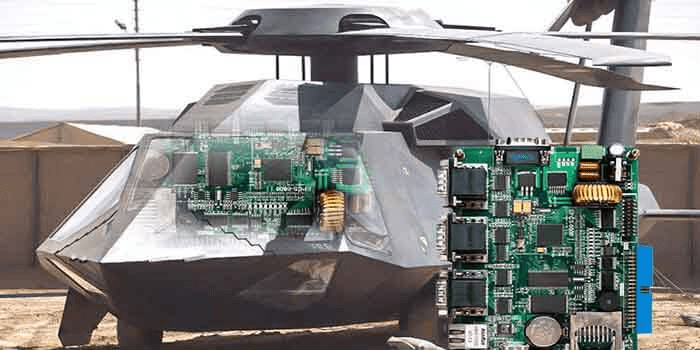
What Are Security & Defense PCBs?
A defense PCB is a printed circuit board designed for military and aerospace equipment, while a security PCB focuses on systems such as surveillance, access control, and communication devices. Both categories share a core trait: resilience. These boards differ from consumer-grade PCBs in terms of durability, material selection, and quality controls.
Defense PCBs often employ high-Tg laminates, ceramic substrates, or metal cores for better heat management. They support higher layer counts and tighter tolerances to handle complex circuits. Security PCBs, on the other hand, are optimized for consistent performance, anti-tampering safeguards, and long operating life.
In short, whether it’s guiding an aircraft, securing a border, or monitoring sensitive facilities, these boards carry the responsibility of reliability under pressure.
Key Applications of Defense PCBs
- Military communication systems
- Radar and navigation equipment
- Surveillance and security devices
- Aerospace and avionics
- Electronic warfare (EW) systems
- Unmanned vehicles (UAVs / drones)
- Missile guidance and control systems
- Naval and submarine systems
- Ground vehicle electronics
- Command and control systems
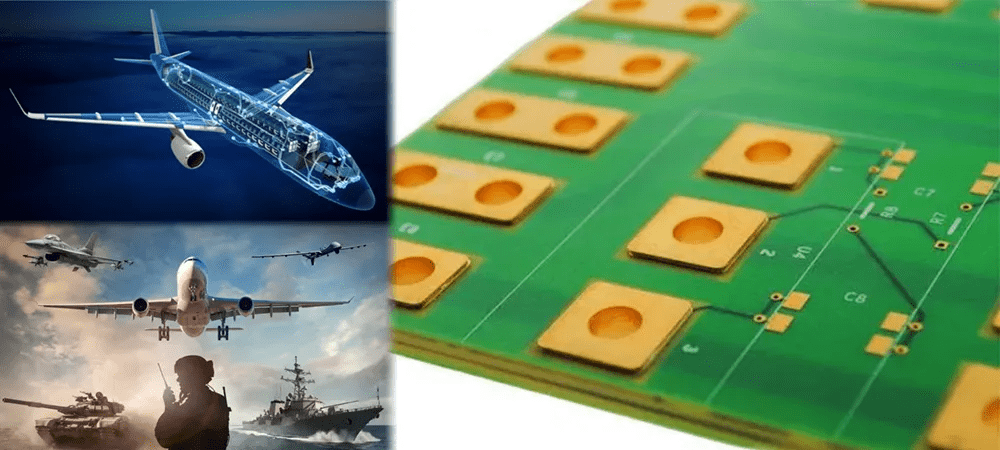
Design Considerations for Military PCBs
Designing a military-grade PCB requires far more than arranging traces and components. Engineers must consider performance under stress, long-term reliability, and strict compliance with defense standards. Key design aspects include:
1. Impedance Control
Defense communication systems often operate at frequencies from 1 GHz up to 20 GHz. At these ranges, even a 5–10% impedance variation can degrade signal quality. Controlled impedance designs typically target 50Ω single-ended or 100Ω differential pairs with a tolerance of ±10%.
2. Material Selection
Military PCBs must withstand wide temperature ranges. Standard FR4 handles 85–130°C Tg, but defense applications often require 170–250°C Tg materials such as polyimide or ceramic. Ceramic substrates like Aluminum Nitride (AlN) provide thermal conductivity of 170–200 W/m·K, almost 100 times higher than FR4.
3. Shielding and Grounding
EMI is a serious concern in radar and avionics. Studies show that unshielded traces can lose up to 30% signal strength in noisy environments. Using multiple ground planes and proper shielding reduces interference by over 90%.
4. Redundancy and Fail-Safe Features
For mission-critical avionics, redundancy is non-negotiable. According to defense electronics guidelines, backup circuits should provide at least 50% operational capability if the main circuit fails.
5. Thermal Management
Power electronics in radar modules can generate heat densities exceeding 100 W/cm². Thermal vias and copper heat spreaders can reduce hotspot temperatures by 20–30°C, extending component lifespan by up to 40%.
6. Traceability and Compliance
In military contracts, 100% traceability is mandatory. Each lot of materials and each PCB batch is logged and auditable, reducing the risk of counterfeit or unqualified components entering defense supply chains.
Manufacturing and Assembly Processes
Producing a defense PCB or security PCB assembly requires advanced manufacturing technology and precise controls. The process involves:
1. Material Selection
Material choice defines PCB performance. High-Tg FR4 works up to 170°C and is common for communication and control units. Polyimide withstands 250°C, suitable for flexible or rigid-flex PCBs, with strong chemical and mechanical stability. Ceramic substrates such as Alumina or Aluminum Nitride reach thermal conductivity up to 200 W/m·K, used in radar and power circuits. Metal-core PCBs made of aluminum or copper are applied in RF amplifiers and high-power systems for heat dissipation.
2. Layer Stack-Up and Lamination
Defense PCBs often have 6–40 layers. Lamination must control heat and pressure precisely. Polyimide requires slower heating to prevent delamination. Layer alignment tolerance is kept within ±25 μm for impedance stability. Proper stack-up supports both signal integrity and thermal management.
3. Drilling and Plating
Microvias down to 75 μm are standard. Blind and buried vias are used for high-density designs. Copper plating thickness is typically 20–25 μm, providing strength against thermal cycling. Laser drilling is used for ceramics and polyimide, while mechanical drilling suits FR4 and metal-core boards.
4. Imaging and Etching
Trace widths are usually 2–3 mil (0.05–0.075 mm). Etching tolerance is kept within ±10% to maintain impedance. Deviation can lead to signal reflection and crosstalk, which is unacceptable in defense electronics.
5. Surface Finish
Surface finish impacts solderability and reliability. ENIG offers flatness and oxidation resistance, suitable for fine-pitch parts. ENEPIG adds palladium for wire bonding and higher thermal reliability. OSP is cheaper but rarely used for defense PCBs. HASL provides basic protection but lacks flatness for BGA and micro-packages. Finish selection depends on part size, thermal demand, and environment.
6. Component Assembly
Automated placement machines place parts with ±25 μm accuracy. Both SMT and through-hole parts are used. Miniaturized designs often require 0201 or 01005 packages. Reflow soldering or selective wave soldering is chosen according to component sensitivity.
7. Inspection and Testing
AOI checks surface defects. X-ray validates BGAs and buried vias. Functional testing simulates operation, with thermal cycling from -55°C to +125°C, vibration, and humidity exposure.
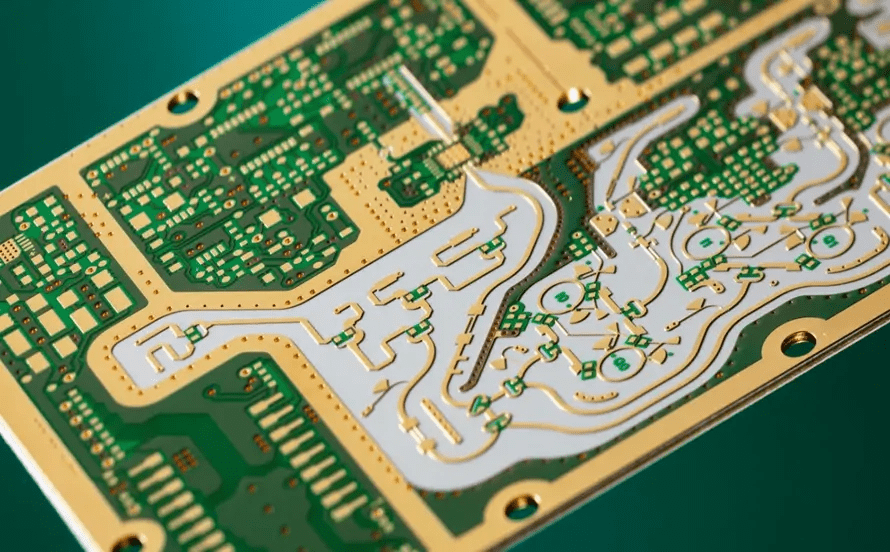
Humidity and Temperature for Security System PCBA
Security and defense systems often operate in unpredictable environments. A security PCB inside a surveillance camera may face tropical humidity or freezing winters, while a defense PCB in avionics may encounter sudden altitude-related temperature shifts.
- Boards must therefore pass environmental testing that simulates:
- Extreme temperature cycles (from -55°C to +125°C or higher).
- High humidity levels (often exceeding 90% relative humidity).
- Salt fog or chemical resistance for maritime or coastal systems.
Protective coatings such as ENIG, HASL, or conformal layers further extend service life. These steps guarantee that sensitive electronics maintain functionality even when exposed to harsh climates.
Defense PCB Manufacturing Capability
At Thindry Circuit, we specialize in high-performance PCB solutions tailored for defense and security sectors. Our capabilities include:
| Capability | Specification |
| Maximum Layer Count | Up to 40+ layers |
| PCB Types | Rigid, Flex, Rigid-Flex, Metal Core, Ceramic, Hybrid PCBs |
| Base Materials | FR4 (High-Tg), PTFE, Polyimide, Ceramics (Alumina, AlN), Metal Core (Al, Cu) |
| Board Thickness Range | 0.2 mm – 12 mm |
| Copper Thickness | 0.5 oz – 12 oz |
| Minimum Trace/Space | 3/3 mil (standard); 2/2 mil (advanced) |
| Via Technology | Blind, Buried, Microvias, Via-in-Pad, Filled & Capped Vias |
| Surface Finishes | ENIG, ENEPIG, OSP, Immersion Tin, Immersion Silver, HASL (Lead-Free / SnPb) |
| Solder Mask Options | Green, Black, Blue, White, Red, Custom Colors |
| Testing | AOI, Flying Probe, X-ray, ICT, Functional Testing |
| Special Features | High-frequency RF boards, impedance control, thermal management designs |
| Assembly Capability | SMT, Through-hole, Mixed Assembly, Selective Wave Soldering, Conformal Coating |
Certifications We Have
To serve defense and security industries, strict compliance with international standards is mandatory. Thindry Circuit is certified and compliant with the following:
- ISO9001 – Quality management system for consistent production standards
- ISO13485 – Medical device standard, relevant for dual-use security equipment
- IATF16949 – Automotive certification ensuring robust process control
- AS9100D – Aerospace and defense certification (critical for military projects)
- RoHS & REACH Compliance – Environmental compliance for materials and finishes
- UL Certification – Safety compliance for PCBs across multiple industries
- ITAR/EAR Compliance – For export-controlled defense-related designs (when required)
- MIL-PRF-31032 (Pending/Applicable) – U.S. military performance specification for printed boards
- IPC Standards Compliance – IPC-A-600 (PCB quality), IPC-A-610 (assembly quality), IPC-6012 (performance spec)
Contact Thindry Circuit for All of Your Security and Defense PCB Needs
When it comes to defense PCBs and security PCB assemblies, the stakes are high. Success depends on precision, durability, and consistency. At Thindry Circuit, we combine advanced engineering, strict quality controls, and international certifications to deliver PCBs that meet the most demanding standards.
With our expertise, global customers trust us for projects ranging from radar systems to surveillance networks. If you are searching for a supplier that offers reliability, competitive pricing, and proven capability, Thindry Circuit is ready to be your partner.
Contact us today to discuss your defense and security PCB requirements.
FAQs
1. What makes a defense PCB different from a standard PCB?
A defense PCB uses advanced materials, tighter tolerances, and strict inspection processes to ensure performance under extreme conditions such as high heat, vibration, and EMI exposure.
2. Why is impedance control so important in military PCB design?
Impedance control keeps signals stable, reducing reflections and interference. This is especially important in radar, communication, and navigation systems where signal clarity is vital.
3. Which materials are most commonly used in defense PCBs?
High-Tg FR4, polyimide, PTFE, ceramic substrates, and metal-core materials are widely used depending on the application’s thermal and mechanical demands.
4. How are defense PCBs tested before delivery?
They undergo multiple checks, including AOI, X-ray, flying probe, ICT, and functional testing. Environmental tests like thermal cycling and humidity exposure are also common.
5. What certifications should a defense PCB supplier have?
At minimum, AS9100D, ISO9001, and IPC compliance are required. Additional certifications such as IATF16949, ITAR/EAR, and MIL-spec qualifications strengthen reliability.
0 Comments