




Introduction: Mastering FR4 PCB Copper Thickness for Optimal Performance
Choosing the right FR4 PCB copper thickness is critical for balancing electrical performance, mechanical reliability, and cost-efficiency in electronic designs. This guide breaks down everything you need to know about FR4 PCB copper thickness, from standard and heavy copper specifications to real-world applications and selection strategies. Whether you’re designing for consumer electronics, industrial systems, or high-power devices, understanding copper thickness nuances ensures your PCB meets durability and functionality requirements.
What Is FR4 PCB Copper Thickness & Why It Matters
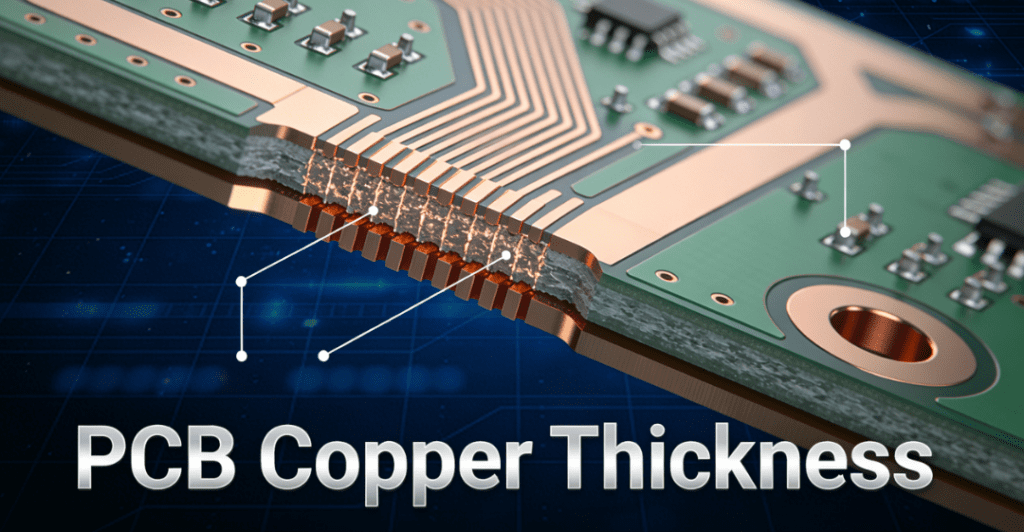
FR4 PCB copper thickness refers to the weight and corresponding physical depth of copper foil laminated to the FR4 fiberglass substrate, typically measured in ounces per square foot (oz/ft²) or micrometers (µm). One ounce of copper equals 35µm thickness. This parameter directly impacts current-carrying capacity, heat dissipation, signal integrity, and mechanical strength of the PCB. Incorrect thickness selection can lead to overheating, signal interference, or premature failure—especially in harsh operating environments.
Standard FR4 PCB Copper Thickness: 0.5 oz to 2 oz

0.5 oz Copper Thickness (17 µm)
0.5 oz copper is an ultra-thin option ideal for high-density PCBs in compact devices. Its thin profile enables fine trace widths (down to 3 mil) and tight spacing, making it perfect for smartphones, tablets, and wearable tech. While cost-effective for low-current applications, it has limited mechanical strength and requires careful handling to avoid copper peeling. It’s often used in radio frequency (RF) circuits where impedance control is critical.
1 oz Copper Thickness (35 µm)
1 oz copper is the industry standard for most electronic devices. It strikes a balance between performance, cost, and manufacturability, supporting moderate current loads (up to 2A for standard trace widths) while accommodating dense routing. Common applications include laptops, routers, IoT sensors, and consumer-grade power supplies. It adheres well to FR4 substrates and works with all standard surface finishes like ENIG and HASL.
2 oz Copper Thickness (70 µm)
2 oz copper offers enhanced current-carrying capacity and heat dissipation compared to 1 oz. It’s suitable for power management circuits, industrial controllers, and automotive electronics (e.g., infotainment systems). With a 30°C temperature rise, it can carry twice the current of 1 oz copper, reducing power loss (P=I²R). Note that 2 oz copper requires thicker PCB substrates (≥1.2mm) and larger vias (≥0.25mm) for reliable manufacturing.
Heavy FR4 PCB Copper Thickness: 12 oz to 48 oz
12 oz to 16 oz Copper Thickness (420 µm to 560 µm)
Copper thicknesses from 12 oz to 16 oz are classified as heavy copper, designed for high-power applications. These thicknesses deliver exceptional current handling (10A+ continuous) and thermal conductivity, making them ideal for industrial inverters, large-scale battery management systems (BMS), and welding equipment. They require specialized etching and lamination processes to maintain structural integrity, with minimal trace spacing of 0.2mm or more.
20 oz to 24 oz Copper Thickness (700 µm to 840 µm)
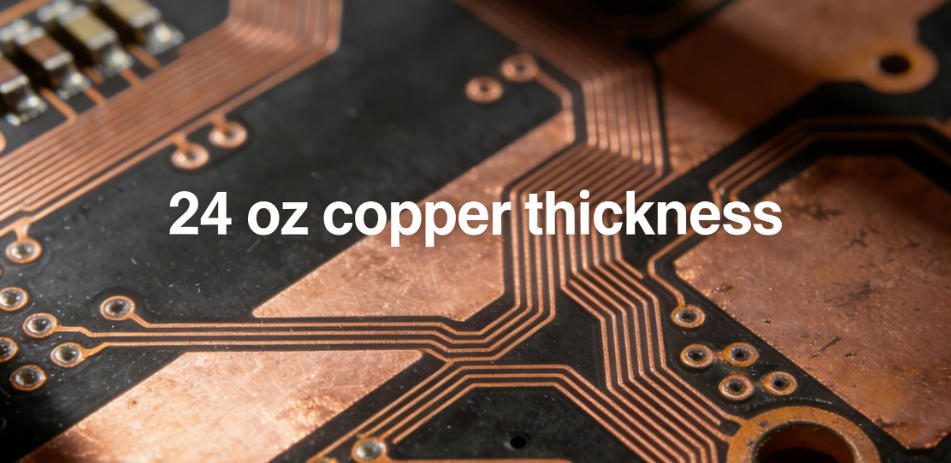
20 oz to 24 oz copper is used in extreme-power scenarios like electric vehicle (EV) motor controllers, high-voltage power supplies, and renewable energy converters. The thick copper layers act as integral heat sinks, reducing the need for additional cooling components. They excel in harsh environments with wide temperature fluctuations (-40°C to 125°C) and meet automotive-grade reliability standards (AEC-Q200). Manufacturing these PCBs requires high-Tg FR4 substrates (≥150°C) for stability.
32 oz to 48 oz Copper Thickness (1120 µm to 1680 µm)
32 oz to 48 oz copper represents the thickest standard option for FR4 PCBs, reserved for ultra-high-power applications such as large industrial motors, grid-tie inverters, and military-grade power systems. These boards offer maximum current carrying capacity (50A+), superior mechanical strength, and excellent EMI shielding. Due to their weight and thickness, they require custom manufacturing processes, including sequential lamination and precision drilling.
FR4 PCB Copper Thickness: Key Applications by Industry
Consumer Electronics
Most consumer devices (smartphones, TVs, headphones) use 0.5 oz to 1 oz copper. This range supports low-current requirements while enabling slim, lightweight designs. 0.5 oz is preferred for ultra-compact wearables, while 1 oz is standard for laptops and home appliances.
Industrial & Automotive
Industrial controllers and automotive electronics rely on 2 oz to 24 oz copper. Industrial PLCs use 2 oz to 4 oz for durability, while EV OBCs and BMS systems require 12 oz to 24 oz for high-current handling. Heavy copper ensures reliability in vibration-prone and temperature-extreme environments.
Renewable Energy & Power Systems
Solar inverters, energy storage systems, and electric vehicle (EV) charging stations use 12 oz to 48 oz copper. The thick layers manage high voltage/current loads and dissipate heat efficiently, critical for outdoor, long-term operation. 32 oz to 48 oz is used in grid-scale power equipment for maximum reliability.
Aerospace & Military
Aerospace and military applications demand 1 oz to 32 oz copper, depending on the component. Avionics use 1 oz to 2 oz for signal integrity, while military power systems utilize 16 oz to 32 oz for extreme reliability and interference resistance (EMI resistance).
How to Select the Right FR4 PCB Copper Thickness
Start by calculating your circuit’s maximum current load—copper thickness should provide a 10-20% current margin to avoid overheating. Next, consider the operating environment: harsh conditions (vibration, temperature swings) require thicker copper (≥1 oz) for mechanical strength. Balance performance with cost: thick copper (≥12 oz) increases material and processing costs by 50% or more compared to 1 oz. Finally, consult your manufacturer to ensure compatibility with PCB thickness, via size, and trace spacing requirements.
Cost & Manufacturing Impacts of FR4 PCB Copper Thickness
Copper thickness directly affects PCB cost: 2 oz copper costs 20-30% more than 1 oz, while 6 oz+ copper can cost 3-4 times more. Thick copper (≥12 oz) increases processing complexity, leading to higher scrap rates and longer lead times. Ultra-thin 0.5 oz copper also costs 10-15% more than 1 oz due to precise manufacturing needs. To optimize cost, use “localized thick copper”—only thicken traces in high-current areas while using standard thickness elsewhere.
FR4 PCB Copper Thickness Standards & Quality Control
Follow IPC-4101 standards for FR4 PCB copper thickness, which specifies tolerance (±10% for standard thicknesses) and adhesion requirements (≥1.0 N/mm copper-substrate bond strength). Quality control includes measuring copper weight via X-ray fluorescence (XRF) and testing for peeling resistance. For high-reliability applications, ensure hole wall copper thickness ≥20µm (IPC Class 2/3) to maintain layer-to-layer connectivity.
FR4 PCB Copper Thickness Common Problems & Solutions (FAQ)
Q1: Why is my FR4 PCB overheating with 1 oz copper?
A1: Overheating occurs when current load exceeds copper capacity. Solution: Upgrade to 2 oz copper or increase trace width. For high-power circuits, use localized thick copper to improve heat dissipation.
Q2: Can 0.5 oz copper be used for industrial applications?
A2: Only for low-current, non-vibration industrial components. For harsh environments, use 1 oz+ copper and increase copper area to enhance mechanical strength.
Q3: What’s the minimum PCB thickness for 2 oz copper?
A3: 2 oz copper requires a minimum PCB thickness of 1.2mm to avoid warping during lamination. Larger vias (≥0.25mm) are also necessary for reliable plating.
Q4: How does copper thickness affect EMI performance?
A4: Thicker copper (≥2 oz) improves EMI shielding by reducing impedance and creating a more effective ground plane. For sensitive circuits, combine 2 oz+ copper with full ground planes to suppress interference.
Q5: Is 48 oz copper available for standard FR4 PCBs?
A5: Yes, but it requires custom manufacturing. 48 oz copper FR4 PCBs are used for ultra-high-power applications and need specialized substrates and lamination processes.
Q6: How to balance cost and performance with copper thickness?
A6: Use standard 1 oz copper for most areas and localized thick copper (2 oz-4 oz) only in high-current regions. This strategy maintains performance while controlling costs.
Get Custom FR4 PCB Copper Thickness Solutions for Your Project
Whether you need 0.5 oz copper for a compact IoT device or 48 oz copper for a high-power industrial system, our team delivers precision-manufactured FR4 PCBs tailored to your exact thickness requirements. We adhere to IPC standards, ensure strict quality control, and offer competitive lead times for both standard and heavy copper projects. Don’t compromise on performance—partner with experts who understand FR4 PCB copper thickness nuances. Contact us today at sales@pcbtry.com to request a quote and bring your design to life with reliable, high-quality PCBs.
0 Comments