



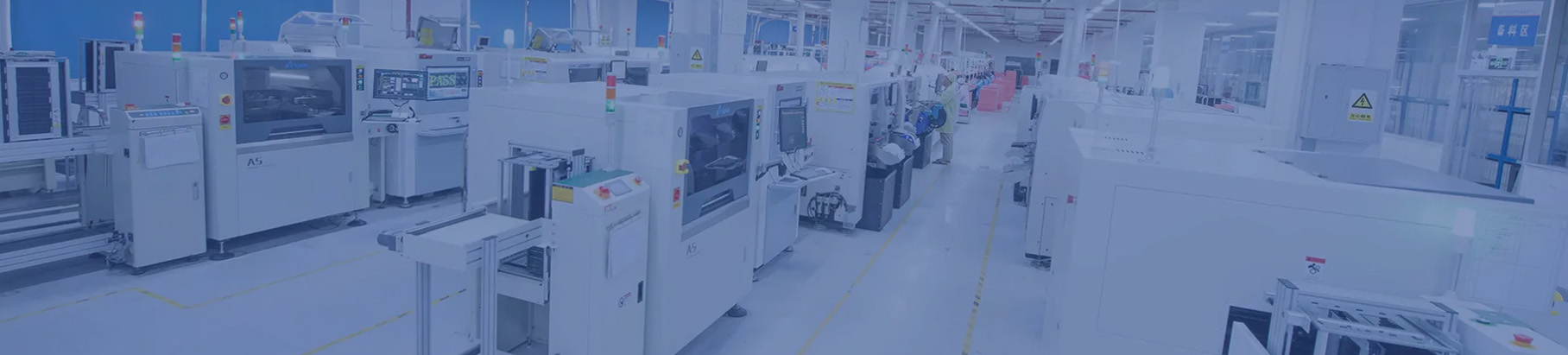
Introduction: Industrial Control PCB—The “Neural Center” of Industrial Automation
In today’s highly developed era of industrial automation, the Industrial Control PCB (Printed Circuit Board) serves as an indispensable core component in various industrial equipment. From precise control in automotive manufacturing lines to intelligent monitoring in energy systems, from the precise operation of medical devices to the stable functioning of aerospace instruments, the Industrial Control PCB acts as the “heart” and “neural center” of industrial equipment. It is responsible for the transmission and processing of electronic signals, ensuring the stable operation of the entire system. Unlike standard PCBs, Industrial Control PCBs must confront various harsh challenges in industrial environments—extreme temperatures, constant vibration, electromagnetic interference, etc. These specific demands impose a series of stringent standards and specifications on their design, manufacturing, and testing phases.
With the advent of the Industry 4.0 era and the deepening advancement of smart manufacturing, the importance of Industrial Control PCBs is becoming increasingly prominent. By monitoring the status and parameters of industrial equipment in real-time and executing precise control algorithms, they not only significantly enhance production efficiency and quality but also markedly reduce labor costs and operational risks. Just as information systems rely on high-performance processors, modern industrial automation systems equally depend on high-performance, highly reliable Industrial Control PCBs. This article will delve into the definition, classification, core characteristics, application fields, key design and manufacturing considerations, and future development trends of Industrial Control PCBs, providing a comprehensive analysis of this key technological cornerstone in the field of industrial automation.
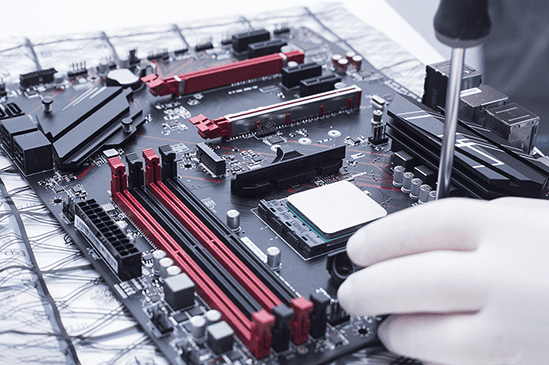
Definition and Classification of Industrial Control PCBs
Industrial Control PCB, fully termed Industrial Control Printed Circuit Board, refers to circuit boards specifically configured or designed for industrial control environments. Unlike PCBs for common consumer electronics, the underlying circuits of Industrial Control PCBs are typically pre-designed and come with abundant input/output interfaces. Users can connect their own components, such as motors, sensors, and other actuators, to these interfaces, thereby relatively conveniently achieving specific control functions.
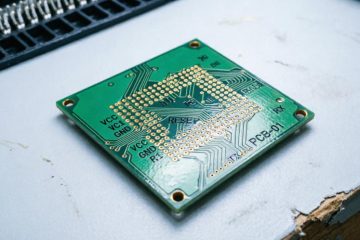
Structurally, industrial control circuit boards generally consist of input/output interfaces, processors, memory, and other auxiliary circuits. The processor executes control algorithms and data processing tasks, while the memory is used for storing programs and data.
From a classification perspective, Industrial Control PCBs can be divided into two main types based on their application flexibility and degree of specialization: dedicated industrial control circuit boards and general-purpose industrial control circuit boards.
- Dedicated Industrial Control PCBs are designed for specific functional requirements, such as temperature control boards, flow control boards, and motion control boards. After purchase, these boards only require connecting corresponding sensors (e.g., thermocouples) to the input ports and actuators (e.g., heating contactors or solid-state relays) to the output ports to accomplish specific control tasks. They are functionally specialized and efficient.
- General-Purpose Industrial Control PCBs typically allow users to perform secondary development and programming, enabling various functions through custom programs. A typical example is the PLC (Programmable Logic Controller), which features functional interfaces like digital inputs, analog inputs, high-speed counter inputs, digital outputs, and some also include communication capabilities. Users can complete various control tasks by writing and compiling programs, making their applications relatively broad.
Table: Main Classifications and Characteristic Comparison of Industrial Control PCBs
| Classification | Main Characteristics | Typical Applications | Advantages |
|---|---|---|---|
| Dedicated Industrial Control PCB | Function-specific, requires no programming, plug-and-play | Temperature control, Flow control, Motion control | High stability, Fast response speed |
| General-Purpose Industrial Control PCB | Allows secondary development, functionally flexible and diverse | PLC control systems, Industrial automation production lines | Strong adaptability, Good scalability |
Additionally, based on physical structure and application requirements, Industrial Control PCBs can also be categorized into Rigid PCBs, Flexible PCBs, and Rigid-Flex PCBs.
- Rigid PCBs are made from solid materials, offering good mechanical strength and stability. They are suitable for applications with high environmental demands, such as industrial equipment and aerospace instruments.
- Flexible PCBs are made from bendable flexible materials, suitable for limited spaces or applications requiring bending/folding, such as mobile devices and wearable devices.
- Rigid-Flex PCBs combine the advantages of both, offering unique benefits in complex industrial environments.
Core Characteristics of Industrial Control PCBs
The key position of Industrial Control PCBs in the industrial control field stems from their unique performance characteristics, which ensure long-term stable operation in complex and harsh industrial environments.
1. Excellent Environmental Adaptability
Industrial environments are often harsher than typical consumer electronics application environments. Industrial Control PCBs must withstand challenges like extreme temperatures, humidity, vibration, and dust.
- Regarding temperature resistance, Industrial Control PCBs typically use high-Tg (Glass Transition Temperature) FR-4 materials, enabling stable operation within a temperature range of -40°C to +85°C or even wider.
- For humid environments, Industrial Control PCBs employ moisture-proof coatings and sealing techniques to effectively prevent moisture ingress and reduce the risk of circuit corrosion.
- Regarding vibration, special optimizations are made in component layout and fixation methods for Industrial Control PCBs, utilizing more robust soldering techniques and support structures to resist the effects of long-term vibration.
2. High Reliability and Stability
In industrial control scenarios, system failures can lead to significant economic losses or even safety incidents. Therefore, Industrial Control PCBs must possess extremely high reliability.
- To this end, Industrial Control PCBs often adopt redundant designs, providing dual or multiple backups for critical circuits, greatly enhancing system fault tolerance.
- In signal transmission, optimized routing strategies and impedance matching designs reduce signal interference and distortion, ensuring the stability of high-speed signal transmission.
- Furthermore, Industrial Control PCBs utilize high-quality surface finish technologies, such as gold plating, ENIG (Electroless Nickel Immersion Gold), etc., to enhance connection reliability and durability.
3. Excellent Electromagnetic Compatibility (EMC)
Industrial environments typically contain numerous sources of electromagnetic interference. Industrial Control PCBs must comply with strict EMC standards (e.g., IEC 61000 series) to ensure stable operation in complex electromagnetic environments.
- To achieve this goal, Industrial Control PCBs employ various shielding measures, such as shield cans and ground plane designs, to effectively reduce external interference and contain internal radiation.
- In power supply design, Industrial Control PCBs integrate filters at the power entry points to suppress noise propagation.
- For sensitive signal lines, techniques like differential pair routing or shielded wires are used to significantly reduce interference effects.
4. Strict Safety Standards
Industrial Control PCBs must adhere to safety standards set by organizations like the International Electrotechnical Commission (IEC) and UL, ensuring electrical safety.
- This includes ensuring sufficient insulation clearance between high-voltage and low-voltage circuits, and using flame-retardant materials meeting V-0 or higher fire rating requirements.
- These safety designs ensure that Industrial Control PCBs minimize risks during abnormal conditions, protecting personnel and equipment safety.
Main Application Fields
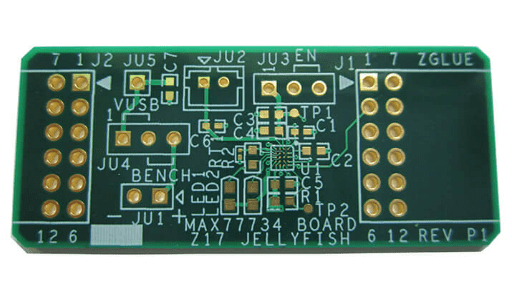
As the core component of industrial automation, Industrial Control PCBs are widely used across various industrial sectors, becoming an indispensable technological foundation for modern industrial production.
- Manufacturing: Industrial Control PCBs are key to realizing automated production lines. They control and monitor various production equipment, such as CNC machine tools, injection molding machines, and stamping presses, enabling automation and intellectualization of production processes. By monitoring equipment status and process parameters in real-time, Industrial Control PCBs enable precise control of production workflows, significantly improving production efficiency and quality consistency. In the automotive manufacturing industry, Industrial Control PCBs are used not only in production line control but also extensively in automotive electronic systems, such as engine control, braking systems, and in-vehicle infotainment systems.
- Energy: The energy sector is another important application area for Industrial Control PCBs. In renewable energy industries like wind and solar power, they are used to control wind turbine yaw systems, solar panel tracking systems, etc., optimizing energy capture efficiency. In power grid monitoring and management systems, Industrial Control PCBs enable real-time monitoring and intelligent dispatch of power transmission and distribution, ensuring stable grid operation. Furthermore, they play important roles in smart meters and energy management equipment.
- Transportation: Industrial Control PCBs are widely used in control systems for vehicles like cars, trains, and airplanes. For instance, in high-speed rail control systems, they monitor various parameters like speed, temperature, and pressure, ensuring operational safety. In avionics equipment, Industrial Control PCBs must meet high-reliability requirements under extreme environments to ensure flight safety.
- Medical Equipment: Medical devices represent another crucial application field for Industrial Control PCBs. In medical imaging systems like CT scanners and MRI machines, they control precise mechanical movements and signal processing, generating high-quality medical images. In medical devices such as patient monitors and infusion pumps, Industrial Control PCBs ensure precise control and reliable operation, directly impacting patient safety.
Additionally, Industrial Control PCBs are extensively used in fields like industrial robotics, automated warehouse systems, and intelligent security systems, covering almost all industrial control scenarios. With the deepening advancement of Industry 4.0 and smart manufacturing, the application fields of Industrial Control PCBs continue to expand and deepen.
Design Essentials and Manufacturing Requirements
The special application scenarios of Industrial Control PCBs dictate that their design and manufacturing processes must adhere to a series of strict standards and specifications to ensure the final product can operate stably and reliably long-term in demanding industrial environments.
1. Design Essentials
The design phase is the primary step in ensuring the reliability of Industrial Control PCBs.
- Material Selection: High-Tg FR-4 substrates or metal core boards are typically chosen to balance cost and heat dissipation needs. As application demands grow more complex, special materials like polyimide are increasingly used for extreme environments.
- Circuit Design: Impedance control is key to ensuring signal integrity, often requiring strict tolerances within ±7%. For high-speed signal lines, differential pair routing and appropriate termination strategies are necessary to reduce signal reflection and crosstalk.
- Thermal Management: Heat dissipation design cannot be overlooked, especially in high-power applications. Thermal via arrays are often added beneath high-power components, and metal core boards (e.g., aluminum) are used when necessary to enhance heat dissipation. For complex systems, additional heatsinks or fans for active cooling might be required.
- Layout Strategy: Analog and digital circuits should be separated and appropriate shielding measures taken to avoid interference. Power traces should be sufficiently wide to carry high currents without overheating. Simultaneously, designs should avoid microvias or extreme line width/spacing, and add test points and diagnostic interfaces to facilitate subsequent maintenance and troubleshooting.
2. Manufacturing Requirements
The manufacturing process of Industrial Control PCBs must comply with a series of industry standards, such as the acceptance conditions for PCB quality in IPC-A-600/610.
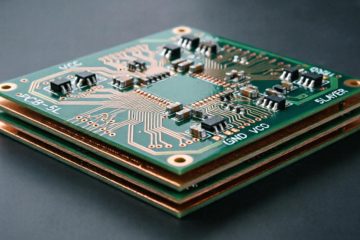
- Multilayer Boards: Multilayer board technology is common for Industrial Control PCBs, often employing 6-12 layers. Reliability is ensured through precise inner layer patterning, lamination processes, drilling, and hole metallization.
- Quality Control: Metallization of vias is crucial to ensure reliable connections between circuit layers.
- Surface Finish: Surface finish technology must be chosen carefully. For example, ENIG (Electroless Nickel Immersion Gold) provides good solderability and oxidation resistance, suitable for high-reliability industrial control products.
- Inspection and Testing: Inspection and testing are the final gateways to ensuring Industrial Control PCB quality. Common methods include Flying Probe Test, AOI (Automated Optical Inspection), and X-ray inspection. X-ray inspection is particularly suitable for detecting hidden solder joint defects like voids or insufficient solder. Additionally, In-Circuit Test (ICT) and Functional Circuit Test (FCT) are conducted to comprehensively verify the PCB’s electrical performance and functional integrity.
Table: Comparison of Main Inspection Methods for Industrial Control PCBs
| Inspection Method | Inspection Principle | Applicable Scenarios | Inspection Capabilities |
|---|---|---|---|
| AOI (Automated Optical Inspection) | Uses cameras to capture images for analysis | Post-soldering surface defect detection | Component missing, misalignment, solder short |
| X-ray Inspection | Utilizes X-ray penetration capability | Hidden solder joints (e.g., BGA, QFP) | Solder voids, insufficient solder, internal defects |
| Flying Probe Test | Uses moving probes for electrical tests | Low-volume, high-mix production | Open circuits, short circuits, abnormal resistance |
| ICT (In-Circuit Test) | Uses bed-of-nails for comprehensive testing | Mass production | Component values, connectivity, basic functions |
Through these stringent design and manufacturing standards, Industrial Control PCBs can meet the demanding requirements for reliability, stability, and durability in industrial environments, providing a solid hardware foundation for industrial automation systems.
Development Trends
Industrial Control PCB technology continues to evolve, with several innovative trends driving development towards higher performance, smaller size, and stronger reliability.
1. High Density and High Performance
As electronic equipment moves towards high-speed and high-frequency directions, Industrial Control PCBs are undergoing significant technological changes.
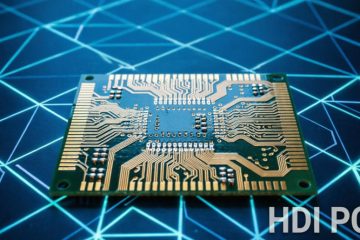
- HDI Technology: High-Density Interconnect (HDI) technology is becoming increasingly prevalent. Utilizing advanced processes like laser drilling of microvias, it enables finer lines and smaller apertures, significantly increasing wiring density. This allows Industrial Control PCBs to implement more complex functions within smaller sizes, meeting the miniaturization needs of industrial equipment.
- High-Frequency Performance: The application and promotion of 5G and the Industrial Internet of Things (IIoT) impose higher requirements on the high-frequency performance of Industrial Control PCBs. High-frequency PCBs require materials with low dielectric loss and dielectric constant, such as PTFE glass cloth, to ensure the integrity of high-speed signal transmission. The development of wireless networks and satellite communication further drives this trend, pushing Industrial Control PCBs towards supporting larger capacity and higher-speed wireless transmission.
2. High Reliability and Integration
The reliability requirements for Industrial Control PCBs are continuously increasing.
- Multilayer Boards: Multilayer board technology is becoming more complex, evolving from traditional 4-6 layers to 12 layers or more, to meet more complex signal isolation and power integrity needs.
- Integration: Integration is another important trend. Through System-in-Package (SiP) and Chip Scale Package (CSP) technologies, multiple functions are integrated into a single PCB, reducing system size and improving signal transmission efficiency.
- Rigid-Flex Boards: The structure of Industrial Control PCBs is also innovating. The application of Rigid-Flex boards is becoming more widespread. This design combines the flexibility of flexible circuits with the stability of rigid boards, making it particularly suitable for industrial applications with space constraints or moving parts.
3. New Materials and Processes
The introduction of new materials is a significant driver for the development of Industrial Control PCBs.
- Metal Core PCBs: Metal core boards (e.g., aluminum substrates) are increasingly used in high-power industrial control equipment due to their excellent thermal conductivity, effectively solving heat dissipation problems.
- Nanomaterials & Ceramic Fillers: The application of nanomaterials and new ceramic fillers improves the thermal conductivity and mechanical strength of PCBs, adapting them to harsher industrial environments.
- Manufacturing Processes: Manufacturing processes are also continuously innovating, evolving from traditional subtractive methods to semi-additive and modified semi-additive methods to meet the needs of finer line processing.
- Surface Finishes: Surface coating technologies are also advancing. For example, ENIG is seeing increasing application due to its uniform plating and good coplanarity.
Intelligent Transformation and New Challenges
With the deepening advancement of Industry 4.0 and smart manufacturing, Industrial Control PCBs are undergoing a transformation from pure control functions towards intelligence and connectivity, facing new opportunities and challenges.
1. Intelligent Transformation of Industrial Control PCBs
Traditional Industrial Control PCBs primarily implement signal transmission and control functions, whereas those in smart factories are incorporating more intelligent elements.
- Integrated Sensors & Self-Diagnostics: Integrated sensors and self-diagnostic functions are becoming new features of high-end Industrial Control PCBs. They can monitor board temperature, vibration, and load status in real-time, providing early warnings for potential failures and enabling predictive maintenance.
- IIoT Integration: The development of the Industrial Internet of Things (IIoT) promotes the deep integration of Industrial Control PCBs with communication technologies. Modern Industrial Control PCBs increasingly integrate wireless communication modules, such as 5G, Wi-Fi 6, and Bluetooth, enabling seamless device connectivity and data sharing. This transforms the Industrial Control PCB from a passive circuit board executing controls into an intelligent node within the IIoT, participating in big data collection, analysis, and optimization decisions.
- Edge Computing: The rise of edge computing imposes new requirements on Industrial Control PCBs. To reduce cloud processing latency and improve system response speed, Industrial Control PCBs need to integrate more powerful edge computing capabilities for local data pre-processing and analysis. This drives the design of Industrial Control PCBs to incorporate more powerful processors and larger capacity memory to meet complex computational demands.
2. New Challenges and Coping Strategies
The intelligent transformation also brings new challenges.
- Information Security: Information security has become a new consideration in Industrial Control PCB design. As industrial control systems become more networked, preventing unauthorized access and data leakage becomes crucial. Industrial Control PCBs need enhanced security features at the hardware level, such as integrated hardware encryption modules and secure boot mechanisms.
- Power Consumption & Thermal Balance: Balancing power consumption and heat dissipation is increasingly difficult. As functional integration increases, the power density of Industrial Control PCBs rises, making thermal issues more prominent. Innovative heat dissipation solutions, such as embedded heat pipes and liquid cooling technology, are becoming R&D priorities.
- Supply Chain Resilience: Building supply chain resilience is increasingly important. Global pandemic and geopolitical factors have led to instability in electronic component supply, affecting Industrial Control PCB production. Manufacturers are improving risk resistance through diversified supply chains, backup designs for key components, and standardized interface designs.
Facing these challenges, the Industrial Control PCB industry needs continuous innovation, strengthened interdisciplinary collaboration, and the cultivation of interdisciplinary talent to adapt to the diverse needs of the new era of industrial automation
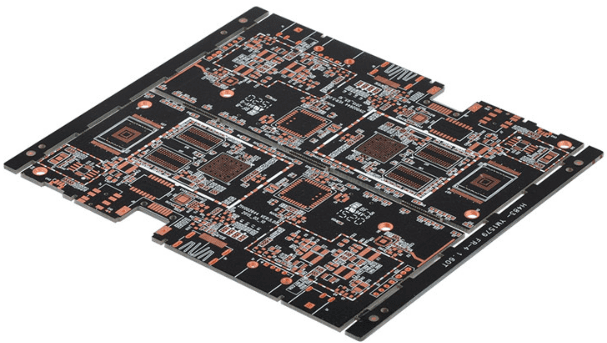
Summary
As the core component of industrial automation, the technical level and product quality of Industrial Control PCBs directly impact the performance and reliability of the entire industrial control system.
- In terms of definition, Industrial Control PCBs are circuit boards specifically configured or designed for industrial control environments, categorizable into dedicated and general-purpose types.
- In terms of characteristics, they possess outstanding features such as broad environmental adaptability, high reliability, excellent electromagnetic compatibility, and adherence to strict safety standards.
These characteristics enable Industrial Control PCBs to meet the demanding application needs across numerous fields including manufacturing, energy, transportation, and healthcare.
The design and manufacturing of Industrial Control PCBs is a systematic engineering project involving multiple stages such as material selection, circuit design, thermal management, precision manufacturing, and stringent testing. It must adhere to industry standards like IPC to ensure product quality.
With technological development, Industrial Control PCBs are rapidly evolving towards higher density, higher performance, and higher reliability. HDI technology, application of new materials, and integrated design have become important development trends.
Particularly important is that, under the wave of Industry 4.0 and smart manufacturing, Industrial Control PCBs are undergoing a profound transformation from traditional control functions towards intelligence and connectivity. New functions like integrated sensing, edge computing, and information security present both new opportunities and challenges for Industrial Control PCBs.
Future Industrial Control PCBs will become more intelligent and flexible, deeply integrated with new technologies like Artificial Intelligence and Digital Twins, driving industrial automation to higher levels.
Although inconspicuous, as the cornerstone of industrial innovation, the technological progress of Industrial Control PCBs will continuously empower the transformation and upgrading of manufacturing, injecting new momentum into global industrial development. With technological innovation and application deepening, Industrial Control PCBs are destined to play an even more important role in future industrial fields.
0 Comments