



Introduction
PCBA cleanliness is a critical quality indicator in modern electronics manufacturing, directly impacting the long-term reliability and performance stability of electronic products. During the assembly process, residues from solder paste, flux, and other process materials remain on the PCB surface. Under specific environmental conditions, these contaminants can lead to serious failures such as corrosion, electrochemical migration, and even short circuits. As electronics trend toward higher density and miniaturization, with component pitch continuously decreasing, cleanliness control has become essential for ensuring product reliability.
Statistical data indicates that approximately 4% of electronic product failures are attributed to short circuits, open circuits, and other late-life failures caused by corrosion and electrochemical migration, making it a primary factor affecting product reliability . Particularly in high-reliability applications such as aerospace, automotive electronics, and medical equipment, even trace amounts of contamination can lead to catastrophic consequences. International standards like IPC-J-STD-001 specify clear requirements for PCBA cleanliness . Effective cleaning processes not only enhance product reliability but also provide an ideal surface condition for subsequent conformal coating processes.
1. What is Post-PCBA Cleaning?
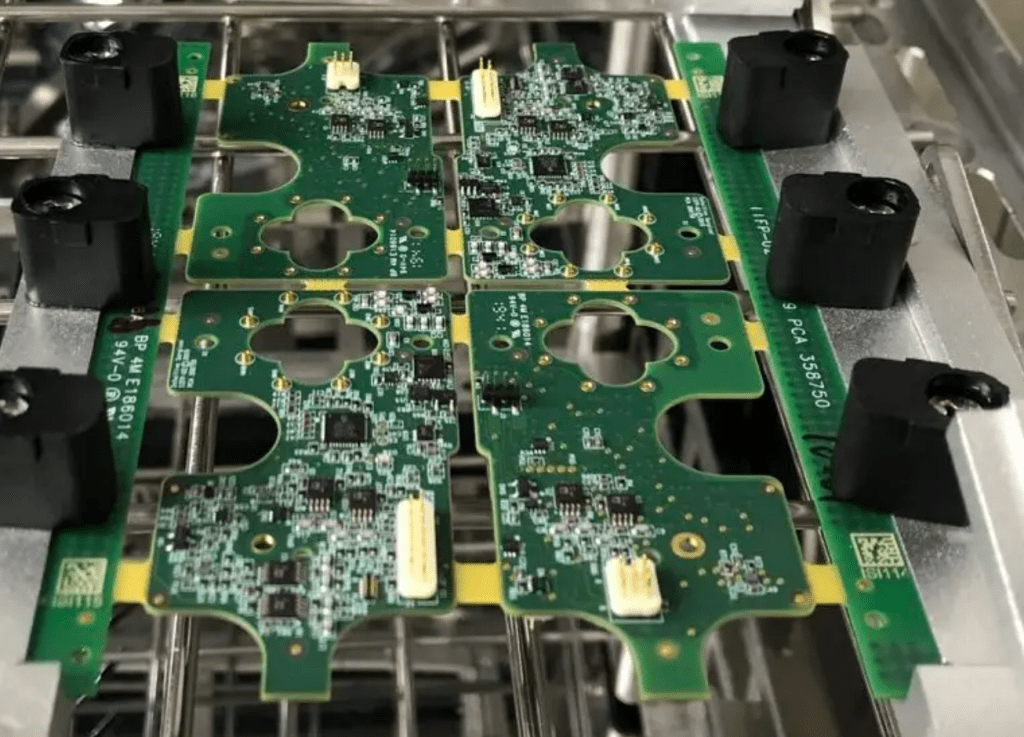
Post-PCBA cleaning refers to the planned cleaning process performed after soldering in electronic assembly to remove residual flux, solder paste residues, particulate contaminants, and other process-related pollutants from the surface of printed circuit board assemblies. This process far exceeds simple “washing” conceptually, involving interdisciplinary knowledge of chemistry, fluid dynamics, and material compatibility. In modern electronics manufacturing, the cleaning process is typically performed after soldering and before electrical testing, aiming to eliminate potential impacts of contaminants on circuit performance.
From a technical perspective, the scope of post-PCBA cleaning includes not only the removal of visible contaminants but also strict control of ionic residue levels. According to IPC standards, ionic contamination must be below 1.56μg/cm² NaCl equivalent, a critical threshold determined through extensive reliability validation . The cleaning process must fully consider the bonding methods between contaminants and the PCB surface—physical bonding (such as rosin and resin residues) and chemical bonding (such as salts formed by activators and metals)—selecting appropriate cleaning agents and process parameters based on the nature of different pollutants.
It is noteworthy that even when users employ “no-clean” fluxes, post-cleaning may still be necessary in certain applications. The no-clean concept originates from the relatively stable chemical properties of flux residues that don’t immediately cause circuit failure. However, over time, under humid conditions or electrical bias, these residues can still absorb moisture and form ionic channels, leading to decreased insulation resistance . Therefore, for high-reliability products, electronics operating in harsh environments (such as automotive electronics and outdoor communication equipment), and PCBAs requiring conformal coating, appropriate post-cleaning is recommended even when using no-clean processes.
2. Common PCBA Contamination Sources and Risks
Contamination sources during PCBA assembly are diverse and complex, primarily categorized into flux residues, ionic contamination, particulate contamination, and human contamination. Flux residue is the primary contamination source, undergoing chemical changes during the high-temperature soldering process to form complex polymers and metal salts. Based on chemical properties, these residues can be classified as polar contaminants (ionic) and non-polar contaminants (non-ionic). Polar contaminants include halide ions and acid radicals, while non-polar contaminants mainly include rosin, resins, and greases.
Ionic contamination poses the most serious threat to PCBA reliability. Typical ionic contaminants include activators from flux, plating salts, and pollutants introduced during handling. When environmental humidity exceeds 60%, these ionic contaminants undergo electrochemical migration under electric fields, forming dendrite growth that leads to circuit shorts . More insidiously, ionic contamination can trigger cyclic corrosion processes. Taking halide ions as an example, they react with lead in solder to form lead chloride, which transforms into lead carbonate in moist CO₂ environments, simultaneously releasing chloride ions to continue eroding the solder. This process cycles continuously until the solder is completely corroded.
Table: Main PCBA Contamination Types and Potential Risks
| Contamination Type | Main Sources | Potential Risks | Detection Methods |
|---|---|---|---|
| Ionic Contamination | Flux activators, plating salts, sweat stains | Electrochemical migration, dendrite growth, corrosion | Ion chromatography, solvent extraction |
| Non-polar Contamination | Rosin, grease, resin residues | Insulating film formation, poor contact | Visual inspection, FT-IR analysis |
| Particulate Contamination | Dust, metal particles, fiber filaments | Short circuits, physical interference | Microscope inspection, particle test |
| White Residue | Polymerized rosin, metal salts | Cosmetic defects, potential corrosion | UV light inspection, chemical analysis |
White residues are complex contaminants commonly encountered in post-PCBA cleaning processes, with various formation mechanisms including decomposition products of flux activators, polymerization products of PCB laminate, and by-products of soldering reactions. These white residues often tenaciously adhere to the PCB surface, making them difficult to remove with conventional cleaning methods and requiring specialized cleaning agents and process parameters. It is important to note that white residues not only affect appearance but may also encapsulate active ions, gradually releasing them under temperature and humidity variations, causing long-term reliability issues .
Human contamination should not be overlooked either. Operators’ sweat, skin oils, cosmetics, and other substances can introduce contaminants to the PCBA surface. Sweat contains sodium chloride, urea, and other components that form invisible residues upon drying, significantly reducing surface insulation resistance. Therefore, high-standard electronic assembly workshops require operators to wear gloves and replace them regularly to avoid direct contact with PCBA surfaces .
3. PCBA Cleaning Methods Classification and Selection
PCBA cleaning methods can be categorized into water-based cleaning, semi-aqueous cleaning, solvent cleaning, and special cleaning based on the cleaning medium and process principles. Water-based cleaning uses water as the primary solvent with additives such as surfactants and corrosion inhibitors to remove contaminants through saponification and emulsification. This cleaning method is environmentally safe but requires higher equipment requirements and precise control of water temperature, pressure, water quality parameters. The resistivity of deionized water needs to be greater than 6MΩ·cm, and the cleaning temperature is typically maintained between 50-65℃ to ensure optimal cleaning effectiveness and material compatibility .
Solvent cleaning technology utilizes the dissolving power of organic solvents to remove contaminants. Traditionally, chlorofluorocarbons (CFC-113) were widely used due to their excellent performance but are now restricted by the Montreal Protocol due to ozone layer depletion. Modern solvent cleaning often employs environmentally friendly solvents like HFE and HFC, achieving efficient contaminant removal through vapor phase cleaning technology. Solvent cleaning is particularly suitable for removing rosin-based flux residues but is less effective than water-based cleaning for certain ionic contaminants .
Table: Comparison of Different PCBA Cleaning Methods
| Cleaning Method | Suitable Contaminants | Process Characteristics | Equipment Requirements | Environmental Friendliness |
|---|---|---|---|---|
| Water-based Cleaning | Water-soluble flux, ionic contamination | Requires multiple rinses, drying | Deionized water system, wastewater treatment | Excellent |
| Semi-aqueous Cleaning | Multiple contamination types | Solvent first, then water rinse | Solvent recovery device | Good |
| Solvent Cleaning | Rosin, resin residues | Fast evaporation, no drying needed | Closed system, explosion-proof requirements | Medium |
| Supercritical Cleaning | Precision devices, particle contamination | No surface tension | High-pressure vessel | Excellent |
The selection of cleaning methods requires comprehensive consideration of multiple factors: contaminant properties, assembly complexity, production volume, environmental requirements, and cost considerations. For PCBAs using water-soluble fluxes, water-based cleaning is the natural choice. For densely packed assemblies with hidden areas, the penetration ability and surface tension characteristics of the cleaning agent must be considered. For components with bottom terminations (such as BGA, QFN), special attention should be paid to the fluidity and displacement capability of the cleaning agent in narrow gaps, where solvent cleaning with low surface tension may have advantages .
Control of process parameters is crucial for cleaning effectiveness. Cleaning time should be adjusted according to the degree of contamination: more residues require longer cleaning times, but excessive duration may damage components. Cleaning agent temperature directly affects chemical reaction rates and dissolution capacity. For every 10°C temperature increase, the reaction rate approximately doubles, but excessively high temperatures may damage components or cause PCB delamination. The addition of mechanical energy (such as ultrasonic, spray pressure) can significantly improve cleaning efficiency, but ultrasonic power must be carefully controlled for delicate components (such as crystals, filters) to avoid resonance damage .
4. Using Automated Liquid Cleaning Machines to Improve Cleanliness
Automated liquid cleaning machines play an irreplaceable role in improving PCBA cleanliness, especially suitable for high-volume, high-reliability production scenarios. Compared to manual cleaning, automated cleaning equipment achieves standardization and repeatability of the cleaning process through precisely controlled spray pressure, temperature profiles, and mechanical movement. Typical inline cleaning machines consist of four main sections: pre-treatment, cleaning, rinsing, and drying, with PCBs sequentially passing through each process area via a conveyor chain to complete the entire process from contamination to cleanliness .
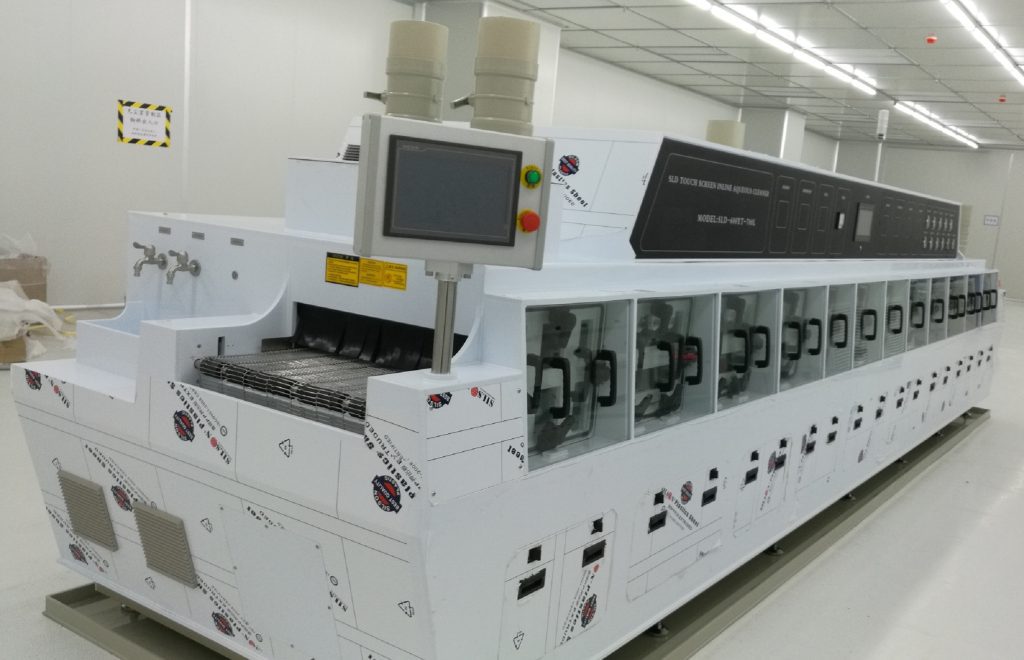
The core technical parameters of automated cleaning machines include spray pressure, liquid temperature, conveyor speed, and filtration precision. Spray pressure is typically controlled within the 0.8-2.5bar range. Pressure that is too low may result in insufficient cleaning force, while pressure that is too high may damage sensitive components. Cleaning temperature is determined by the cleaning agent type, with water-based cleaners generally set at 55-65℃, while solvent cleaning occurs near room temperature. Conveyor chain speed must match cleaning requirements, typically adjustable within 50-150cm/min, ensuring sufficient residence time in each zone .
The filtration system is key to maintaining consistent cleaning results. Modern automated cleaning machines are equipped with multi-stage filtration devices, including coarse filtration (removing >5μm particles), fine filtration (removing >1μm particles), and ultra-filtration (removing ionic contaminants). Some high-demand cleaning systems also feature oil-water separation devices and resin adsorption towers to maintain continuous cleanliness of the cleaning agent. The resistivity of deionized water must be monitored in real-time, ensuring it remains above 6MΩ·cm, and replaced immediately when falling below the threshold .
Process optimization is the core value of automated cleaning. Taking an actual cleaning process applied by an enterprise as an example, a four-step process of “hot water pre-wash – alkaline cleaning – deionized water rinse – hot air drying” is adopted, reducing ionic contamination from >5.0μg/cm² before cleaning to <0.8μg/cm² after cleaning, far below the IPC standard limit of 1.56μg/cm² . In this process, the alkaline cleaning stage uses a specialized cleaner with a pH of 9.5-10.5 to decompose organic contaminants through saponification reactions while avoiding erosion of sensitive components such as aluminum electrolytic capacitors and labels.
Automated cleaning equipment also integrates a series of quality control functions, such as real-time conductivity monitoring, automatic liquid level compensation, and fault self-diagnosis systems. These intelligent features enable operators to promptly understand equipment status and receive alarms when parameters deviate from set ranges. Data logging functionality can also store cleaning parameters for each batch of PCBAs, providing evidence for quality traceability, which is particularly important for products requiring compliance with quality systems such as ISO13485 and IATF16949, like automotive electronics and medical devices .
5. PCBA Cleanliness Standards and Testing Methods
The assessment of PCBA cleanliness relies on a series of international standards and testing methods to ensure accuracy and comparability of evaluation results. Standards published by IPC (Association Connecting Electronics Industries) are globally accepted technical specifications in the electronics manufacturing industry, with IPC-J-STD-001 “Requirements for Soldered Electrical and Electronic Assemblies” and IPC-A-610 “Acceptability of Electronic Assemblies” being two core standards . These standards classify electronic products into three levels based on their end-use: Level 1 (General Electronics), Level 2 (Dedicated Service Electronics), and Level 3 (High-Reliability Electronics), with different cleanliness requirements corresponding to each level.
Cleanliness testing methods mainly include ionic contamination testing, surface insulation resistance (SIR) testing, visual inspection, and solvent extraction. Ionic contamination testing uses a mixture of 75±2% isopropyl alcohol and 25% deionized water as the extraction solution, calculating the ionic contamination equivalent relative to NaCl by measuring the change in solution conductivity before and after cleaning . According to IPC standards, ionic contamination should be below 1.56μg NaCl equivalent/cm², while high-reliability products require less than 1.0μg/cm².
Surface Insulation Resistance (SIR) testing is an important method for evaluating the long-term reliability of PCBA, measuring insulation resistance changes under specific temperature and humidity conditions (e.g., 85℃/85%RH). SIR test samples typically require continuous testing for 168-1000 hours to monitor resistance value trends and evaluate the ionization and migration potential of contaminants in humid environments. Qualified SIR results should show resistance values consistently above 10^8Ω with no continuous downward trend .
Table: Comparison of Main PCBA Cleanliness Testing Methods
| Testing Method | Testing Object | Technical Characteristics | Applicable Standards | Detection Limit |
|---|---|---|---|---|
| Ionic Contamination Test | Polar contaminants | Fast, quantitative | IPC-TM-650 2.3.28 | 0.1μg NaCl/cm² |
| SIR Test | Electrochemical migration tendency | Accelerated life test | IPC-TM-650 2.6.3.7 | 10^8Ω |
| Ion Chromatography | Specific ion types | Qualitative and quantitative analysis | IPC-TM-650 2.3.28 | ppb level |
| UV-Vis Spectrophotometry | Rosin residues | Specific detection | IPC-TM-650 2.3.27 | 0.01μg/cm² |
It is important to note that IPC-J-STD-001H has eliminated the unified 1.56μg/cm² limit requirement, instead emphasizing customized cleanliness standards based on the product’s actual application environment . This change reflects the increasing complexity of modern electronic products, recognizing that there is no “universal” cleanliness threshold. Manufacturers now need to determine appropriate cleanliness control thresholds based on product type, operating environment, and reliability requirements.
Visual inspection, as the most basic cleanliness assessment method, still holds significant value. Inspection should be performed under uniform lighting, assisted by a 2-10x magnifier if necessary, focusing on areas prone to residue accumulation such as around solder joints, connector pins, and under fine-pitch components. Acceptable PCBA surfaces should be free of visible residues, white corrosion products, and abnormal discoloration. For high-end applications such as military and medical fields, ultraviolet light inspection can be used, detecting barely visible residue films through the fluorescence characteristics of rosin under UV light .
6. The Importance of PCBA Cleaning
PCBA cleanliness decisively influences the long-term reliability of electronic products, with its importance reflected in multiple dimensions including electrical performance stability, long-term failure rate control, and product lifespan assurance. Under humid conditions or electrical bias, contaminants act as catalysts for electrochemical reactions, triggering various failure modes. Taking dendrite growth as an example, when ionic contaminants exist between adjacent conductors, metal ions migrate toward the opposite electrode under electric fields, forming conductive filaments that ultimately lead to short-circuit failures .
Corrosion is another serious problem caused by contaminants, particularly in environments containing sulfur and chlorine, where copper traces and solder joints undergo progressive corrosion, leading to increased resistance or even open-circuit failures. Research shows that even PCBAs complying with IPC ionic contamination standards may still experience corrosion in harsh environments due to the presence of specific ions (such as chloride and bromide ions) . This is why high-reliability applications require stricter cleanliness standards and separate control of specific ion types.
Cleanliness is equally crucial for subsequent process quality, particularly conformal coating processes. Studies show that appropriate cleaning can increase coating adhesion by 50% . Contaminants prevent direct contact between the conformal coating and the PCB surface, leading to poor coating adhesion, cracking, or delamination, resulting in loss of protection. Contaminants such as rosin residues can also migrate under the conformal coating, gradually reducing insulation performance.
For high-frequency and high-speed circuits, the impact of cleanliness on signal integrity is particularly significant. Contaminants can alter the characteristic impedance of transmission lines, increasing signal loss and jitter. In microwave and millimeter-wave applications, even nanometer-thick contaminant films can significantly increase insertion loss, affecting system performance. Therefore, antenna modules and power amplifiers in 5G communication equipment have extremely strict cleanliness requirements, typically requiring ionic contamination to be controlled below 0.5μg/cm² .
From an economic perspective, while appropriate cleaning processes increase initial manufacturing costs, they significantly reduce repair rates and failure rates over the product’s life cycle. Research in the automotive electronics field shows that the return on investment for cleanliness can reach 1:5, meaning every dollar invested in improving cleanliness saves five dollars in after-sales service and warranty costs . This is why mainstream automotive electronics manufacturers have纷纷 established corporate cleanliness specifications stricter than industry standards.
7. How PCB Cleaning Prevents Defects
Appropriate cleaning processes can effectively prevent various PCBA defects and improve product reliability. The mechanism of cleaning for defect prevention is mainly reflected in eliminating electrochemical corrosion paths, maintaining surface insulation resistance, and ensuring solder joint integrity. When ionic contaminants are present on the PCBA surface, they electrolyze to form ionic solutions in humid environments, generating electrochemical migration under electric fields, forming dendrites or tin whiskers, leading to insulation failure or even short circuits. By removing these ionic contaminants through cleaning, this reaction path can be fundamentally interrupted .
The cleaning process is crucial for preventing corrosion. Taking common halide ion corrosion as an example, chloride ions react with lead in solder to form lead chloride, which then reacts with water and carbon dioxide in the air to form lead carbonate while releasing chloride ions, forming a cyclic corrosion process. Appropriate cleaning processes can completely remove chloride ions, interrupting this cyclic corrosion chain and preventing solder joint degradation . Cleaning is equally important for lead-free solder, as tin-based solder can undergo similar corrosion reactions in the presence of silver and copper ions.
Table: Main Defect Types Prevented by PCBA Cleaning Processes
| Defect Type | Formation Mechanism | Cleaning Protection Role | Applicable Cleaning Methods |
|---|---|---|---|
| Dendrite Growth | Ion migration, electrochemical reduction | Remove ionic contaminants | Water-based cleaning, ion exchange |
| Corrosion | Chemical/electrochemical reaction | Interrupt corrosion chain | Water-based cleaning, neutralization |
| Poor Contact | Resin residues, oxide films | Remove insulating films | Solvent cleaning, mechanical scrubbing |
| Coating Failure | Contaminants hinder adhesion | Improve surface energy | Proper cleaning, surface activation |
For high-density interconnect (HDI) and fine-pitch components, cleaning processes prevent bridging and short circuits between solder joints. In modern electronic assembly, component pitch has shrunk to 0.3mm and below, even smaller, where flux residues may form conductive channels in these tiny gaps. By optimizing cleaning processes, especially improving the penetrability and fluidity of cleaning agents, these potential short-circuit sources can be effectively cleared .
Cleanliness also affects the accessibility and accuracy of test points. During in-circuit testing (ICT), contaminants can form insulating or conductive films, leading to misjudgment or missed detection. Rosin residues hinder good contact between test probes and test points, increasing contact resistance and distorting measurements. Appropriate cleaning eliminates these interferences, improving test coverage and fault diagnosis accuracy .
To ensure cleaning effectiveness achieves defect prevention goals, a comprehensive quality control system needs to be established. This includes regular monitoring of cleaning agent concentration, purity, and activity, controlling key process parameters (temperature, pressure, time), and systematic cleanliness verification. For high-reliability products, it is recommended to perform ionic contamination testing at least once per shift and conduct SIR testing monthly to verify process stability. When introducing new components, solder paste, or flux, the effectiveness of the cleaning process needs to be revalidated .
Conclusion
PCBA cleanliness is a core link in the quality control of electronic manufacturing, directly affecting the long-term reliability and performance stability of products. As electronic equipment develops towards higher frequency, higher speed, and higher density, the requirements for cleanliness are becoming increasingly stringent. Modern cleaning technology has evolved from simple contaminant removal to complex process control systems involving comprehensive application of multidisciplinary knowledge such as chemistry, materials, and fluid dynamics.
Effective cleanliness control needs to be systematically implemented from four dimensions: material selection, process design, process monitoring, and result verification. Manufacturers should establish reasonable cleanliness standards based on product application fields and reliability requirements, and select appropriate cleaning processes and equipment. Meanwhile, cleanliness control should not be regarded as an independent link but should be considered as part of the entire manufacturing ecosystem, including synergistic optimization with soldering processes, inspection methods, and coating technologies.
In the future, with the popularization of 5G communication, artificial intelligence, and Internet of Things technologies, electronic components will face more complex working environments and higher reliability requirements. PCBA cleanliness technology will continue to develop, with new cleaning agents, more precise cleaning equipment, and more efficient cleaning processes continuously emerging. Only by adhering to a scientific attitude and systematic methods can breakthroughs in cleanliness control be achieved, providing a solid guarantee for the high reliability of electronic products.
1 Comment
PCB Cleaning Process: Surface Preparation, Residue and Quality Checks - thindry pcb manufacturer · 08/28/2026 at 11:57
[…] Do not use a PCBA flux-removal recipe as a universal bare-copper preparation step, or treat a bare-board rinse specification as proof that a populated assembly is clean. For the assembly-specific acceptance side, review PCBA cleanliness and defect prevention. […]