




Introduction
Whether you’re repairing an air conditioner, connecting a new LED light, or working on electrical wiring, you are likely using resistors. Resistors can be found in almost every electrical circuit, though they are often integrated directly onto other components. So, what exactly is the role of these hidden resistors? Why are they so crucial for the circuits you use daily?
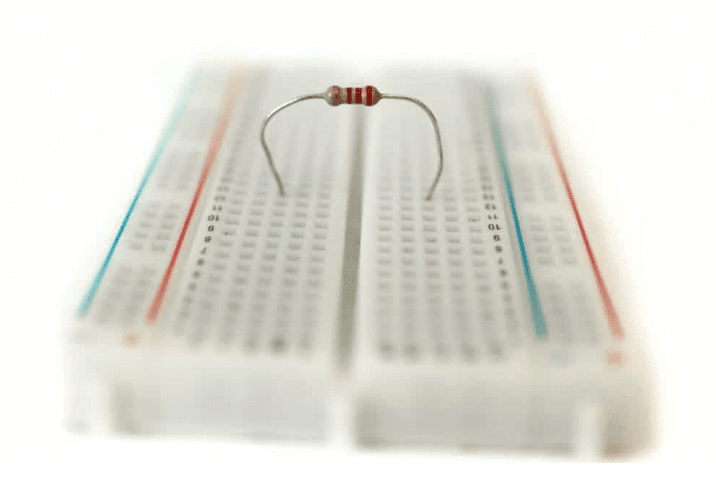
What is a Resistor ?
A resistor, commonly referred to simply as “resistance,” is one of the most fundamental and widely used electronic components. Its primary physical characteristic is to impede the flow of electric current.
You can visualize it as a “constriction” in a water pipe:
- Water flow is analogous to electric current.
- Water pressure is analogous to voltage.
- A narrow section in the pipe that restricts water flow is analogous to a resistor.
What Does a Resistor Do?
Resistors perform various functions within a circuit, contributing to its overall operation and safety. Here’s a detailed look at the roles of resistors in a circuit:
Current Limiting
Resistors restrict the amount of current flowing through a circuit, protecting sensitive components from damage due to excessive current. For instance, resistors are commonly connected in series with LEDs to prevent them from burning out. This is vital in applications requiring precise current control to ensure proper functionality and prevent damage to fragile components.
Voltage Division
Resistors can be used to divide voltage, creating different voltage levels within a circuit. This is particularly useful in applications like sensor circuits, where a specific voltage range is necessary for correct operation. A voltage divider essentially splits the voltage between two or more resistors, providing a lower output voltage. This technique is widely used for signal conditioning and level shifting in analog circuits.
Biasing Transistors
Resistors play a key role in biasing transistors, ensuring they operate within the desired amplification or switching region. Proper biasing stabilizes the transistor’s operating point, preventing distortion or instability in amplifier circuits. This guarantees that the transistor functions efficiently and reliably, delivering the required amplification and switching characteristics.
Signal Processing
Resistors are also used in signal processing circuits to filter or shape signals. In audio equipment and communication systems, resistors help shape and condition signals, enhancing clarity and performance. For example, resistors can be used in filter circuits to attenuate specific frequencies or in amplifier circuits to adjust gain.
Power Dissipation
In high-current applications, resistors dissipate excess power in the form of heat. This is common in power supplies, where resistors help regulate voltage and prevent other components from overheating. A resistor’s power rating determines the amount of power it can safely dissipate.
Signal Conditioning
Resistors are employed in signal conditioning circuits to adjust signal amplitude or impedance. For instance, a resistor can match a sensor’s output impedance to the input impedance of a measuring instrument, ensuring accurate readings. This is crucial in applications where signal integrity and measurement accuracy are paramount.
Materials Used in Resistors
- Carbon Resistors: Typically used in low-power circuits.
- Film Resistors: Offer better accuracy and stability.
- Wirewound Resistors: Capable of handling high power, often used in industrial applications.
Resistors are versatile and play a critical role in countless electrical devices, from simple household electronics to complex industrial systems.
Types of Resistors
Understanding the different types of resistors is essential for selecting the right component based on specific circuit requirements. Here are the different types of electronic resistors you can choose from:
Fixed Resistors
This type of resistor has a predetermined, unchangeable resistance value. They are the most common type and are widely used in various circuits for tasks such as limiting current, dividing voltage, and setting transistor bias points. They are available in various sizes, power ratings, and tolerance levels to suit different applications.

Variable Resistors
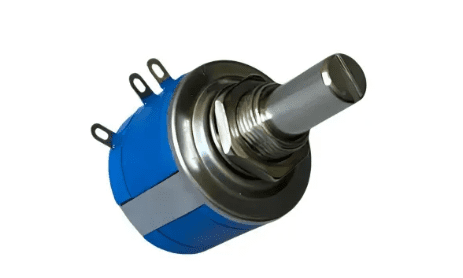
Variable resistors, also known as potentiometers or rheostats, allow for manual adjustment of their resistance value. This type is commonly used in applications requiring dynamic resistance control, such as volume controls, dimmer switches, and sensor calibration. For example, a potentiometer is a three-terminal variable resistor where the resistance between two terminals can be adjusted by rotating a knob or sliding a lever.
Specialty Resistors
Specialty resistors are designed for specific applications or to exhibit unique characteristics in response to environmental changes. Some common types of specialty resistors include:
- Thermistors: These resistors change their resistance with temperature variations, making them suitable for temperature sensing and control applications, such as thermostats and temperature monitoring systems.
- Light-Dependent Resistors (LDRs): LDRs change their resistance based on the intensity of light falling on them, making them ideal for light-sensing applications like automatic night lights and camera light meters.
- Fusible Resistors: These components act as both a resistor and a fuse, protecting circuits from overcurrent conditions by breaking the circuit when the current exceeds a certain threshold. They are often used in power supplies and other high-current applications.
How to Choose the Right Resistor for Your Circuit
Selecting the appropriate resistor is crucial for the proper functioning and safety of your circuit. Here are the key factors to consider:
Resistance Value (Ohms, Ω)
The resistance value is the primary factor, as it determines the resistor’s opposition to current flow in the circuit. Use Ohm’s Law and circuit analysis to calculate the required resistance value for your specific application. For example, if you need to limit the current through an LED to 20 mA with a 5V supply voltage, you would require a 250Ω resistor.
Power Rating (Watts, W)
Choose a resistor with a power rating sufficient to safely handle the power dissipated in the circuit. You can calculate the power dissipation using the formula P = I² × R, where P is power, I is current, and R is resistance. It is also advisable to select a resistor with a power rating higher than the calculated dissipation to ensure safe operation.
Tolerance (% Error)
Tolerance indicates the allowable variation from the stated resistance value. For applications requiring higher precision, such as measurement or calibration circuits, resistors with lower tolerance (e.g., 1% or 0.1%) are recommended. For general-purpose applications, a tolerance of 5% or 10% is usually sufficient.
Temperature Coefficient (ppm/°C)
If the resistor will be exposed to significant temperature fluctuations, consider its temperature coefficient. For applications where temperature stability is critical, such as in precision instruments or temperature-sensitive circuits, select resistors with a low temperature coefficient.
Type and Material
Select the appropriate resistor type (Fixed, Variable, or Specialty) based on your circuit’s needs. The material should also be considered based on factors like cost, performance, and environmental conditions.
For instance, if you need a resistor for high-temperature applications, choose a metal film or wirewound resistor. Conversely, if cost is a primary concern and the application is undemanding, carbon film resistors may be a suitable choice.
Physical Size
Select a resistor whose physical size is appropriate for your circuit board and application. Smaller surface-mount resistors are typically used in compact electronics, while larger through-hole resistors are used for higher-power applications.
Summary and Practical Applications
In summary, resistors act as the “traffic police” of the electronic world, ensuring that other components within a circuit operate under safe and stable conditions by limiting current, dividing voltage, and generating heat.
Real-World Examples:
- Desk Lamp Dimmer: The dimmer knob is a potentiometer (variable resistor) that changes the resistance to regulate the current flowing to the bulb, thereby controlling its brightness.
- Smartphone Volume Buttons: Pressing the volume buttons essentially changes a resistor network, which adjusts the strength of the audio signal.
- Phone Charger: Resistors inside the charger are used for current limiting and voltage division to protect your phone’s battery.


0 Comments