




Introduction
Light is one of the fundamental needs of human life, and our world is filled with a vast array of light sources, ranging from the soft glow of a bedside lamp to the intense illumination of a stadium. The intensity of light varies depending on its type, power consumption, and manufacturing process. This article will focus on the lumen, the unit of measurement for luminous intensity, aiming to provide a professional explanation to help you thoroughly understand this concept.
The Cognitive Shift from Watts to Lumens
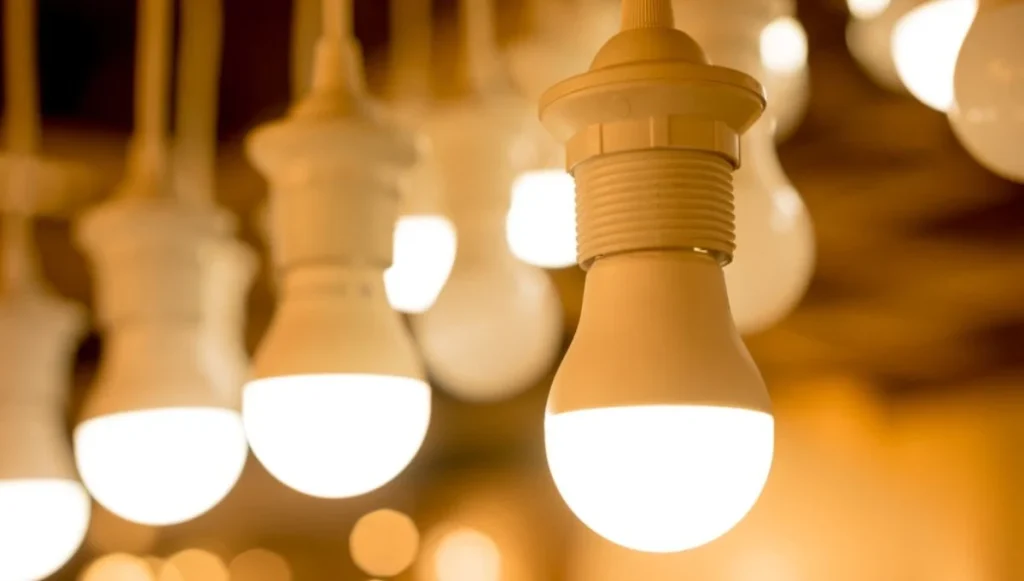
In traditional understanding, a bulb’s brightness was directly correlated with its wattage, but this notion is now obsolete. Breakthroughs in fluorescent and LED technologies have enabled modern lighting, like flashlights, to produce significantly more light with lower power consumption. The current standard for measuring brightness has shifted to lumens – a higher value indicates greater light output intensity and longer beam distance.
Lumen-Watt Conversion System
Conversion Formula:
Lumens = Watts × Luminous Efficacy or Watts = Lumens ÷ Luminous Efficacy
(Luminous efficacy depends on the light source’s manufacturing technology)
Conversion Examples:
- A 1500-lumen incandescent bulb (15 lm/W efficacy): 1500 ÷ 15 = 100 watts
- A 1000-lumen CFL (50 lm/W efficacy): 1000 ÷ 50 = 20 watts
What is a Lumen?
A lumen measures the total luminous flux emitted by a bulb. Compared to watts (which measure energy consumption), lumens more accurately represent actual brightness. A higher lumen value indicates a brighter light emitted from the bulb. Professionally understanding “lumens” hinges on grasping its core meaning: it measures the total quantity of light emitted by a source – essentially, the “flow” of light perceivable by the human eye.
The table below helps summarize key points and distinguishes it from another common concept, “lux.”
| Concept Name | Physical Meaning | Unit | Metaphor | Key Point |
|---|---|---|---|---|
| Lumen (lm) | Luminous Flux: Total light radiated by a source per unit time in all directions. | Lumen (lm) | Water flow from a pipe: Total water volume from a faucet. | Describes the light-emitting capability of the source itself; its total output. |
| Lux (lx) | Illuminance: Luminous flux received per unit illuminated area. 1 lx = 1 lm/m² | Lux (lx) | Rainfall on the ground: Amount of rain received per unit area. | Describes the brightness of an illuminated surface; decreases as distance from the source increases. |
Professional Definition and Interpretation of the Lumen
The lumen (symbol: lm) is the International System of Units (SI) unit for luminous flux. Its formal definition is: the luminous flux emitted into a solid angle of one steradian (unit solid angle) by a point source with a luminous intensity of one candela (cd).
This definition incorporates two core concepts:
- Candela (cd): The unit of luminous intensity, which can be understood as the “luminous density” of a source in a specific direction. One candela is approximately equivalent to the luminous intensity of an ordinary candle.
- Steradian (sr): The unit of solid angle, used to measure angular size in three-dimensional space.
Since a full sphere has a solid angle of 4π (approximately 12.56) steradians, a point source of 1 candela emits a total luminous flux of 4π (approximately 12.56) lumens into the entire space. This means the total luminous flux (in lumens) of a light source is constant and does not change with the observer’s distance.
The Difference Between Lumens and Lux
Clearly distinguishing between lumens (luminous flux) and lux (illuminance) is crucial, as they are often confused.
- Lumens are the total amount: Like the total water flow in the faucet analogy, it only concerns how much light the source itself emits.
- Lux is the intensity: It concerns how much of that light “lands” on a specific surface. This depends on two factors: the distance from the source and the focusing of the light beam.
- Effect of Distance: For the same light source, the illuminance might be several hundred lux at 1 meter, but it drops drastically at 10 meters. The luminous flux (lumens) hasn’t changed, but the illuminance (lux) decreases because the light is spread over a larger area.
- Effect of Focusing: A flashlight uses a reflector to concentrate the light from the bulb into a beam. When this beam hits a small spot in the distance, that point becomes very bright (high lux value). This is because the same luminous flux is concentrated onto a very small area.
The Difference Between Lumens and Radiant Flux
It is essential to distinguish between: Radiant flux measures the total power of electromagnetic waves, while the lumen is based on the “luminosity function” and measures visible light as perceived by the human eye. The luminosity function curve shows that the human eye is most sensitive to green light at a wavelength of 555 nanometers, with sensitivity decreasing towards longer and shorter wavelengths. This function is the core basis for lumen calculation, ensuring brightness measurement aligns with human visual perception.
How to Calculate Lumens
Theoretically, lumen value can be calculated by multiplying illuminance (in lux) by the area (in square meters) it covers, but this method is cumbersome. A simpler approach is to check the lumen rating directly on the product packaging or online specifications.
For example: An LED light with an efficacy of 100 lumens per watt and a power consumption of 10 watts is calculated as:
100 lm/W × 10 watts = 1000 lumens
This means the LED light produces 1000 lumens of visible light.
Practical Applications of Lumens
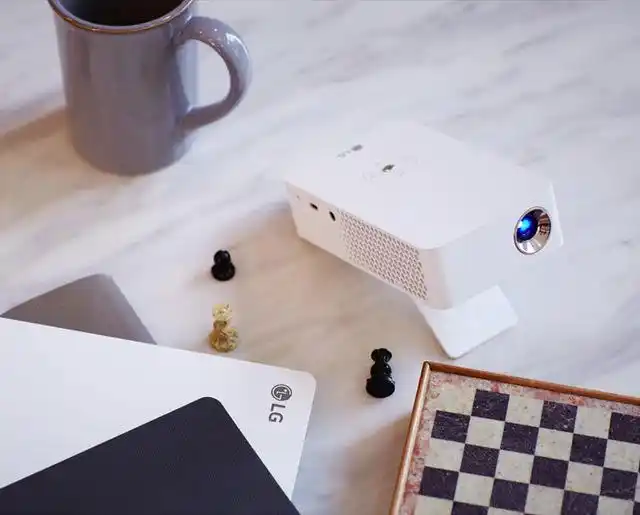
One of the most valuable applications of understanding lumens is selecting a projector.
- ANSI Lumens: This is a standard developed by the American National Standards Institute specifically for measuring the luminous flux of projectors. It calculates the value by measuring the illuminance at 9 specific points on the screen, averaging them, and multiplying by the screen area. When buying a projector, be sure to look for the ANSI lumen parameter, not the potentially inflated “light source lumens” sometimes advertised by sellers.
- How to Choose: For general home use, projectors are recommended to be between 1500 and 3000 ANSI lumens. A value that is too low requires closing curtains during the day; one that is too high might be overly glaring in a dark environment (though most projectors have adjustable brightness).
Furthermore, when purchasing bulbs or luminaires, we should pay more attention to their luminous efficacy (lm/W) – how many lumens of luminous flux are produced per watt of electrical energy. For instance, the efficacy of LED lights (80-200 lm/W) is far superior to that of incandescent bulbs (approx. 15 lm/W), meaning LEDs are significantly more energy-efficient for providing the same level of brightness.
Why Lumens are a Measure of “Human Perception”
The lumen is not a pure physics-based energy unit; it already incorporates a correction for the sensitivity of the human visual system to different wavelengths of light. The human eye is most sensitive to yellow-green light at 555 nm and less sensitive to red and violet light. Therefore, even if 1 watt of red light and 1 watt of green light carry the same physical energy, their lumen values are vastly different (1 watt of green light is approximately 683 lumens, while 1 watt of red light is only about 73 lumens). This makes the lumen a physical quantity specifically tailored to human subjective brightness perception.
Recommended Lumen Requirements for Different Scenarios
Lumen requirements depend on the specific application. The following are recommended values for common scenarios:
General (Ambient) Lighting
For providing overall illumination to a space:
- Living Room: 1,500 – 3,000 lumens
- Bedroom: 1,000 – 2,000 lumens
- Kitchen: 3,000 – 4,000 lumens
- Bathroom: 4,000 – 5,000 lumens
Task Lighting
Focused illumination for specific activities:
- Reading: 400 – 1,000 lumens
- Writing: 400 – 1,000 lumens
- Cooking: 4,000 – 5,000 lumens
Accent Lighting
For highlighting specific features or areas of a room:
- Artwork: 1,000 – 1,500 lumens
- Architectural Details: 1,500 – 2,500 lumens
Practical Representation of 1500 Lumens Brightness
- Equivalent to the combined intensity of 1500 candles.
- The ideal brightness for halogen lights, suitable for outdoor activity lighting (note higher heat output).
- A motorcycle taillight can illuminate approximately 300 meters, enhancing nighttime riding safety.
- A flashlight can achieve a beam distance of up to 250 meters, making it a benchmark brightness for professional-grade lighting tools.
1000 Lumens Application Scenarios
- A ceiling light sufficient for basic illumination in small to medium-sized rooms.
- An optimal choice for desk lamps, suitable for prolonged eye-use scenarios like reading and writing.
- A standard configuration for headlamps, meeting the needs of outdoor activities like camping and hiking.
- Equivalent to the concentrated light intensity of 1000 candles.
Summary
Users can flexibly adjust based on age group and room furnishings, but visual health requirements must be considered.
Natural Light
Areas with ample daylight can appropriately reduce the required lumen output of artificial light sources, especially in places primarily used during the day, such as offices and libraries.
Layered Lighting
Lighting hierarchy can be achieved through a combination of multiple light sources, optimized for visual comfort by considering color temperature choices (warm light/cool light).



0 Comments