




What is a 10k Ohm Resistor?
A 10k resistor is a type of resistor whose resistance value is denoted as 10kΩ (kiloohm). Resistors are typically made of rigid materials capable of dissipating heat, thereby preventing circuits from overheating. These components are widely used in electrical systems and electronic circuits to regulate the flow of electric current.
The Role of Resistors in Electronic Circuits
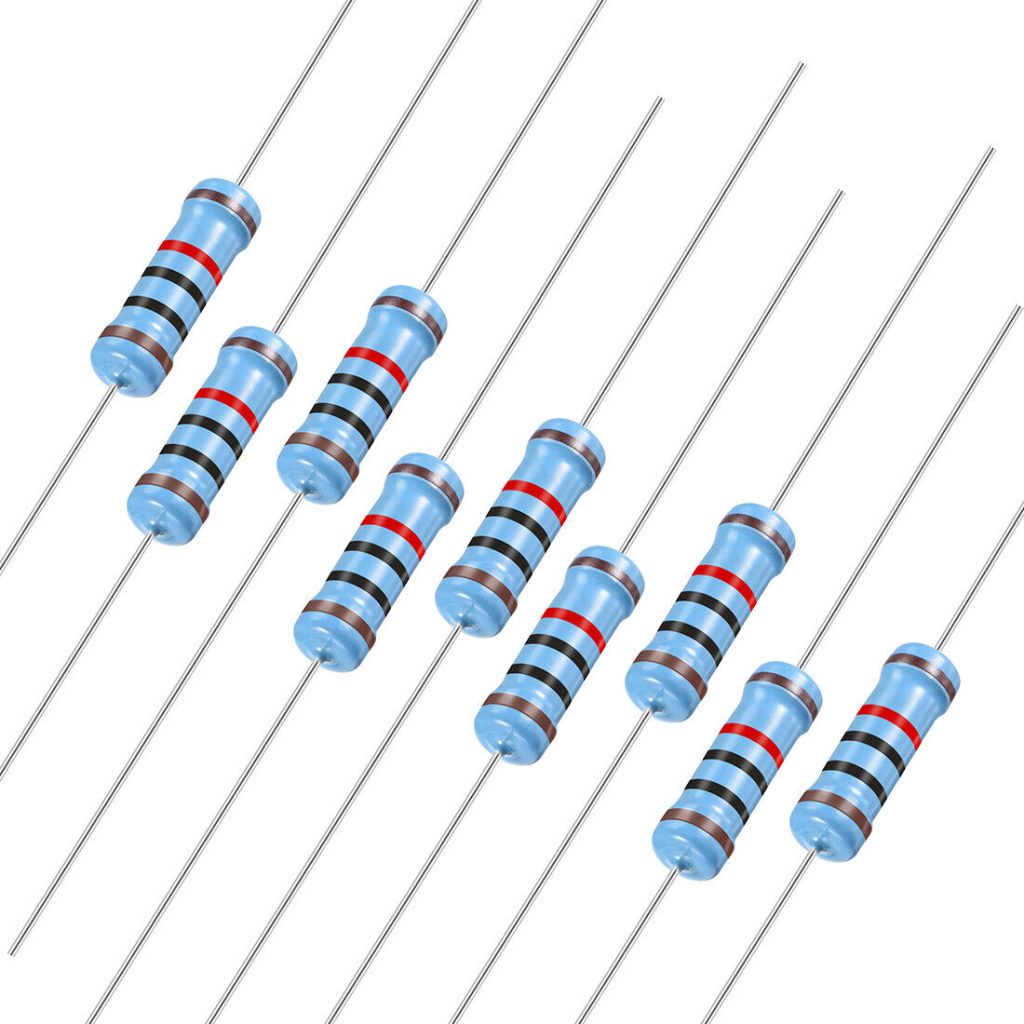
Resistors are the cornerstone of electronic circuits. They regulate current, divide voltage, and protect sensitive components from damage. For instance, a resistor can limit the current flowing through an LED to prevent it from burning out. Resistors also contribute to creating timing circuits, filtering unwanted frequencies, and matching impedance between different parts of a circuit. Without resistors, circuits would lack stability and precision.
The 10k resistor, in particular, is highly popular due to its versatility. It performs effectively in both analog and digital circuits, making it a preferred component for engineers and hobbyists alike.
Common Applications of the 10k Resistor
10k resistors are utilized in a wide array of devices. They are commonly found in temperature sensors, such as those in thermostats, to ensure accurate readings. In battery management systems, they assist in temperature monitoring to ensure safe charging. Digital circuits frequently employ 10k resistors as pull-up or pull-down components to stabilize signal lines.
Industrial applications also rely on 10k resistors for precision. For example, ovens and kilns use them to monitor and control temperature. Communication protocols like I2C integrate 10k resistors to maintain signal integrity. Their reliable performance across diverse environments makes them indispensable in modern electronics.
Types of Resistors
Resistors are primarily categorized into two types: Fixed Resistors and Variable Resistors. Each type serves specific purposes in electronic circuits.
Fixed Resistors
Fixed resistors have a constant, non-adjustable resistance value. They are ideal for applications requiring stable and reliable performance, such as setting voltage levels or limiting current. These resistors are commonly used in circuits with 10k resistors to maintain consistent operation.
Variable Resistors
Variable resistors, also known as potentiometers or rheostats, allow for resistance adjustment. They are used for tasks like signal conditioning, volume control, or dimming. However, they are more sensitive to environmental factors like temperature and may introduce noise into the circuit.
| Characteristic | Fixed Resistor | Variable Resistor |
|---|---|---|
| Resistance Value | Constant | Adjustable |
| Usage | Set current/voltage levels, voltage dividers | Control current/voltage, adjust signals |
| Stability | More stable and reliable | Prone to noise and errors |
| Flexibility | Less flexible, non-adjustable | More flexible and customizable |
| Sensitivity | Less affected by environmental factors | More sensitive to environmental factors |
Understanding these types helps in selecting the appropriate resistor for your project, whether you need a stable 10k resistor or an adjustable one for fine-tuning.
Common Types of 10k Resistors
Carbon Film Resistor
Carbon Film Resistors are a popular choice for many electronic applications. These resistors are fabricated by depositing a thin carbon film onto a ceramic substrate. This design provides stable resistance values, making them suitable for circuits requiring good precision. You will often find carbon film resistors in devices like televisions, radios, and small appliances.
One of the key advantages of carbon film resistors is their lower noise generation compared to carbon composition resistors. This characteristic makes them ideal for circuits where signal clarity is critical. Additionally, they feature low tolerance, meaning their resistance values are more accurate. They are also cost-effective, making them ideal for projects with budget constraints. Their wide operating range ensures excellent performance across various electronic circuits.
| Advantage | Description |
|---|---|
| Lower Noise | Compared to carbon composition resistors |
| Low Tolerance | More precise resistance value |
| Low Cost | Cost-effective for a wide range of applications |
| Wide Operating Range | Suitable for diverse electronic circuits |
If you are working on a project that requires a reliable and affordable resistor, a Carbon Film 10k resistor is an excellent choice.
Metal Film Resistor
Metal Film Resistors are another common type found in electronics. These resistors are made by depositing a thin metal layer (such as nickel-chromium) onto a ceramic substrate. This construction grants them superior stability and accuracy. Metal film resistors are often used in high-precision applications like measuring instruments and audio equipment.
A primary advantage of metal film resistors is their low noise characteristic. This makes them ideal for circuits where signal integrity is paramount. They also possess a low temperature coefficient, meaning their resistance value changes minimally with temperature fluctuations. This stability ensures consistent performance even in demanding environments.
Metal film resistors are slightly more expensive than carbon film resistors, but their superior performance justifies the cost. If your project demands high precision and reliability, a Metal Film 10k resistor is an excellent choice.
10k Resistor Specifications and Standards
Nominal Value and Tolerance
The nominal value of a resistor is its specified resistance. For a 10kΩ resistor, this value is 10,000 ohms. However, no resistor is perfectly precise. Tolerance indicates the permissible deviation of the actual resistance from the nominal value. For example, a 10kΩ resistor with a ±5% tolerance can have an actual resistance between 9,500 ohms and 10,500 ohms.
- A lower tolerance (e.g., ±1%) provides higher accuracy, which is crucial for circuits where precise resistance is vital for performance.
- For less critical applications, a higher tolerance (e.g., ±5%) is sufficient. These are also more cost-effective and perfectly suitable for general-purpose use.
When selecting a resistor, consider the precision required by your circuit. For high-accuracy applications, a ±1% tolerance is preferable. For simpler circuits, a ±5% tolerance works well and saves costs.
Power Rating
A resistor’s power rating determines the maximum amount of power it can safely dissipate as heat without being damaged. Common power ratings for 10k resistors include 1/8 Watt (0.125W), 1/4 Watt (0.25W), and 1/2 Watt (0.5W). Selecting the correct power rating is crucial to prevent overheating and ensure the resistor’s longevity.
| Power Rating | Common Usage |
|---|---|
| 1/8 W | Low-power devices |
| 1/4 W | General purpose, standard circuits |
| 1/2 W | Circuits with higher power demands |
For most general-purpose circuits, a 1/4 Watt resistor is sufficient. However, if your circuit involves higher currents or voltages, consider using a 1/2 Watt resistor to handle the increased power dissipation.
Package Types
SMD (Surface Mount Device)
SMD resistors are mounted directly onto the surface of a Printed Circuit Board (PCB). This design eliminates the need for drilling holes, allowing for smaller components and denser layouts. SMD resistors are ideal for compact devices like smartphones and laptops.
Through-Hole
Through-hole resistors have leads that are inserted through drilled holes in the PCB. This method provides a stronger mechanical bond, making it well-suited for applications demanding higher durability, such as industrial equipment.
- Through-Hole mounting offers better resistance to mechanical stress and vibration.
- Surface-Mount Technology (SMT) enables smaller, lighter, and more automated assembly.
When choosing between the two, consider your project’s size and durability requirements. For compact designs, SMD resistors are the best choice. For applications requiring high reliability and ease of manual prototyping, through-hole resistors are often more suitable.
Conclusion
The 10k resistor plays a pivotal role in modern electronics. It is essential in circuits requiring precise voltage control and current regulation. For example, it is used to divide signal voltages, such as reducing a 5V signal to 2.5V, thereby ensuring the safe operation of microcontrollers. It also helps define reference voltages, guaranteeing stable performance for both analog and digital circuits. Without this fundamental component, the reliable operation of numerous electronic devices would be compromised.


0 Comments