



What Is Tg in PCB?
In PCB manufacturing, Tg stands for glass transition temperature. It refers to the temperature at which the PCB’s base resin—typically part of the FR4 material—changes from a hard, glassy state to a softer, rubber-like condition. This transformation isn’t melting. Instead, the material becomes mechanically weaker and more prone to deformation.
Tg is a critical thermal parameter. If your PCB regularly operates near or above its Tg, its insulation, structural stability, and even solder joint integrity can break down. That’s why designers always check the Tg value of the substrate before finalizing the PCB material, especially for high-reliability electronics.
What Is a High Tg PCB?
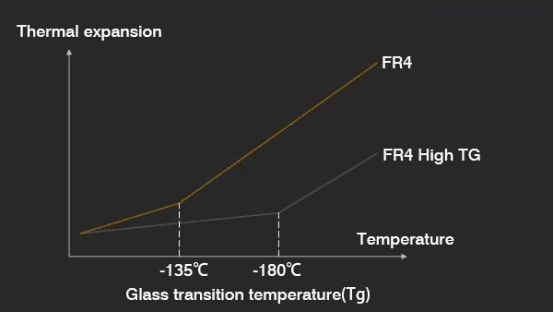
A High Tg PCB is a circuit board built with materials that have a glass transition temperature of 170°C or higher. While standard FR4 has a Tg of around 130–140°C, high Tg FR4 offers more headroom for thermal stress, usually 170°C, 180°C, or 200°C.
High Tg PCBs are ideal for environments where the PCB will face:
- Extended high temperatures
- Frequent thermal cycling
- Lead-free soldering processes
- High current and voltage applications
The core difference lies in the resin formulation. High Tg laminates use thermally-enhanced epoxy systems or other polymers that can resist thermal degradation, warping, and delamination over time.
The Tg PCB can be divided into three types: low Tg value, middle Tg value and high Tg value.
Low Tg Value (130°C–150°C):
- FR-4: This is the most commonly used PCB substrate. It is cost-effective and has stable performance, making it suitable for most general electronic devices such as consumer electronics and household appliances.
- CE (Cellulose Epoxy): A phenolic resin-based material made with paper, featuring low cost and used for products with minimal performance requirements, such as simple toys and small home appliances.
Medium Tg Value (150°C–170°C):
- FR-4 (High Tg Version): An improved version of standard FR-4 with a Tg above 150°C. It is suitable for devices with slightly higher thermal requirements, such as industrial control equipment and standard automotive electronics.
- CEM-1: A phenolic resin-based substrate reinforced with glass fibers. Its performance falls between FR-4 and CE, with a moderate price, and it’s used for mid- to low-end electronic products.
High Tg Value (Above 170°C):
- CEM-3: A glass fiber-reinforced epoxy resin substrate. It offers performance similar to FR-4 but with a higher Tg value. It is used in high-performance applications such as advanced automotive electronics and aerospace.
- Special Materials: Materials like Polyimide (PI) and Polytetrafluoroethylene (PTFE) have extremely high Tg values but are also more expensive. They are used in high-end applications under extreme conditions, such as satellite communications and military equipment.
Importance of Glass Transition Temperature
- Thermal Stress Resistance: A board with a low Tg may begin to deform during reflow soldering or continuous use.
- Delamination Prevention: High Tg materials resist layer separation when exposed to high temperatures or moisture.
- Better Electrical Stability: Dielectric properties such as Dk (dielectric constant) remain stable under high temperature.
- Dimensional Control: High Tg keeps the PCB layers aligned and in shape, especially in high-density, multilayer builds.
Tg is particularly important in industries where electronics must perform flawlessly under heat—automotive, aerospace, industrial control, and power management are good examples.
Features of High Tg PCBs
A high Tg PCB stands out because of its ability to maintain both electrical and mechanical performance under heat. Here are some of its main features:
- Higher Thermal Threshold: Can operate above 170°C continuously without degradation.
- Dimensional Stability: Less expansion and contraction, reducing the risk of solder cracks or via failures.
- Lower Z-axis Expansion: Ensures plated through-holes (PTH) remain intact during soldering and operation.
- Enhanced Mechanical Strength: Boards remain firm and stable during lamination and assembly processes.
- Lead-Free Assembly Ready: Withstands higher temperatures required by RoHS-compliant solder pastes.
- Improved Chemical Resistance: Survives cleaning agents and harsh industrial chemicals without absorbing moisture.
Because of these features, among the FR4 PCB, high Tg PCBs are often the only option when your product needs long-term durability under heat.
Why Choose High Tg PCB Material?
1. Increased Heat Tolerance
If your circuit operates near heat-generating components (e.g., MOSFETs, LEDs, processors), standard FR4 won’t last long. High Tg materials hold up under these temperatures and avoid early failure.
2. Higher Reliability in Harsh Environments
In applications like automotive ECUs or base stations, electronics face constant thermal fluctuations. High Tg materials can endure these cycles without cracking or degrading.
3. Better for High Layer Counts
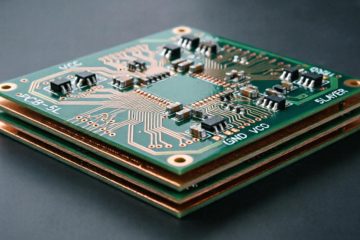
As PCBs grow more complex with 10+ layers, each lamination step introduces thermal stress. High Tg laminates stay dimensionally stable during multilayer pressing and reflow processes.
4. Improved Solder Joint Integrity
Repeated temperature changes cause solder joints to expand and contract. High Tg materials reduce PCB movement, which means less stress on joints.
5. RoHS Compliance
Lead-free solder has a higher melting point (~260°C), which can damage low Tg substrates. High Tg materials make the board compatible with RoHS solder profiles.
What Is the Difference Between High Tg and Low Tg?
The main difference between high Tg and low Tg PCBs is how much heat the board material can handle before it starts to soften. Tg, or glass transition temperature, tells you the point where the material begins to lose its solid structure.
Low Tg PCBs usually have a Tg around 130°C to 140°C. They are good for electronics that don’t get too hot, like basic consumer devices. However, they may not hold up well in high-power or high-temperature situations.
High Tg PCBs, on the other hand, have a Tg of 170°C or higher. These boards can handle more heat, stay more stable, and last longer in tough environments like automotive, industrial, or power electronics.
| Feature | Low Tg PCB | High Tg PCB |
| Tg Value | ~130–140°C | ≥170°C |
| Heat Resistance | Moderate | Excellent |
| Durability | Lower in hot or harsh conditions | Strong even under long-term heat |
| Use Case | Consumer products | Automotive, industrial, high-speed systems |
| Mechanical Stability | Weaker when exposed to high temperatures | Stable and less likely to warp |
| Cost | Lower | Slightly higher |
If your product operates in a stable environment with low heat, standard FR4 is sufficient. But if reliability is a priority—especially in heat-heavy, mission-critical devices—a high Tg solution is the smarter choice.
FR4 High Tg Datasheet
High Tg FR4 materials are widely used for advanced PCBs due to their improved thermal and mechanical stability. Below is a comprehensive overview of key properties you’ll typically find in a FR4 high Tg datasheet. These values represent general industry ranges and can vary depending on the specific laminate brand (e.g., Shengyi S1000H, Isola 370HR, ITEQ IT180A, Kingboard KB6165F).
| Parameter | Typical Value / Range |
| Glass Transition Temperature (Tg) | 170°C – 200°C |
| Decomposition Temperature (Td) | ≥ 300°C |
| Thermal Conductivity | 0.3 – 0.45 W/m·K |
| Coefficient of Thermal Expansion (CTE) – Z Axis | 45 – 60 ppm/°C (below Tg); 180 – 250 ppm/°C (above Tg) |
| CTE – X/Y Axis | 13 – 17 ppm/°C |
| Dielectric Constant (Dk) | 4.2 – 4.7 @ 1 MHz |
| Dissipation Factor (Df) | 0.015 – 0.022 @ 1 MHz |
| Flammability Rating | UL94-V0 |
| Water Absorption | ≤ 0.10% |
| Peel Strength (1oz Cu foil) | ≥ 1.0 N/mm (after thermal stress) |
| Flexural Strength (lengthwise) | ≥ 400 MPa |
| Surface Resistance | ≥ 10⁶ MΩ |
| Volume Resistivity | ≥ 10⁷ MΩ·cm |
| Tracking Index (CTI) | ≥ 300V |
| MOT (Max Operating Temp) | 130°C – 150°C (continuous use) |
| Layer Capability | 2–30 layers |
Common High Tg FR4 Material Brands
Popular high Tg FR4 materials include:
- Isola 370HR
- Panasonic R-1755V
- Shengyi S1000H
- Kingboard KB6165F
- ITEQ IT180A
Each brand may offer slightly different performance levels. It’s important to match material choice with your thermal, mechanical, and signal integrity needs, especially if your design includes lead-free soldering, HDI stackups, or long service life expectations.
Applications of High Tg PCBs
- Automotive electronics
- Industrial power systems
- Aerospace & military devices
- Led lighting systems
- Telecommunications
- Medical imaging equipment
If your application involves power, precision, or continuous operation, high Tg materials provide the long-term stability you need.
High Tg FR4 PCB Manufacturer – Thindry circuit
When your project demands high thermal reliability, precise performance, and long-term stability, working with the right high Tg FR4 PCB manufacturer makes all the difference. That’s where Thindry circuit comes in.
We specialize in building high Tg PCBs using premium FR4 materials from trusted brands like Shengyi, Isola, Panasonic, ITEQ, and Kingboard. Our materials offer Tg values from 170°C up to 200°C, suitable for automotive, industrial, telecom, aerospace, and power applications.
With years of experience serving clients worldwide, we offer dependable delivery and responsive support, no matter where you are. Whether it’s a 4-layer high Tg board or a 16-layer stackup with impedance control, we can deliver fast without sacrificing quality. Contact Thindry circuit today to request a quote or get engineering guidance for your next high-performance PCB.
Frequently Asked Questions (FAQs)
1. What is the minimum temperature considered high Tg?
Typically, a Tg of 170°C or more is considered high Tg in PCB materials.
2. Can high Tg PCBs be used with standard soldering processes?
Yes. They’re compatible with both leaded and lead-free soldering, making them versatile for global compliance.
3. Is there a big cost difference between regular FR4 and high Tg FR4?
The cost is slightly higher—usually 10–20% more—but the long-term reliability often outweighs the extra investment.
4. Can I get a custom stackup with high Tg material?
Absolutely. At Thindry circuit, we help you design custom impedance-controlled, multilayer stackups with high Tg materials.
5. How do I get the FR4 high Tg datasheet?
Just contact our sales team. We’ll send you detailed datasheets based on your material preferences and performance requirements.
0 Comments