




What is a PCB Cable Assembly?
PCB cable assembly is a set of cables designed specifically for printed circuit boards, consisting of two or more wire bundles tied together and wrapped in a protective sleeve. It is equipped with connectors or terminals at both ends, and the design can be changed according to application requirements.
Electric wires are divided into power lines and data lines, rated according to their specific purposes. The outer sheath of the wire is usually made of rubber or plastic to provide insulation and protection, ensuring the safety and durability of the product.
However, distinguishing between wire harnesses and cable components is crucial. Although wiring harnesses can organize cables, they cannot resist the influence of environmental factors; The cable assembly wraps the cable in a sturdy outer sheath, providing better protection performance.
Functions of PCB Cable Assemblies
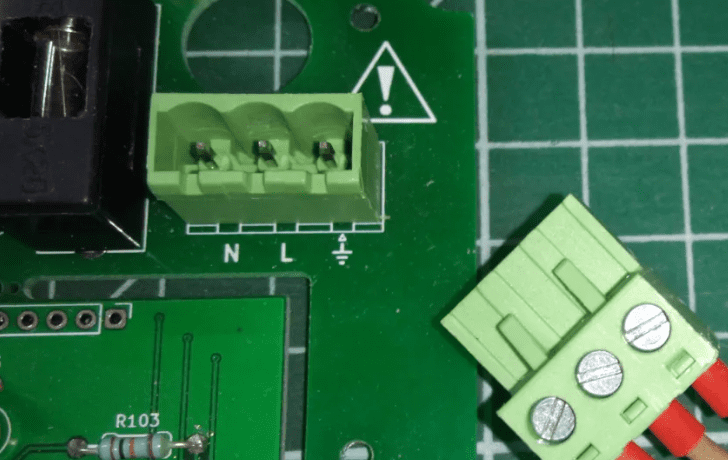
The basic definition of a PCB cable assembly is a cable with a connector on one or both ends, designed to mate securely with corresponding interfaces on a printed circuit board, such as sockets, pin headers, or board-edge connectors. Its functions extend far beyond simple physical connection:
- Signal Transmission
- High-Speed Data: In servers, routers, and high-speed computers, differential pair cables transmit high-speed data signals at GHz levels. Their precise shielding and impedance control are fundamental to ensuring signal integrity.
- Low-Frequency Control Signals: In industrial controls and appliances, simple ribbon cables or wire harnesses transmit switch signals and sensor data, requiring stability and reliability.
- Power Distribution
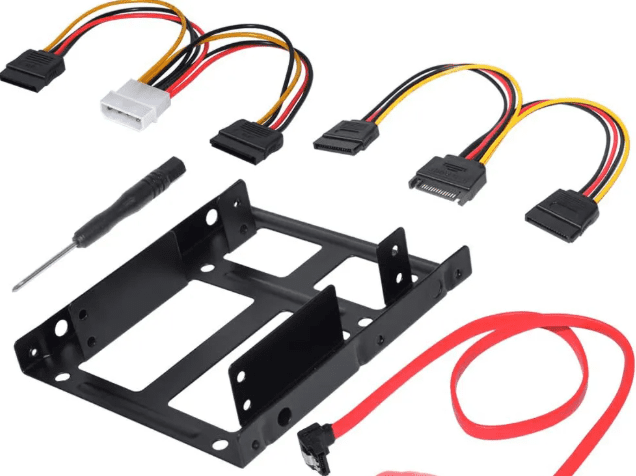
- They provide electrical power to various sub-modules within a system. Examples include power cables from the motherboard to hard disk drives and auxiliary power cables from the PSU to graphics cards. Such cables need to carry relatively high currents, necessitating larger conductor cross-sectional areas and strict requirements for contact resistance and insulation performance.
- Modularity and Maintainability
- Cable assemblies are key to achieving modular design in equipment. They allow sub-modules like displays, keyboards, cameras, and power supplies to be designed, tested, and replaced as independent units. This significantly simplifies the assembly process and reduces production and maintenance costs.
- Overcoming Spatial Constraints and Providing Mobility
- In scenarios with compact spaces or relative movement, such as laptops, robot joints, and wearable devices, flexible flat cables can bend, fold, and traverse narrow spaces to connect two PCBs that are not on the same plane or have relative motion.
- Grounding and Shielding
- The outer shield of many cable assemblies is connected to the metal housing of the connector, forming a continuous Faraday cage. This effectively blocks external electromagnetic interference and prevents internal signal radiation from disrupting other equipment. This is crucial for passing EMC certifications.
What Are PCB Cable Assemblies Made Of?
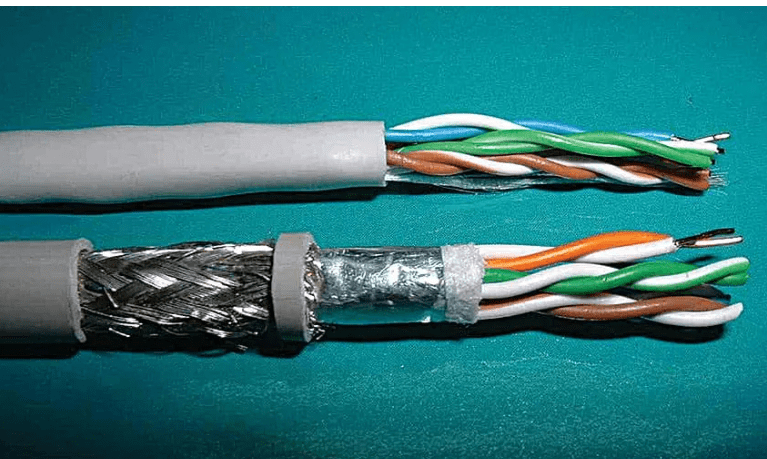
A board-to-board cable assembly includes the following discrete components: wires, insulation, optional EMI shielding, jacketing, and connectors or terminals.
- Wires
- Typically made of copper, wires transmit information or voltage from one point to another. They must have the correct current-carrying capacity rating and are available in different diameters based on usage needs.
- Jacketing/Sheath
- The sheath covers the wires. Sheath materials can vary and include extruded or shrink-wrapped thermoplastics, vinyl, or even rubber. The sheath material must resist damage from abrasion, moisture, high temperatures, and other environmental factors.
- Insulation
- Here, insulation refers to the material covering each individual wire within the assembly. Its purpose is to protect the wires from short circuits or mechanical stress, ensuring reliable product operation and preventing dielectric breakdown and other issues.
- EMI Shielding
- The EMI shield is an optional component, required only when the application demands it, such as when the PCB and cable operate in an environment susceptible to radiation or transmit radio frequency signals. It usually consists of a braided mesh and a thin foil wrapped around the wires.
- Connectors or Terminations
- The ends of the assembly use connectors or terminals to connect to the circuit board or other equipment. Connector types and connection mechanisms vary widely, including insulation displacement, wire-to-wire, wire-to-board, and screw terminations.
Main Types of PCB Cable Assemblies
Based on structure, performance, and suitable scenarios, PCB cable assemblies are mainly categorized as follows:
- Flexible Flat Cable (FFC) / Flexible Printed Circuit (FPC)
- This type consists of extremely fine parallel conductors bonded to a flat plastic film substrate. It is one of the most common types.
- Characteristics: Ultra-thin, excellent flexibility, lightweight, neat wiring.
- Connection Method: Typically uses ZIF or LIF connectors, achieving stable connection with zero insertion force via flip-lock or slide-lock mechanisms.
- Variant: FFC is the base for this category. FFCs are “pre-fabricated,” whereas FPCs can have circuits etched directly onto their substrate and even components soldered onto them, enabling three-dimensional routing and more powerful functionality.
- Imagery Association: Connection between laptop motherboard and display; connection between scanner head and motherboard.
- Coaxial Cables
- Composed of a center conductor, insulation layer, shielding layer, and outer sheath.
- Characteristics: Excellent shielding performance, stable impedance, high bandwidth.
- Application: Primarily used for transmitting high-frequency RF signals, such as GPS antennas, Wi-Fi antennas, and cellular module antenna connections.
- Twisted Pair Cables
- Made by twisting two insulated conductors together. Can be Shielded (STP) or Unshielded (UTP).
- Characteristics: The twisted pair structure effectively cancels out common-mode interference, improving signal quality.
- Application: Widely used in Ethernet; also commonly used for differential signal transmission, such as in internal connections for digital interfaces like USB and HDMI.
- Discrete Wire Assemblies
- Consist of multiple independent colored wires bundled together, with their ends crimped or soldered to a PCB connector.
- Characteristics: Flexible design, allows selection of different wire gauges based on current requirements, cost-effective.
- Application: Common in power distribution, industrial control panels, and appliance interiors where signal speed requirements are not high.
- Hybrid Cable Assemblies
- Integrate multiple cable types mentioned above within a single sheath or braid.
- Characteristics: A single cable simultaneously handles power, high-speed data, low-frequency signals, and even optical fibers.
- Application: Used in high-end devices with extremely limited space, such as medical endoscopes, robotic arms, and high-end server interiors, to simplify wiring and improve reliability.
- Backplane Cable Assemblies
- A special and important type used in large communication equipment to connect “daughter cards” at the front of a chassis to a central “backplane” at the rear.
- Characteristics: Often ribbon-like structures containing numerous high-speed differential pairs, featuring very low signal loss and crosstalk, supporting very high data rates.
- Representative: High-speed backplane cables offered by companies like TE Connectivity.
Applications of PCB Cable Assemblies
PCB cable assemblies are found in almost all electronic fields:
- Computers and Data Centers:
- Internal: SATA cables connecting hard drives/SSDs, front panel connector cables, CPU fan power cables.
- External: Backplane cables connecting line cards to switch fabric in switches; high-speed cables for server cluster interconnects.
- Consumer Electronics:
- Smartphones/Tablets: FPCs/FFCs connecting the mainboard to the display, battery, charging port, and side buttons.
- TVs/Monitors: LVDS FFCs connecting the logic board to the panel; wire harnesses connecting the power board to the backlight driver.
- Gaming Consoles: Various internal connections for sensors, fans, and optical drives to the mainboard.
- Automotive Electronics:
- Cables connecting the infotainment system head unit to displays, GPS antennas, and rearview cameras.
- Wire harnesses connecting ECUs to sensors and actuators, often containing numerous PCB terminals.
- Industrial Automation:
- Connection cables between PLCs and I/O modules.
- Flexible cables resistant to repeated bending inside robot joints, connecting motor drivers to encoders and sensors.
- Medical Equipment:
- Signal connections inside portable monitors and ultrasound devices.
- Highly integrated hybrid cables in endoscopes, transmitting image signals, providing light, and enabling mechanical control.
- Telecommunications and Networking:
- Numerous coaxial cable assemblies connecting RF boards to antennas in base station radio units.
Advantages of PCB Cable Assemblies
Bundling wires within a protective sheath offers multiple advantages. Understanding these is crucial when designing boards for specific projects, especially when the board must connect to other devices.
- Simplified PCB Assembly
- Compared to designing and soldering connection elements directly on the board, cables are easier to produce and use. Using cables reduces the manufacturer’s workload on the board itself, thereby simplifying the PCB assembly process.
- Reduced PCB Manufacturing Costs
- Through simplified PCB design and assembly steps, you can reduce the manufacturing cost of the board compared to using wired connections directly on the PCB. If you are mass-producing PCBs for a project, the cost savings become even more significant.
- Enhanced PCB Adaptability
- By connecting to external devices or systems, the assembly enhances the board’s versatility, making it suitable for a wider range of applications. Furthermore, it simplifies connections, facilitating modifications to meet future usage requirements.
- Improved Safety and Durability
- The assembly is covered with plastic or rubber. The insulating properties of the sheath ensure the safe operation of the conductors. It also protects against environmental damage, extending the lifespan of both the assembly and the board.
How to Select the Right PCB Cable Assembly?
Selecting the appropriate PCB cable assembly is a critical step for successful product design, requiring comprehensive consideration of:
- Electrical Performance: Voltage, current, impedance, signal speed, attenuation, crosstalk.
- Mechanical Performance: Bend radius, flexibility, flex life, tensile strength, connector locking mechanism.
- Environmental Suitability: Operating temperature range, chemical resistance, flame retardancy rating.
- Electromagnetic Compatibility: Whether shielding is needed and its effectiveness.
- Cost and Supply Chain: Selecting the most cost-effective and stable supply solution that meets performance requirements.
Conclusion
PCB cable assemblies are indispensable yet often overlooked heroes in modern electronic engineering. They quietly shuttle between circuit boards, carrying the flow of information and energy, forming the physical foundation for system integration and performance realization. Ranging from the simplest ribbon cables to high-speed differential pairs carrying Tbps data, their technological evolution directly mirrors the trend of electronic devices toward higher performance, smaller size, and more complex functionality. A deep understanding of their functions, types, and applications is a fundamental and crucial competency for anyone involved in the design, manufacturing, and maintenance of electronic products.
0 Comments