



Introduction
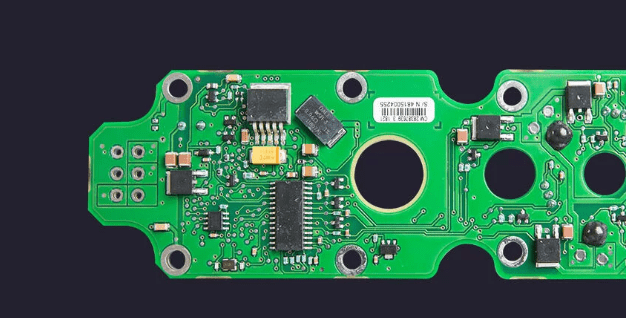
Printed Circuit Board Assembly (PCBA) involves assembling various electronic components onto a Printed Circuit Board (PCB) to create a functional electronic device.
This process is crucial in electronics manufacturing. It transforms a bare PCB, lacking components, into a fully functional unit. The PCBA serves as the core of many electronic devices, ensuring each component is correctly connected to transmit signals and manage electrical current.
PCBA is vital because it integrates all necessary components—including resistors, capacitors, and integrated circuits—onto the PCB. Without PCBA, the PCB cannot perform its intended function within an electronic product.
As a critical step in device production, PCBA ensures the efficient operation of modern electronics, from smartphones to industrial machinery. In electronics manufacturing, the efficiency and precision of the PCB assembly process are essential for producing reliable, high-performance devices.
What is PCBA?
Printed Circuit Board Assembly (PCBA) is the process of assembling electronic components onto a Printed Circuit Board (PCB) to form a fully functional electronic device. This process involves soldering various components such as resistors, capacitors, and integrated circuits onto the PCB, which serves as the foundation for electrical connections.
PCBA is essential in the electronics manufacturing industry because it converts a bare PCB into a functional product ready for integration into various applications, ranging from consumer electronics to complex industrial machinery. Let’s explore PCBA and its distinction from PCB.
Definition and Composition of PCBA
PCBA stands for Printed Circuit Board Assembly. It is a critical step in the electronics manufacturing process, involving the assembly of various electronic components onto a PCB (Printed Circuit Board). While the PCB provides the physical platform for electronic components, it lacks any components itself.
In contrast, a PCBA board is equipped with various active and passive components such as resistors, capacitors, diodes, and integrated circuits, enabling its use in diverse electronic devices. The assembly process involves mounting components onto the PCB and transforming it into a ready-to-deploy PCBA control board.
Definition of PCB Assembly
What does PCBA mean? PCBA, or PCB Assembly, is the process of mounting electronic components like microchips, resistors, and capacitors onto a printed circuit board. This step turns the bare board into a working device.
What are the two primary techniques used in the PCB assembly process?
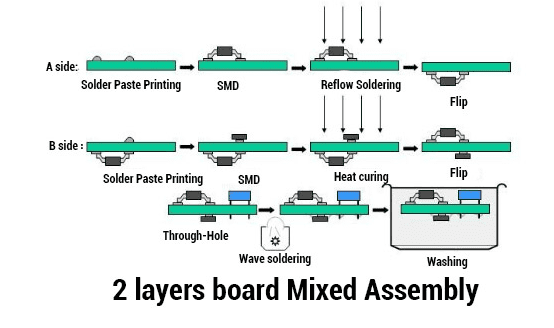
In the PCBA manufacturing process, the assembly field primarily relies on two main waves: Surface Mount Technology (SMT) assembly and Through-Hole Technology (THT).
- SMT mounts components directly onto the surface of the board. It is fast and cost-effective for many electronic products. This method is particularly suitable for lightweight, space-saving products.
- Conversely, THT assembly requires inserting component leads through pre-drilled holes in the board, much like threading a needle. This older method provides robust connections, making it ideal for heavy-duty equipment, but requires more time and space.
- While SMT assembly technology is evolving rapidly to meet modern demands, through-hole PCB assembly services are trusted for their robustness under harsh conditions and high temperatures. Each has its merits—SMT is suited for complex circuits requiring miniature components, while THT can withstand harsh conditions where toughness is crucial.
- PCBA manufacturing techniques are diverse. How the electronic parts are assembled depends on the trials your gadget needs to endure, whether in the field or in a comfortable pocket.
Surface Mount Technology (SMT)
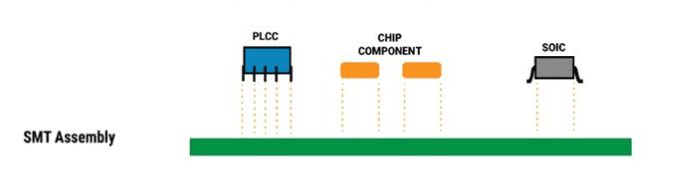
Surface Mount Technology (SMT) is an assembly process that mounts electronic components directly onto the surface of a PCB. This technology is highly automated and flexible, enabling higher connection density. It allows manufacturers to fit complex circuits into small form factors.
The four fundamental steps of SMT PCBA are:
- PCB Preparation: First, the assembler places solder paste onto the required locations on the board.
- Component Placement: Next, components are placed onto the board, typically using a pick-and-place machine.
- Reflow Soldering: The board is then passed through a reflow oven where it is heated until the solder paste melts and forms solder joints upon cooling.
- Inspection: Assemblers conduct inspections throughout the SMT process, including before component placement, and before and after reflow soldering.
Through-Hole Technology (THT)

Through-Hole Technology is an assembly process that requires drilling holes into the PCB to accommodate the connection of electronic components, known as leads. This technology is older than SMT, but it establishes stronger mechanical bonds between the board and components, resulting in more durable and reliable assemblies.
Through-hole assembly can be fully automated or semi-automated. The steps in the THT PCBA process include:
- Drilling: The first step in the through-hole process is drilling holes in the circuit board. These holes must be sized to fit the component leads.
- Lead Insertion: Next, the assembler inserts the component leads into the holes.
- Soldering: The subsequent step is soldering. This step ensures the components are securely fixed in place.
- Inspection: Throughout the process, components undergo inspection to ensure the PCBA will function as intended.
Inspection and Testing
This is a critical stage for ensuring PCBA quality.
- AOI (Automated Optical Inspection): Uses cameras to inspect solder joints for defects such as shorts, insufficient solder, misalignment, etc.
- ICT (In-Circuit Test): Uses a bed of nails tester to check connectivity, voltage, current, and other parameters on the PCBA’s circuits for correctness.
- FCT (Functional Test): Simulates the real-world operating environment of the PCBA’s final product to test its overall functionality. For example, powering up an air conditioner control PCBA to test if it can correctly control the fan, display temperature, etc.
What is the Difference Between PCBA and PCB?
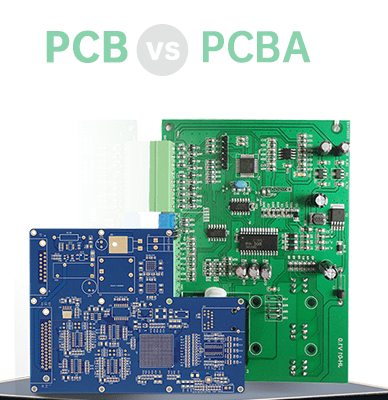
| Feature | PCB (Bare Board) | PCBA (Assembled Board) |
|---|---|---|
| Full Chinese Name | PCB (bare board) | PCBA (assembled board) |
| Nature | Carrier/Platform for Electrical Connections | Functional Electronic Assembly |
| Composition | Substrate, Copper Traces, Pads, Silkscreen | PCB + Soldered Electronic Components |
| Function | No Independent Function | Possesses Complete Circuit Functionality |
| Manufacturing Process | Design, Photoplotting, Etching, Lamination, Drilling, etc. | PCB Fabrication + SMT/THT Assembly + Testing |
| Cost | Relatively Low | Relatively High (includes PCB and component costs) |
| Relationship | The foundation and skeleton of the PCBA | The final value and functional realization of the PCB |
A Vivid Analogy
- A PCB is like a blank map with a planned road network.
- Components are like buildings (houses, factories, etc.) ready for construction.
- A PCBA is like a functional city where all buildings have been constructed according to the map, and all roads are connected. Only such a city allows “residents and vehicles” – the electric current and data – to live and work within it.
The PCB is the “board”; the PCBA is the “board + components”. All the electronic devices we encounter in daily life, such as computer motherboards or the green boards inside phones, are actually PCBAs, because they are densely populated with various chips, resistors, capacitors, and other components.
The Importance of PCBA
- Function Enabler: A bare PCB and a pile of loose components are useless. Only through the PCBA process are they organically combined to realize the designed electronic functions. PCBA is the “heart” and “brain” of electronic products.
- Core of Value: The cost and value of a single PCBA far exceed those of a bare PCB. It encompasses the cost of the PCB itself, all components, and the complex assembly and testing processes.
- Microcosm of the Product: The core of almost all electronic devices we use daily consists of one or multiple PCBAs. Examples include: mobile phone motherboards, computer graphics cards, smart TV control boards, washing machine main control boards, etc.
Summary
PCBA is not merely an object, but a “state” or a “result.” It refers to “a circuit board that has completed component assembly.”
When you see a green board covered densely with black chips, silver cylindrical components (capacitors), and various slots and interfaces, you are not looking at a PCB, but rather a PCBA. It is the foundation of the modern electronics industry and the soul of all intelligent devices.
0 Comments