



lead free solder is an essential material in modern electronic manufacturing, designed to replace traditional lead-based solder and meet global environmental and health standards. This guide covers everything you need to know about lead free solder, including its types, applications, common pain points, and solutions—all tailored to help you choose and use it effectively.
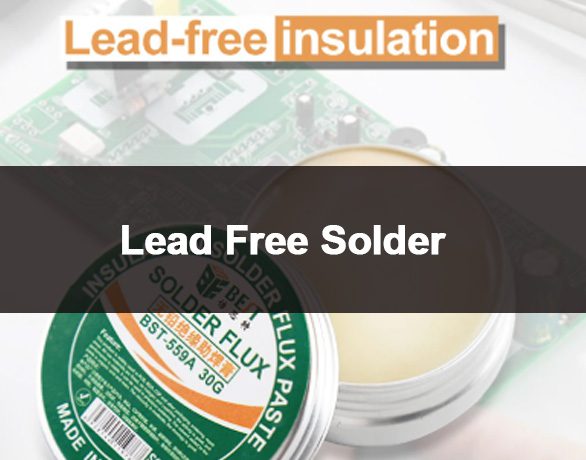
What Is Lead Free Solder and Why Is It Mandatory?
Lead free solder is a metal alloy that contains no lead (or less than 0.1% lead, per RoHS standards) and uses metals like tin, silver, copper, or bismuth instead—its lead-free solder composition varies by alloy type, each tailored to specific uses. It is mandatory because lead is toxic, posing health risks to workers and environmental harm during disposal.
Most countries and regions, including the EU, US, and Asia, have enforced regulations (such as RoHS) to ban lead in electronic products. Using lead free solder ensures compliance and protects both human health and the planet.
What Are the Common Types of Lead Free Solder?
The main types of lead free solder are categorized by their alloy composition, each with unique properties for different applications—from industrial use to hobby projects. Below is a detailed comparison of the most widely used types, including options ideal for those seeking the best lead-free solder for various needs:
| Alloy Type | Composition | Melting Point (°C) | Key Advantages | Best Applications |
|---|---|---|---|---|
| SAC 305 | Sn-3.0Ag-0.5Cu | 217-221 | High strength, good thermal fatigue resistance, reliable joints | Consumer electronics, automotive electronics |
| SAC 0307 | Sn-0.3Ag-0.7Cu | 221 | Cost-effective, stable performance, low silver content | Mass-produced electronics, industrial control |
| Sn-Cu | Sn-0.7Cu | 227 | Low cost, easy to use, good compatibility with PCB pads | Basic electronics, LED lighting |
| Sn-Bi | Sn-58Bi | 139 | Low melting point, suitable for heat-sensitive components | Medical electronics, delicate PCBA |
How to Choose the Right Lead Free Solder for Your Application?
Choosing the right lead free solder depends on three key factors: application temperature, component sensitivity, and regulatory compliance. Start by checking the melting point required for your PCB assembly process.
For heat-sensitive components (like medical sensors), opt for low-melting Sn-Bi alloys. For high-reliability applications (like automotive electronics), SAC 305 is ideal. Always ensure the solder meets RoHS and relevant industry standards.
We offer lead free solder tailored to your specific needs—support custom customization + free DFM report to ensure perfect compatibility with your production process.
What Are the Top Industry Applications of Lead Free Solder?
Lead free solder is used across various electronic industries and hobby applications, with four key sectors relying on it most heavily. It is also widely available for personal use—you can find lead free solder at Hobby Lobby and lead free solder at Home Depot for small projects, or lead free solder on Amazon for convenient online purchases. Below are real PCB/PCBA application cases and hobby uses for each:
1. Consumer Electronics
Application: Smartphone PCB assemblies (e.g., charging port PCBA, display driver PCBA).
Problem Solved: Ensures compliance with global RoHS standards, prevents lead contamination, and maintains reliable electrical connections in compact, high-density PCBs.
2. Automotive Electronics
Application: Engine control unit (ECU) PCBA, infotainment system PCBA.
Problem Solved: Withstands high temperatures and vibration, provides strong thermal fatigue resistance, and meets automotive industry environmental regulations.
3. Medical Electronics
Application: Portable medical device PCBA (e.g., blood glucose monitor PCBA, pulse oximeter PCBA).
Problem Solved: Non-toxic composition eliminates health risks, low-melting variants protect heat-sensitive medical components, and ensures compliance with medical device standards.
4. Industrial Control/Automation
Application: PLC (Programmable Logic Controller) PCBA, sensor module PCBA.
Problem Solved: Resists harsh industrial environments (temperature changes, humidity), provides stable electrical conductivity, and supports long-term reliable operation. For hobbyists, specialized lead free solder for stained glass and lead free solder for jewelry are available, with lower melting points to avoid damaging delicate materials.
What Are the Common Challenges When Using Lead Free Solder?
Using lead free solder comes with unique challenges, but each has a simple solution to ensure smooth production and high-quality joints.
Challenge 1: Higher Melting Point Than Lead-Based Solder
Solution: Adjust your reflow soldering temperature curve by 10-20°C higher than that for lead-based solder. Use solder with an optimized alloy composition (like SAC 305) to reduce thermal stress on components.
Challenge 2: Poor Wetting and Soldering Defects
Solution: Use high-quality flux with lead free solder to improve wetting. Ensure PCB pads are clean and free of oxidation before soldering, and control workshop temperature (20-25°C) and humidity (40-60%).
Challenge 3: Joint Brittleness and Fatigue
Solution: Choose alloys with added silver or copper (like the SAC series) to enhance joint strength. Avoid overheating during soldering, as this weakens the solder joint structure.
How to Store and Handle Lead Free Solder Properly?
Proper storage and handling of lead free solder are critical to maintaining its performance and avoiding defects in soldering.
Store unopened lead free solder in a cool, dry environment (2-8°C for solder paste) to prevent oxidation. Allow refrigerated solder to return to room temperature (24 hours) before opening to avoid condensation.
Once opened, use solder paste within 72 hours and seal it tightly after use. For solder wire, keep it in a moisture-proof container to prevent flux degradation.
What’s the Difference Between Lead-Free Solder vs Lead Solder?
When comparing lead-free solder vs lead solder, the choice often comes down to compliance, safety, and application needs—lead-based solder was once the standard for its low melting point and ease of use, but lead free solder has become mandatory for most electronic and hobby projects due to its non-toxic properties. Whether you’re buying lead free solder at Hobby Lobby for a stained glass project or sourcing industrial-grade options, understanding this comparison helps you make the right choice.
| Factor | Lead Free Solder | Lead-Based Solder (Sn-63Pb-37) |
|---|---|---|
| Lead Content | ≤0.1% (RoHS compliant) | 37% lead (non-compliant with most regulations) |
| Melting Point | 139-227°C (varies by alloy) | 183°C (lower, easier to work with) |
| Health & Environment | Non-toxic, eco-friendly, safe for workers | Toxic, harmful to health, environmental pollutant |
| Reliability | Higher thermal fatigue resistance (SAC series) | Good ductility but lower long-term reliability |
| Compliance | Meets RoHS, REACH, and global standards | Banned in most electronic products |
FAQ: Common Lead Free Solder Questions Answered
1. Is lead free solder compatible with all PCB materials?
Yes, lead free solder is compatible with most common PCB materials, including FR-4, aluminum, and copper-clad boards. For high-temperature PCBs (e.g., automotive), use SAC series solder to ensure compatibility.
2. Can I use lead free solder with existing soldering equipment?
Yes, most existing soldering equipment (reflow ovens, soldering irons) can be used with lead free solder by adjusting the temperature settings. Ensure the equipment is cleaned to remove lead residues before switching.
3. How does lead free solder affect soldering speed and efficiency?
Lead free solder has a slightly higher melting point, which may slow down soldering slightly. However, using high-quality lead free solder with optimized flux reduces this impact and maintains production efficiency.
4. What standards should lead free solder meet for automotive applications?
For automotive applications, lead free solder must meet IATF 16949, RoHS, and AEC-Q100 standards. SAC 305 is the most commonly used alloy, as it provides high reliability and thermal fatigue resistance.
5. How to fix cold solder joints when using lead free solder?
Cold solder joints (dull, weak joints) are caused by insufficient heat or poor wetting. Increase the soldering temperature by 10-15°C, use fresh flux, and ensure the solder fully wets the PCB pad and component pin.
6. Is lead free solder more expensive than lead-based solder?
Some lead free solder alloys (like high-silver SAC 305) are slightly more expensive, but cost-effective options (like Sn-Cu, SAC 0307) are available—this is a key point in lead-free solder vs lead solder comparisons. The long-term benefits (compliance, health safety) outweigh the minor cost difference, even for hobbyists buying lead free solder at Hobby Lobby, lead free solder at Home Depot, or lead free solder on Amazon.
7. Can lead free solder be used for hand soldering, including hobby projects?
Yes, lead free solder wire is suitable for hand soldering—ideal for hobbyists working on stained glass or jewelry. Lead free solder for stained glass and lead free solder for jewelry are formulated with lower melting points to protect delicate materials, and you can easily find them at lead free solder at Hobby Lobby, lead free solder at Home Depot, or lead free solder on Amazon. Use a soldering iron with adjustable temperature (350-380°C) and choose solder wire with built-in flux for easier wetting and smoother joints.
How to Ensure Quality When Using Lead Free Solder?
Ensuring quality with lead free solder—whether for industrial use or hobby projects—requires strict control of materials, process, and testing. This is especially important when choosing the best lead-free solder, whether you’re buying from a supplier like us or retail stores like lead free solder at Hobby Lobby or lead free solder at Home Depot. Start by choosing a reliable supplier with ISO 9001 certification and RoHS compliance.
Test solder samples before mass production to check wetting, joint strength, and compliance. Monitor the reflow temperature curve closely to avoid overheating or underheating.
Regularly inspect solder joints for defects (cold joints, bridging, voids) using visual inspection or X-ray testing. We provide lead free solder with strict quality control, support custom customization + free DFM report to help you avoid quality issues.
What Are the Future Trends of Lead Free Solder?
The future of lead free solder focuses on three key areas: lower-cost alloys (reducing silver content), improved performance (higher thermal fatigue resistance), and compatibility with advanced PCB technologies (e.g., fine-pitch components).
New alloys (like Sn-Ag-Cu-P) are being developed to reduce costs while maintaining reliability. Additionally, eco-friendly flux formulations are becoming more common to further reduce environmental impact.
How to Transition from Lead-Based to Lead Free Solder Smoothly?
Transitioning to lead free solder requires careful planning to avoid production disruptions. Start by training your team on lead free solder properties and process adjustments.
Test the new solder on a small batch of PCBs to identify and resolve issues (e.g., soldering defects) before full-scale production. Clean all equipment to remove lead residues and update your quality control processes.
Final Thoughts on Lead Free Solder
lead free solder is no longer an option but a necessity for modern electronic manufacturing, ensuring compliance, health safety, and long-term reliability. Whether you’re producing consumer electronics, automotive components, medical devices, or industrial controls, choosing the right lead free solder is critical to success.
We provide high-quality lead free solder for all industries and hobby uses—including options comparable to the best lead-free solder available at lead free solder at Hobby Lobby, lead free solder at Home Depot, or lead free solder on Amazon. Our products are tailored to your specific application needs, whether you need lead free solder for stained glass, lead free solder for jewelry, or industrial-grade alloys. Support custom customization + free DFM report to ensure seamless integration into your production process or hobby project. If you need lead free solder or related products, contact us to place an order at sales@pcbtry.com.
0 Comments