



In the field of electronic components, the comparison between PWB and PCB is a common question that confuses many people—whether hobbyists or industry professionals. Understanding the differences, regional naming variations, and reasons between PWB and PCB is crucial for selecting the right circuit board for your application, as each has unique advantages, limitations, and ideal use cases. This guide will detail their core differences, regional usage, origins, application scenarios, and pain points, combined with practical insights and industry cases to help you make an informed decision.
What Is the Main Difference Between PWB and PCB?
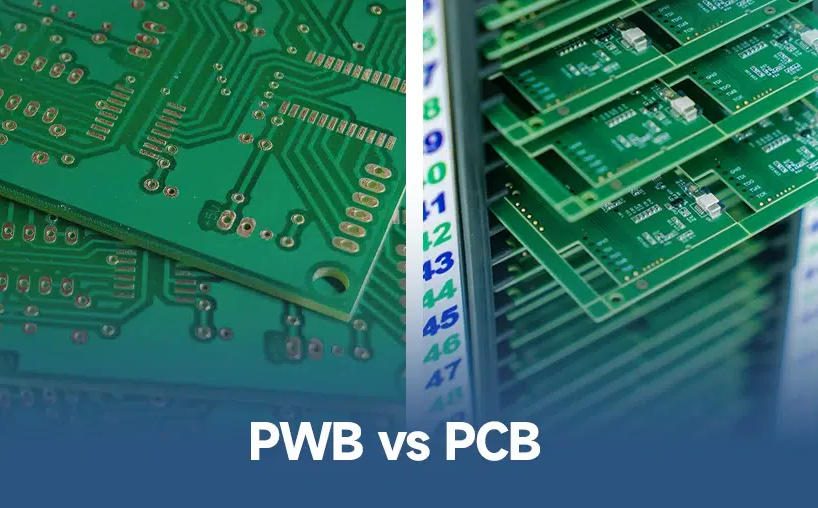
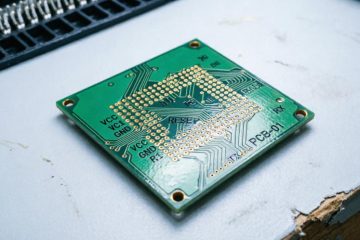
The core difference between PWB (Printed Wiring Board) and PCB (Printed Circuit Board) lies in their design, functionality, and manufacturing process. A PWB refers to a substrate with only conductive circuits (wiring) and no mounted components, while a PCB integrates these circuits with electronic components (resistors, capacitors, chips) to form a complete functional circuit.
In short, all PCBs are essentially PWBs, but not all PWBs are PCBs. A PWB is the basic structure, while a PCB is the finished form of a PWB after component integration.
Which Countries Prefer to Call PCB PWB? And Why?
Currently, the United Kingdom and some regions deeply influenced by British traditions (such as Hong Kong, China) are accustomed to referring to PCB (Printed Circuit Board) as PWB (Printed Wiring Board). The core reasons stem from term origin, historical traditions, and the continuation of standards, which can be detailed in three points.
First, the historical inertia of term origin. PWB was the name given to such substrates by the British in the early days, because the circuit boards at that time only had conductive circuits and no printed components, belonging to a relatively primitive substrate form. This name was fixed with the development of early electronic technology, and many British people still use this traditional name today.
Second, the impact of regional culture and technological inheritance. Influenced by the history of British colonial rule, Hong Kong, China, has continued British habits in the use of electronic industry terms. Therefore, some practitioners in Hong Kong also refer to PCB as PWB, consistent with the British name.
Finally, the continuation of some industry standards. In international certification standards such as UL, the definitions of PWB and PCB are clearly distinguished. Among them, PWB specifically refers to a bare board with only circuits, while PCB refers to a finished board integrated with components. In industry practice, the United Kingdom and related regions are more inclined to use the term PWB to refer to various circuit boards, thus forming a usage habit.
Origins of PWB and PCB
Both PWB and PCB originated in the early 20th century, with the core purpose of solving the problems of complex wiring and high cost of electronic components. The names and development histories of the two are closely related but each has its own focus.
The concept of PCB (Printed Circuit Board) gradually developed on the basis of PWB. In the early 20th century, Western Europe, North America and other regions began to study methods of replacing traditional wiring with printing. In 1925, American inventor Charles Ducas obtained the first related patent. In 1936, Austrian Paul Eisler developed the first PCB used in radio systems. After the U.S. Army made the technology public in 1948, PCB officially entered the stage of large-scale development.
The difference in their names also comes from the development stage: in the early days, only substrates with circuits could be made, so they were called PWB; with the progress of technology, components could be integrated on the substrate to form a complete circuit, and the name PCB gradually became popular.
Detailed Comparison Table of PWB and PCB
| Comparison Factor | PWB (Printed Wiring Board) | PCB (Printed Circuit Board) |
|---|---|---|
| Core Definition | A substrate with conductive copper foil circuits, no mounted electronic components | A PWB soldered with electronic components, which can form a functional circuit |
| Design Focus | Circuit layout, connectivity, and structural stability | Component integration, signal integrity, and overall functionality |
| Manufacturing Complexity | Low complexity, focusing on copper foil pattern production and substrate lamination | High complexity, including PWB manufacturing + component soldering (SMT/THT) and testing |
| Key Advantages | Low cost for prototyping, flexible design, easy modification | Ready to use, high reliability, optimized for specific device functions |
| Ideal Application Scenarios | Prototyping, circuit testing, custom wiring substrates | Finished electronic devices, mass-produced products, high-performance applications |
| Common Industries | Hobby electronics, prototyping labs, small-scale custom projects | Consumer electronics, automotive, medical, industrial control, etc. |
When Should You Choose PWB Instead of PCB?
Choose PWB when you need to test or prototype circuit lines without investing in component integration. It is suitable for the early stage of design verification, allowing you to verify the accuracy of the lines before adding expensive components.
For projects where components may be frequently replaced, PWB is also a better choice—you can easily modify the lines without reworking soldered parts, saving time and loss during the design iteration process.
When Is PCB a Better Choice Than PWB?
PCB is the right choice for finished products or projects that require a complete functional circuit. If your device needs to perform specific tasks (such as powering sensors or processing data), PCB can integrate all necessary components on a single reliable substrate.
For mass production, PCB is more efficient and cost-effective in the long run. It eliminates the manual component assembly step after PWB manufacturing, reducing human error and improving product consistency.
PWB vs PCB in Consumer Electronics: Practical Application Cases
In the field of consumer electronics, PCB is the standard configuration for finished products, while PWB is used for prototyping. For example, the main board of a smartphone is a PCB that integrates the processor, memory, and camera modules to achieve complete functionality.
During the smartphone design phase, PWB is used to test the lines between the processor and the display, ensuring signal integrity before component soldering and avoiding high rework costs caused by flawed line layouts.
Applications of PWB and PCB in Automotive Electronics
Key automotive electronic systems (such as infotainment systems, Advanced Driver Assistance Systems (ADAS), and engine control units) rely heavily on PCB. A typical ADAS camera module uses a PCB that integrates sensors and processing chips to detect obstacles.
These automotive circuits are prototyped using PWB to test the line’s resistance to high temperatures and vibration—core requirements for the automotive environment. After verification, the PWB is converted to PCB for mass production.
PWB vs PCB in Medical Electronics: Ensuring Reliability
Medical electronics have extremely high reliability requirements, so PCB is the preferred choice for finished devices. A portable ultrasound probe uses a 6-layer HDI PCB to integrate transducers and signal processing components in a small space.
PWB is used to test the signal integrity of PCB lines, ensuring that the probe can transmit microvolt-level ECG or ultrasound signals without distortion. This verification is crucial for medical devices that require accurate diagnostic data.
PWB vs PCB in Industrial Control Applications
Industrial control systems use PCB to achieve long-term stable operation in harsh environments. The main board of a servo drive integrates power management and signal processing components to control motor speed and position.
PWB is used to prototype PCB lines, testing their resistance to electromagnetic interference (EMI) and voltage fluctuations common in industrial environments, ensuring that the final PCB can operate reliably in factories and manufacturing plants.
What Are the Common Pain Points When Choosing Between PWB and PCB?
Pain Point 1: Ambiguous Design Requirements
Many people struggle to determine whether they need a PWB (lines only) or a PCB (with components). The solution is to clarify core needs: do you need to test lines first, or do you need a complete functional circuit? Choose PWB for prototyping and PCB for finished products.
Pain Point 2: Balancing Cost and Performance
PWB has lower upfront costs, but PCB is more cost-effective in mass production. The solution is to use PWB for prototyping, iterate and optimize the design repeatedly, and then switch to PCB for mass production after the design is improved.
Pain Point 3: Ensuring Compatibility with Components
A common problem is that the designed PWB does not match the expected components. The solution is to finalize component specifications before designing the PWB, ensuring that the line layout is consistent with the component pinout.
Pain Point 4: Meeting Industry-Specific Standards
Industries such as medical and automotive have strict standards for PCB. The solution is to cooperate with manufacturers familiar with these standards to ensure that the designed PWB/PCB meets relevant requirements such as ISO, IPC, and FDA.
FAQ: Common Questions About PWB and PCB
Are PWB and PCB the Same?
No, they are not the same. A PWB is a substrate with only conductive lines, while a PCB is a PWB soldered with electronic components. All PCBs are PWBs, but not all PWBs are PCBs.
Can a PWB Be Converted to a PCB?
Yes. A PWB can be converted to a PCB by soldering electronic components onto the PWB’s conductive lines. This is a common process in prototyping: test the PWB first, then convert it to PCB for production.
Which Is More Cost-Effective: PWB or PCB?
For small-batch production or prototyping, PWB is more cost-effective because it skips the component soldering step. For mass production, PCB is more cost-effective, as automated soldering reduces labor costs and improves consistency.
Is There a Difference in Durability Between PWB and PCB?
The durability of PWB and PCB depends on the substrate material and manufacturing process, not the product type itself. Both can be designed to withstand harsh environments (high temperature, vibration) by choosing appropriate materials.
Which Is Better for High-Frequency Applications: PWB or PCB?
Both PWB and PCB can be used for high-frequency applications, but design is the key. PWBs for high-frequency applications require optimized line layouts, while PCBs need reasonable component placement to reduce signal interference.
Can PWB Be Used for Mass Production?
While feasible, PWB is not suitable for mass production. It requires manual component assembly, which is time-consuming and prone to errors. PCB is more suitable for mass production because component integration is completed during the manufacturing process.
How to Ensure Your PWB/PCB Meets Project Requirements?
First, clarify your project goals: prototyping or finished product production, industry standards to be met, and performance requirements. This will help you determine whether you need a PWB or a PCB.
Cooperate with manufacturers that provide customizable solutions and can adapt to design changes. We offer support for on-demand customization + free DFM reports to ensure your PWB or PCB meets all specifications before production.
Why Choose Thindry for Your PWB and PCB Needs?
Thindry specializes in high-quality PWB and PCB manufacturing, with rich experience in consumer electronics, automotive, medical, and industrial control fields. Our team of engineers ensures that your design achieves optimal performance, reliability, and cost-effectiveness.
We provide customized PWB and PCB solutions for your project, covering the entire process from prototyping to mass production. Support for on-demand customization + free DFM reports ensures you get the circuit board that meets your needs, avoiding unnecessary delays and rework.
We provide PWB and PCB products. If you need high-quality, reliable solutions, please contact us to place an order. Our email is sales@pcbtry.com.
0 Comments