




Why Is PCB Green? Here’s the Straightforward Answer
The question “why is PCB green” is one of the most common among electronics professionals and enthusiasts alike. The short answer is: PCB is green because of the solder mask—a protective layer applied to the board’s surface.
This green solder mask isn’t chosen for aesthetics; it’s a deliberate engineering decision that balances functionality, manufacturability, and cost.
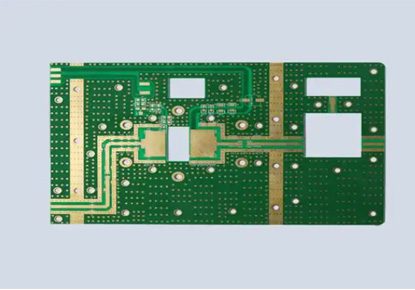
Why is PCB green? It all comes down to optimal visibility, material stability, and industry tradition that has stood the test of time.
What Is the Green Layer on a PCB, Exactly?
The green color on a PCB is not the board itself—it’s a solder mask (also called “green oil”), a thin protective coating applied over the copper traces.
Its primary job is to prevent short circuits during soldering, protect copper from oxidation, and insulate components.
The green solder mask is made of resin, fillers, and a stable green pigment (typically phthalocyanine green). This pigment is non-conductive, heat-resistant, and compatible with standard PCB manufacturing processes.
Why Is PCB Green Instead of Other Colors?
Green became the global industry standard due to three key advantages that solve critical engineering and production pain points: visibility, material reliability, and manufacturing compatibility.
First, green offers superior contrast with copper traces and white solder paste, simplifying defect detection for both automated and manual inspections.
Second, green solder mask delivers excellent thermal and chemical stability, easily withstanding lead-free soldering temperatures up to 280°C.
Third, green solder mask was one of the first stable, mass-producible formulas, making it the default optimized for all production equipment.
How Does Green Solder Mask Improve PCB Manufacturing?
Green solder mask significantly improves efficiency in automated optical inspection (AOI) and manual quality control workflows.
AOI systems perform best with the 520-560nm wavelength of green light, boosting defect detection accuracy by nearly 15% compared to alternative colors.
For manual inspections, green light reduces eye strain during long shifts, lowering human error and improving overall production yields.
Green PCB vs. Other PCB Colors: A Detailed Comparison
| PCB Color | Key Advantages | Key Disadvantages | Common Applications |
|---|---|---|---|
| Green | High contrast, low visual fatigue, stable material, compatible with AOI, high manufacturability | Less aesthetically unique | Consumer electronics, industrial control, communication devices, automotive electronics |
| Black | Sleek appearance, reduces glare, minor electromagnetic shielding | Difficult to inspect, higher production cost, signal loss risk at high frequencies | High-end consumer electronics, aerospace systems |
| Red | High temperature stability, strong visibility for manual checks | Slower curing time, lower AOI accuracy | Industrial control equipment |
| White | High light reflectivity, ideal for LED designs | Prone to yellowing, harder to clean | LED lighting, display panels |
Green PCB Applications in Top Industries (Real-World Examples)
1. Consumer Electronics
Smartphones, laptops, and wearables use green PCBs to protect ultra-fine copper traces and ensure stable signal transmission between core components.
2. Automotive Electronics
Engine control units (ECUs) and battery management systems (BMS) rely on green PCBs for high heat resistance and long-term reliability in harsh vehicle environments.
3. Industrial Control & Automation
Programmable logic controllers (PLCs) use green PCBs to resist moisture, oil, dust, and chemical exposure in factory settings.
4. Communication Devices
5G routers and base stations use green PCBs for stable dielectric properties, minimizing signal loss and ensuring reliable high-speed data transmission.
What Are the Common Myths About Green PCBs?
Myth 1: Green PCBs Are Cheaper or Lower Quality
This is false. Green PCBs offer optimized production efficiency, not poor quality. High-grade green PCBs meet strict international performance standards.
Myth 2: Green PCBs Are Eco-Friendly Due to Color
The green pigment does not improve eco-friendliness. Sustainability depends on RoHS-compliant materials, not solder mask color.
Myth 3: Green PCBs Have Better Electrical Performance
Performance depends on substrate material, copper thickness, and design—not color. Green’s value lies in manufacturing and inspection, not electrical function.
FAQ: Common Questions About Why PCB Is Green
1. Is the green color part of the PCB base material?
No. The green layer is a protective solder mask. The PCB substrate is typically yellow or brown FR-4 material.
2. Can a PCB be green without a solder mask?
No. Without solder mask, copper traces are exposed and vulnerable to oxidation, short circuits, and physical damage.
3. Does green solder mask affect signal integrity?
No. Green solder mask has a stable dielectric constant and does not interfere with signal transmission or performance.
4. Why do high-end products use non-green PCBs?
Non-green colors are used for branding or aesthetics only—they provide no performance benefits over green PCBs.
5. Is green solder mask heat resistant?
Yes. It withstands temperatures up to 280°C, fully compliant with lead-free soldering requirements.
6. Can I order custom color PCBs instead of green?
Yes, custom colors are available, but green remains the most reliable and cost-effective choice for most applications.
How to Choose the Right Solder Mask Color for Your PCB Project
Choose green PCBs for optimal manufacturability, inspection efficiency, and reliability in nearly all applications.
Select alternative colors only for specific use cases such as LED lighting or brand aesthetics.
We offer custom PCB solutions with green solder mask and full customization support. Customization is available + free DFM reports are provided to ensure manufacturability.
Get High-Quality Green PCBs for Your Project
Now that you understand why PCB is green and the advantages of green solder mask, you can select the best PCB solution for your project.
Thindry specializes in high-performance green PCBs for consumer electronics, automotive, industrial, and communication applications.
We provide reliable, industry-standard green PCB products tailored to your needs. If you need green PCBs or related solutions, contact us to place an order.
Our email: sales@pcbtry.com
Customization is available + free DFM reports
0 Comments