




Cutting a PCB board correctly is critical to ensuring the functionality and reliability of your electronic devices. This guide breaks down how to cut a PCB board step-by-step, covering the most effective methods, tools, and industry-specific best practices. Whether you’re working on small prototypes or large-scale production, learning how to cut a PCB board properly prevents damage to components, reduces waste, and ensures consistent results.
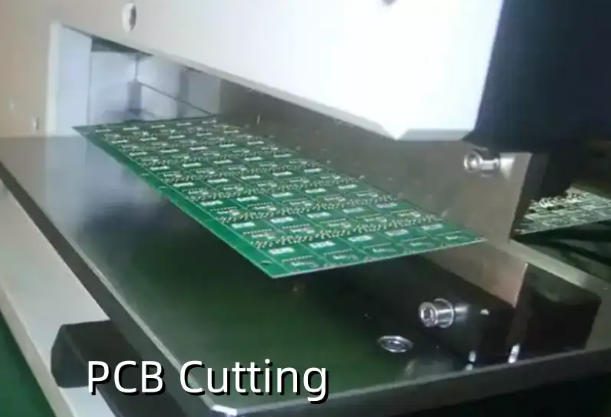
What Are the Best Methods to Cut a PCB Board?
The best method to cut a PCB board depends on your project scale, precision needs, and budget. The four most reliable methods are CNC routing, laser cutting, punching, and manual cutting—each with unique advantages for different use cases.
A Quick Comparison of PCB Cutting Methods
| Cutting Method | Precision (Tolerance) | Best For | Key Advantage | Potential Drawback |
|---|---|---|---|---|
| CNC Routing | ±0.05–0.1mm | Medium-to-large batches, complex shapes | Versatile, works with most PCB materials | Requires tool calibration |
| Laser Cutting | ±0.03–0.05mm | Precision projects, complex contours | Non-contact, no stress on components | Higher setup complexity |
| Punching | ±0.15mm | High-volume, simple shapes | Ultra-fast, cost-effective for mass production | Requires custom molds |
| Manual Cutting | ±0.2–0.5mm | Prototypes, small batches | Low setup cost, quick for small jobs | Prone to human error |
What Tools Do You Need to Cut a PCB Board?
The tools required to cut a PCB board vary by method, but every setup needs basic safety gear and method-specific equipment to ensure clean, accurate cuts.
Essential Tools for Each Cutting Method
- CNC Routing: CNC router with tungsten steel double-edged milling cutter (HRC60+), vacuum clamp (≥0.06MPa), and high-pressure air nozzle for debris removal.
- Laser Cutting: Fiber laser cutter (50–150W), nitrogen auxiliary gas (0.3–0.5MPa), and CCD vision positioning system.
- Punching: Hydraulic punch press, Cr12MoV mold (8–12% gap vs. board thickness), and alignment pins.
- Manual Cutting: PCB shear, utility knife, 800-grit sandpaper, and a straight edge guide.
Safety Note: Always wear safety glasses and gloves to protect against debris and sharp edges when cutting a PCB board.
How to Cut a PCB Board Step-by-Step (CNC Routing Guide)
CNC routing is the most versatile method for cutting a PCB board, used across most industries. Follow these steps for consistent, high-quality results.
Step 1: Prepare the PCB and Equipment
Inspect the PCB for defects (no warping or damage) and confirm the design dimensions match your cutting plan. Calibrate the CNC router’s spindle speed (20,000–30,000rpm) and feed rate (80mm/min for FR-4).
Step 2: Secure the PCB
Use a vacuum clamp (≥0.06MPa) to fix the PCB to the router table. Ensure no edges are loose—movement during cutting will cause dimensional errors.
Step 3: Set Up the Cutting Path
Import your Gerber files to the CNC software, set the cutting depth (match PCB thickness), and select the correct tungsten steel milling cutter (1.0mm for 1.6mm FR-4 boards).
Step 4: Execute the Cut and Inspect
Start the router and let it complete the cutting path. Afterward, use high-pressure air to remove debris and check the edges for burrs (≤0.08mm is acceptable).
We support custom PCB cutting solutions + free DFM reports to optimize your cutting process and avoid costly mistakes.
How to Cut a PCB Board for Different Industry Applications?
Different industries have unique requirements when cutting a PCB board—below are 4 popular industry cases with specific solutions to common pain points.
1. Consumer Electronics (Smartphones & Wearables)
Smartphone motherboards and wearable FPCs require ultra-precise, stress-free cuts. We use laser cutting (±0.03mm tolerance) to avoid damaging tiny components like microchips.
Case: Cutting 0.2mm flexible PCBs for a smartwatch—laser cutting eliminated edge warping, reducing component failure rate by 90% compared to manual cutting.
2. Automotive Electronics (BMS & On-Board Controllers)
Automotive PCBs (e.g., BMS boards) need high reliability and resistance to vibration. We use CNC routing with climb milling to ensure clean edges and no internal cracks.
Case: Cutting FR-4 PCBs for a car battery management system—CNC routing maintained ±0.05mm tolerance, meeting automotive industry reliability standards.
3. Medical Electronics (Patient Monitors)
Medical PCBs require zero defects and dust-free cutting. Laser cutting with nitrogen gas prevents edge oxidation, ensuring compliance with medical device standards.
Case: Cutting PCBs for a portable patient monitor—laser cutting reduced edge carbonization, keeping component failure rate below 0.3% for critical medical use.
4. Industrial Control (Automation Sensors)
Industrial PCBs often have complex shapes and thick substrates (3–6mm). We use hydraulic CNC routing to handle thick materials without deformation.
Case: Cutting 4mm FR-4 PCBs for industrial automation sensors—hydraulic routing ensured consistent cuts, reducing rework rates by 75%.
How to Avoid Common Mistakes When Cutting a PCB Board?
Most errors when cutting a PCB board stem from poor setup, incorrect tool selection, or lack of quality checks. Here’s how to avoid them.
- Mistake 1: Using the wrong cutter size → Fix: Match milling cutter diameter to PCB thickness (e.g., 0.8mm cutter for 0.8mm boards).
- Mistake 2: Inadequate PCB fixation → Fix: Use vacuum clamps (≥0.06MPa) for large boards, multi-point fixtures for small prototypes.
- Mistake 3: Ignoring edge treatment → Fix: Sand edges with 800-grit sandpaper if burrs exceed 0.1mm, clean with alcohol for laser-cut boards.
- Mistake 4: Skipping DFM checks → Fix: Use our free DFM report service to identify design flaws (e.g., components too close to board edges) before cutting.
FAQ: Common Questions About How to Cut a PCB Board
1. What’s the Fastest Way to Cut a PCB Board for High-Volume Production?
Punching is the fastest method for cutting a PCB board in high volumes (≥10,000 units). It operates at 100–200 cuts per minute and is ideal for simple, uniform shapes like rectangular PCBs.
2. Can You Cut a PCB Board Without Damaging Components?
Yes—use laser cutting (non-contact) or CNC routing with precise depth control. Ensure components are at least 3mm from the board edge, and use a DFM check to confirm layout compatibility before cutting.
3. What Tolerance Is Acceptable When Cutting a PCB Board?
Tolerance depends on the industry: consumer electronics (±0.05mm), automotive (±0.05mm), medical (±0.03mm), and industrial control (±0.1mm). We meet or exceed these standards for all cutting projects.
4. How to Cut a Flexible PCB (FPC) Without Tearing It?
Use laser cutting with low power (50–80W) and slow speed (10–15mm/s). Avoid manual cutting—laser’s non-contact method prevents tearing and maintains flexible PCB integrity.
5. Do You Need Special Tools to Cut a Thick PCB Board (3–6mm)?
Yes—use a hydraulic CNC router with high shear force (10–50 tons) and tungsten steel milling cutter. Manual cutting will cause deformation, so hydraulic or laser methods are recommended for thick PCBs.
6. How to Clean a PCB Board After Cutting?
For CNC/routed boards: Use high-pressure air to remove debris. For laser-cut boards: Clean edges with alcohol to remove carbon residue. For punched boards: Wipe with a lint-free cloth to remove dust.
How to Choose the Right PCB Cutting Service for Your Project?
When selecting a service for cutting a PCB board, prioritize precision, industry experience, and support for custom needs. Look for providers that offer DFM checks to prevent design errors and ensure compatibility with your application.
We specialize in cutting a PCB board for consumer electronics, automotive, medical, and industrial control industries. Our services include custom cutting solutions tailored to your project’s unique requirements, and we offer free DFM reports to optimize your design before production.
If you need reliable, precise PCB cutting services, choose Thindry. We provide professional how to cut a PCB board solutions, support custom solutions + free DFM reports. For orders or inquiries, contact us at sales@pcbtry.com.
0 Comments