




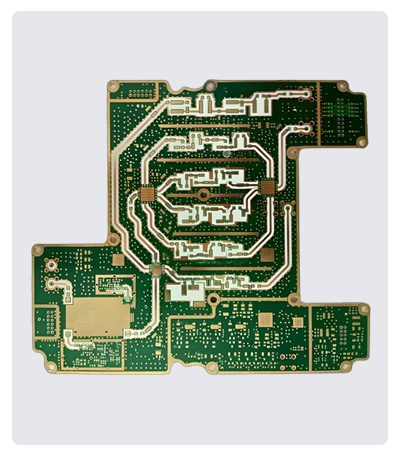
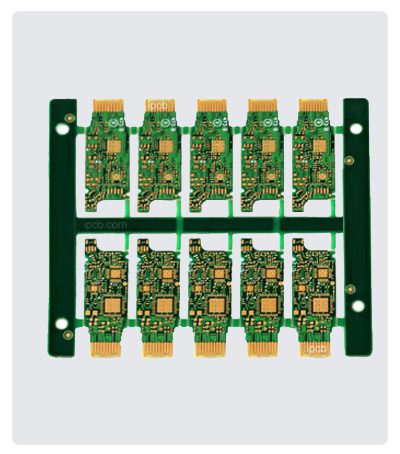
When sourcing FR4 prototype PCB, partnering with a trusted manufacturer like Thindry is non-negotiable for precision and reliability. Our expertise in FR4 prototype PCB fabrication ensures your designs transition seamlessly from prototype to production, with strict adherence to industry standards for medical, aerospace, and industrial applications. Let’s dive into the critical details that make FR4 the top choice for prototypes and how to optimize your project for performance and manufacturability.
Why Choose Thindry for FR4 Prototype PCB?
We deliver 24/48h FR4 prototype PCB samples, backed by ISO certification and extensive experience in high-reliability industries. Our team of veteran PCB engineers provides tailored solutions—from high Tg FR4 to halogen-free options—with rigorous multi-step quality control to meet the strictest application demands. We support global clients with on-demand technical expertise, flexible customization for complex multilayer designs, and seamless prototyping-to-production scalability.
What Is FR4 Prototype PCB and Its Core Properties?
Definition & Composition
FR4 prototype PCB uses flame-retardant grade 4 (FR4) material, a glass fiber cloth composite impregnated with epoxy resin—this combination is the universal industry standard for printed circuit board prototypes. It is the go-to substrate for prototyping due to its balanced mechanical strength, excellent electrical insulation, and high processability, accounting for over 80% of global PCB substrate usage across all industries.
Key Technical Parameters
| Technical Parameter | Typical Value (Standard FR4) | High Tg FR4 |
|---|---|---|
| Glass Transition Temperature (Tg) | 130–140°C | 170–180°C |
| Decomposition Temperature (Td) | 300–350°C | 350+°C |
| Dielectric Constant (Dk, 1GHz) | 4.2–4.8 | 4.3–4.6 |
| Loss Factor (Df, 1GHz) | 0.015–0.03 | 0.012–0.025 |
When to Use FR4 for Prototype PCBs (and When to Avoid It?)
Ideal Applications for FR4 Prototype PCB
FR4 prototype PCB excels in low-to-mid frequency (≤1GHz) electronic designs, including consumer electronics, industrial control panels, and portable medical devices. Its unbeatable cost-effectiveness and mature manufacturing process make it the perfect substrate for rapid prototyping, design validation, and small-batch pre-production runs.
Scenarios to Avoid Standard FR4 Prototype PCB
Avoid standard FR4 for high-frequency (≥10GHz) RF/microwave designs or extreme-temperature operating environments above 150°C. For these high-performance use cases, opt for specialized substrates like Rogers laminates for RF or ceramic substrates for extreme thermal conditions instead of FR4.
How to Select the Right FR4 Variant for Prototypes?
- Standard FR4: The best choice for consumer electronics prototypes with moderate operating temperature requirements (≤85°C) and basic performance needs—cost-efficient and highly manufacturable.
- High Tg FR4: Essential for industrial, automotive, and aerospace prototypes, as it endures lead-free reflow soldering temperatures (260°C) and sustained high operating temperatures without degradation.
- Halogen-Free FR4: Mandatory for medical, aerospace, and automotive prototypes to meet RoHS 2.0 and international environmental standards, featuring non-toxic phosphorus-based flame retardants.
FR4 Prototype PCB vs. Other Substrate Materials
| Substrate Material | High-Frequency Performance | Heat Dissipation | Processability | Typical Prototype Use Case |
|---|---|---|---|---|
| FR4 | Moderate (≤1GHz) | Low (0.3 W/(m·K)) | Excellent | General industrial controls, portable medical devices |
| Rogers RO4000 | Superior (≥5GHz) | Moderate | Difficult | RF communication, radar sensor prototypes |
| Aluminum Substrate | Moderate | Excellent (1–4 W/(m·K)) | Moderate | Power module, LED driver prototypes |
| Ceramic (AlN) | Superior | Exceptional (170+ W/(m·K)) | Very Difficult | Aerospace high-temperature sensor prototypes |
What Are the Manufacturing Limits for FR4 Prototype PCB?
Key Process Constraints for Standard Fabrication
Standard FR4 prototype PCB fabrication supports board thicknesses ranging from 0.2–3.2mm, copper weights of ½–4 oz, and a minimum line width/spacing of 0.1–0.15mm for 1 oz copper cladding. The reliable plating aspect ratio (board thickness:hole diameter) for through-hole vias is typically 8:1–10:1, ensuring uniform copper deposition and mechanical stability.
Layer Count Considerations for FR4 Prototypes
Standard FR4 is highly practical for 1–12 layer prototypes for all mainstream industries. Beyond 12 layers for complex high-density designs, high Tg FR4 is strongly recommended to prevent board warping and delamination during multiple lamination and thermal cycles in production.
How to Optimize FR4 Prototype PCB for Medical Devices?
Medical FR4 prototype PCB requires halogen-free FR4 materials, full ISO 13485 certification compliance, and zero-fault reliability for patient safety. Thindry recently supplied FR4 prototype PCB for a portable handheld ultrasound device, utilizing high Tg halogen-free FR4 to ensure stable performance across a 0–40°C operating range and full compatibility with sterile medical device packaging and sterilization processes.
What Are the Aerospace Grade Requirements for FR4 Prototype PCB?
Aerospace FR4 prototype PCB must meet strict MIL-STD military standards, with high Tg FR4 or ceramic-modified FR4 variants required for extreme temperature cycling (-55°C to 125°C). Our engineering team delivered custom FR4 prototype PCB for a small satellite navigation module, using ceramic-filled high Tg FR4 to minimize high-speed signal loss and enhance mechanical durability against launch vibration and space environmental stressors.
How to Ensure Industrial Equipment Reliability with FR4 Prototype PCB?
Industrial FR4 prototype PCB demands robust resistance to vibration, dust, chemical exposure, and wide temperature fluctuations. For a heavy-duty CNC machine controller prototype, Thindry used 7628 glass fiber FR4 (thick woven cloth) to boost impact and flexural resistance, paired with ENIG surface treatment for long-term corrosion protection in factory floor industrial environments.
FAQ: Common FR4 Prototype PCB Issues & Solutions
1. Why Does My FR4 Prototype PCB Delaminate During Soldering?
Delamination in FR4 prototype PCB during soldering stems from low Tg material selection or inadequate lamination pressure/temperature control in fabrication. Resolve this by using high Tg FR4 (170°C+) for lead-free soldering processes and verifying your manufacturer follows IPC-A-600 lamination standards. Thindry’s strict pre-preg quality control and precision lamination eliminate this common failure risk entirely.
2. Can FR4 Prototype PCB Handle High-Frequency Signals?
Standard FR4 prototype PCB performs reliably for signals ≤1GHz with minimal signal loss. For high-frequency signals between 1–10GHz, use ceramic-filled modified FR4 (with a dielectric constant of 3.5–4.0) to reduce signal attenuation. For frequencies beyond 10GHz, switch to specialized RF substrates like Rogers for optimal high-frequency performance.
3. How to Improve Heat Dissipation in FR4 Prototype PCB?
Enhance heat dissipation in FR4 prototype PCB by increasing copper pour areas for power/ground planes, placing thermal vias (with large pad sizes) near high-heat components, or selecting carbon-modified FR4 (offering 3x higher thermal conductivity than standard FR4). For high-power industrial/medical prototypes, combine FR4 with aluminum core substrates for hybrid thermal performance.
4. What Surface Treatment Is Best for FR4 Prototype PCB?
ENIG (Electroless Nickel Immersion Gold) is the best surface treatment for aerospace/medical FR4 prototype PCB, offering superior flatness for fine-pitch components and long-term corrosion resistance. HASL is a cost-effective option for industrial prototypes with through-hole components, while OSP is an eco-friendly choice for consumer electronics prototypes with short production lead times.
5. Is Halogen-Free FR4 Necessary for Prototypes?
Yes, halogen-free FR4 prototype PCB is a mandatory requirement for medical, aerospace, and automotive prototypes to meet RoHS 2.0 and REACH international regulations. Halogen-free FR4 maintains nearly identical mechanical and electrical properties to standard FR4 but emits no toxic or corrosive gases when exposed to high temperatures or open flame—critical for safety-critical applications.
6. How to Reduce Warpage in Multilayer FR4 Prototype PCB?
Warpage in multilayer FR4 prototype PCB is minimized by balancing copper distribution equally across all layers, using a symmetric stackup design, and selecting high Tg FR4 material for lamination. Thindry’s precision lamination process (with temperature control of ±2°C and uniform pressure distribution) limits board warpage to ≤0.75%—well below IPC industry standards.
What Are the Best Surface Treatments for FR4 Prototype PCB?
- ENIG: The gold standard for aerospace and medical FR4 prototype PCB, delivering long-term corrosion resistance, a flat soldering surface, and compatibility with fine-pitch SMD and BGA components.
- HASL: A cost-efficient surface treatment for industrial FR4 prototype PCB, ideal for through-hole components and low-complexity designs with large pad sizes.
- OSP: An eco-friendly, water-based surface treatment for consumer electronics FR4 prototype PCB, fully compatible with reflow and wave soldering processes for fast prototyping.
How to Design FR4 Prototype PCB for Optimal Performance?
Stackup Design Guidelines for FR4 Prototypes
Always use symmetric stackups for FR4 prototype PCB to eliminate warpage caused by uneven thermal expansion. For optimal signal integrity, separate power and ground planes on adjacent layers and precisely control dielectric thickness to maintain target characteristic impedance (50Ω for single-ended signals, 100Ω for differential pairs).
Thermal Design Tips for FR4 Prototypes
Add thermal relief pads for high-heat discrete components and place dense thermal vias (0.2mm drill size) near high-power ICs to transfer heat from the FR4 substrate to copper planes. Avoid large, unconnected copper islands on any layer, as they trap heat in the FR4 material and cause localized overheating and component failure.
Thindry is a leading manufacturer of high-quality FR4 prototype PCB, offering fully custom solutions engineered for medical, aerospace, and industrial equipment applications. Our 24/48h quick-turn samples, ISO-certified quality control, and in-house engineering expertise ensure your FR4 prototype PCB meets all design, performance, and industry compliance requirements—from initial prototype to full production scaling. If you need reliable, high-performance FR4 prototype PCB or any custom PCB solutions, contact our team to place your order at sales@pcbtry.com.
0 Comments