




Military PCB design is not about cost optimization. It is about survival, reliability, and mission success. If you are sourcing a military PCB manufacturer, choosing the wrong partner can introduce risks that only show up after deployment.
This guide explains military PCBs step by step—from standards and materials to fabrication and testing—so even first-time buyers can make confident decisions. For engineers and procurement teams seeking a dependable military PCB manufacturer, Thindry Circuit is built for these requirements.
What Is a Military PCB and Why Is It Different From Commercial PCBs?
A military PCB is a printed circuit board engineered to operate reliably under extreme environmental, mechanical, and electrical stress.
Unlike commercial PCBs, military PCBs are designed for:
- Long service life (often 15–30 years)
- Zero-failure tolerance
- Harsh conditions such as vibration, shock, humidity, and temperature cycling
Commercial PCBs focus on cost and speed.
Military PCBs focus on repeatable performance under worst-case conditions.
Key differences include:
- IPC Class 3 or Class 3A acceptance criteria
- Mandatory traceability
- Controlled materials and processes
- Extensive electrical and environmental testing

Why Do Military Electronics Require Extremely High-Reliability PCBs?
Military electronics often operate where repair is impossible.
Failure risks include:
- Mission interruption
- Equipment loss
- Safety hazards
Military PCBs must withstand:
- Wide temperature ranges (-55°C to +125°C or higher)
- Continuous vibration and mechanical shock
- Long-term exposure to moisture and contaminants
Because of this, military PCB fabrication prioritizes process stability, not production speed.
What Standards Must a Military PCB Meet?
Military PCB requirements are typically defined by a combination of widely adopted industry standards and defense-specific specifications. A qualified military PCB manufacturer should be able to prove compliance through records, not slogans.
Common standards and specifications
- IPC-A-600 Class 3 / Class 3A
- IPC-6012 Class 3
- IPC-A-610 Class 3 (assembly acceptance)
- AS9100D quality management system
- MIL-PRF-31032 performance specification
These standards control:
- Copper plating thickness
- Hole wall integrity
- Solder mask adhesion
- Registration accuracy
- Electrical continuity
A qualified military PCB manufacturer must demonstrate compliance through documented processes—not marketing claims.
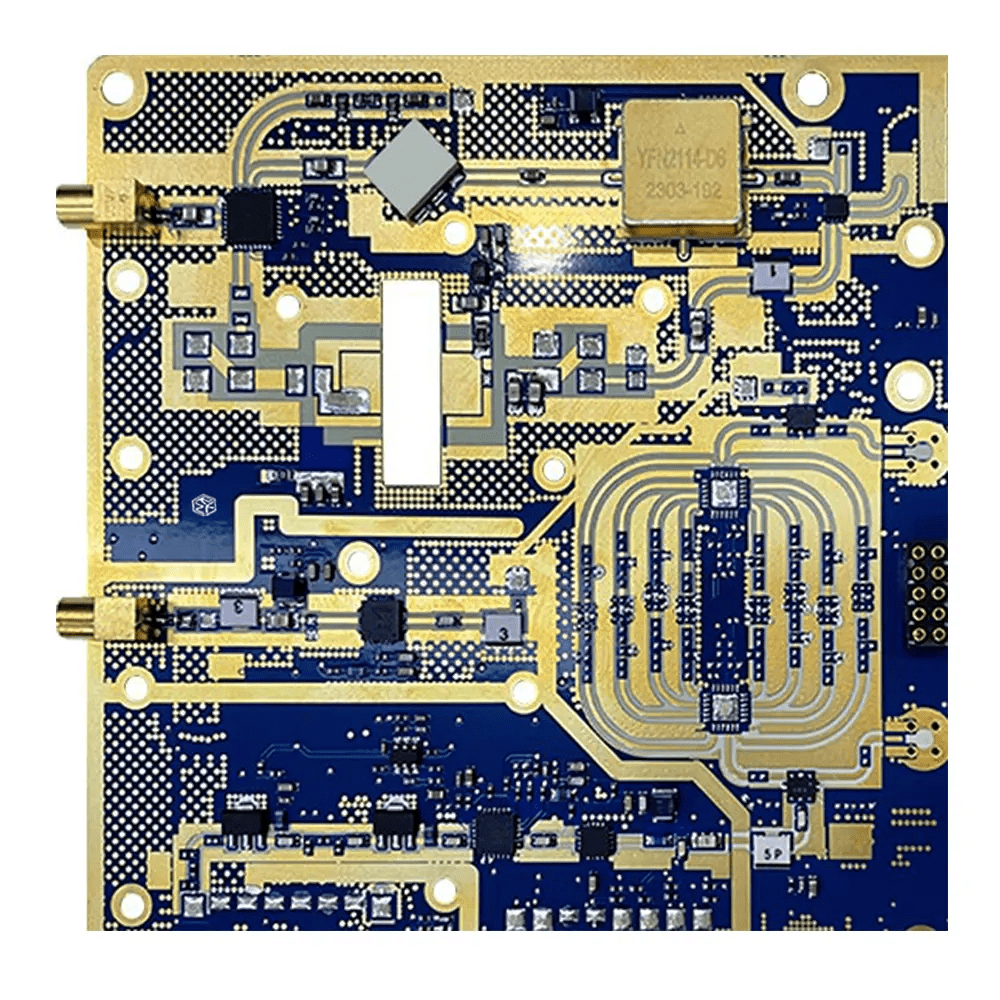
What Materials Are Commonly Used in Military PCBs?
Material selection is one of the biggest reliability drivers in military PCB fabrication. The right material helps resist delamination, cracking, and performance drift over time.
Common military PCB materials
- High-Tg FR-4 (often Tg ≥ 170°C)
- Polyimide for high-temperature endurance
- PTFE-based laminates for RF military systems
- Heavy copper laminates (for example, 2–10 oz) for power sections
What engineers should verify in material selection
- CTE stability and CTE mismatch risk control
- Thermal endurance and CAF resistance expectations
- Dielectric stability for controlled impedance designs
- Lot control and documentation for traceability
How Is Military PCB Fabrication Different From Standard PCB Fabrication?
Military PCB fabrication uses tighter process windows at every step. Output speed is less important than process repeatability and documented control.
Typical process differences
- Controlled lamination cycles and pressure profiles
- Reduced drill smear tolerance and tighter hole quality criteria
- Thicker copper plating and stricter plating uniformity controls
- Stronger inspection of hole wall quality and internal features
- 100% electrical testing as a baseline expectation
What Are Typical Military PCB Stack-Up Designs?
Military PCB stack-ups are usually designed for signal integrity, mechanical stability, and predictable impedance. The stack-up should be validated during prototyping, then locked for production.
Typical structures
- 4–8 layer rigid PCBs for control and embedded systems
- 10–20+ layer PCBs for complex communication and radar subsystems
- Hybrid RF stack-ups with controlled impedance routing
- Heavy copper inner layers for power distribution and thermal margin
How Are Military PCBs Tested for Reliability and Traceability?
Testing is non-negotiable in military PCB manufacturing. Traceability ensures every build can be audited back to materials and process parameters.
Common reliability tests and verifications
- 100% flying probe test or fixture electrical test
- Microsection analysis for plating and structure validation
- Thermal stress screening where required
- Solderability testing and process compatibility checks
- Impedance verification for RF and high-speed designs
Traceability expectations
- Raw material lot tracking and controlled storage
- Process parameter logging with auditable records
- MES-based serialization for end-to-end traceability
What Applications Commonly Use Military-Grade PCBs?
Military-grade PCBs appear in systems where reliability, longevity, and controlled performance are mandatory.
Common use cases
- Communication systems
- Radar and surveillance equipment
- Avionics and navigation modules
- Power control and conversion hardware
- Secure computing and encrypted systems
How Do Military PCBs Compare With Aerospace and Industrial PCBs?
This comparison helps you position requirements correctly when specifying a military PCB versus other high-reliability categories.
| Feature | Military PCB | Aerospace PCB | Industrial PCB |
| IPC Class | Class 3 / 3A | Class 3 | Class 2 / 3 |
| Traceability | Full | Full | Partial |
| Operating Temp | Extreme | High | Moderate |
| Failure Tolerance | Near zero | Very low | Low |
| Typical Lifespan | 20+ years | 15–20 years | 5–10 years |
How to Choose a Reliable Military PCB Manufacturer?
When selecting a military PCB manufacturer, validate capability and process control first. Price should be a later filter, not the primary decision rule.
Selection checklist
- AS9100D certification and controlled quality system
- Proven IPC Class 3 manufacturing experience
- Documented traceability and audit-ready records
- Engineering support before production (DFM, stack-up, materials)
- Experience with small batch, high-mix builds for qualification cycles
Why Choose Thindry Circuit as Your Military PCB Manufacturer?
Thindry Circuit supports high-reliability PCB and PCBA programs with engineering-led execution. Our goal is simple: deliver predictable quality, fast feedback, and production that matches real-world reliability needs.
Why engineers choose Thindry Circuit
- No MOQ and personal service
- AS9100D certificated
- Technical support before and after sales
- Prototype and small volume welcome
- Quick turn-out and on-time delivery
- High quality and special request available
- Strong R&D team with practical know-how
- Prompt feedback within 12 hours
Military PCB FAQ – Common Questions From Engineers and Buyers
What does Thindry Circuit do?
Thindry Circuit provides military PCB fabrication and military PCB assembly, including DFM support, prototyping, testing, and traceable manufacturing for high-reliability programs.
Does Thindry Circuit welcome prototypes or small-quantity orders?
Yes. We support prototypes and small batches with no MOQ, and we provide personal engineering support to help you validate designs faster.
Do you offer quick turn production?
Yes. We support quick-turn builds, including 1.5-week rapid PCBA delivery for urgent schedules when requirements are confirmed.
Can you produce PCBs that meet IPC Class 3 standards?
Yes. We can manufacture to IPC Class 3 and align process controls to high-reliability acceptance expectations.
Are you UL approved and can you support compliance needs?
Please share your project requirements. We can provide compliance documentation and manufacturing records needed for audits and program control.
What files do you need to quote a military PCB?
Gerber, drill files, stack-up, material callouts, impedance targets (if any), surface finish, solder mask notes, and testing requirements are usually enough to start.
How long will it take to get a completed quote?
For standard packages, we respond quickly once files are complete. For complex builds, we may confirm details first to avoid incorrect assumptions.
Can you deliver PCBs to our location?
Yes. We support global delivery. Share your shipping destination and timeline so we can propose a practical logistics plan.
Call to Action
If you are sourcing a military PCB or need a reliable military PCB manufacturer for prototypes or production, Thindry Circuit is ready to support your program.
Contact us: sales@pcbtry.com
0 Comments