




Security systems are essential in today’s connected world. From home monitoring cameras to industrial alarm networks, every device that protects people and property depends on one silent component — the Security PCB.
A Security PCB (Printed Circuit Board) forms the foundation of all electronic security devices. It connects sensors, processors, power circuits, and communication modules together to ensure every signal, every alert, and every response works accurately.
What Is a Security PCB?
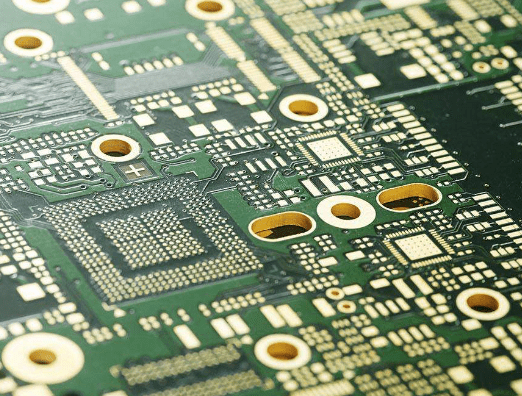
A Security PCB is a specially designed circuit board used to control, manage, and process signals in electronic security equipment. It acts as the “nervous system” of devices such as surveillance cameras, motion detectors, alarm controllers, access panels, and communication modules.
Unlike standard PCBs, security PCBs are built with strict attention to signal stability, reliability, and safety. They often include features such as:
- Multi-layer structures to support high-speed data communication.
- Shielding and grounding to reduce electromagnetic interference.
- Heat-resistant substrates for continuous operation.
- Compact layouts for smaller and smarter devices.
A well-engineered security PCB helps ensure that cameras capture clear images, alarms react instantly, and communication modules transmit data without delay.
What Is a Security PCB?
How Does PCB Assembly Work for Security Systems?
The PCB assembly (PCBA) process transforms a raw board into a fully functional control unit. Since security systems must work continuously, every assembly step demands precision.
1. PCB Design and Layout
Engineers start with circuit design, defining power distribution, signal routing, and grounding patterns. For security devices, proper EMI control and trace width calculation are critical to avoid signal loss.
2. Material Preparation
High-quality copper-clad laminates, solder paste, and components are prepared under controlled conditions. Materials are chosen based on temperature stability, dielectric strength, and mechanical toughness.
3. SMT (Surface Mount Technology) Assembly
This is the most crucial step. Tiny components — resistors, capacitors, IC chips — are placed automatically on the board using high-speed pick-and-place machines.
4. Reflow Soldering
The board is then heated in a reflow oven to melt the solder paste, creating solid electrical connections between pads and components. Temperature profiles are carefully controlled to prevent solder bridging or weak joints.
5. Through-Hole Assembly
For larger components such as relays, connectors, or transformers, through-hole soldering is used. It provides mechanical strength and ensures stable connections.
6. Testing and Inspection
Every security PCB undergoes AOI (Automatic Optical Inspection), X-ray testing, and functional verification. These tests guarantee that all circuits perform as intended before final assembly into security devices.
Why PCB Quality Is Crucial for Security Applications?
In security electronics, reliability is non-negotiable. Even a single faulty PCB could lead to false alarms, data loss, or system downtime — all of which compromise safety.
High-quality PCBs ensure:
- Stable signal transmission for sensors and processors.
- Durable solder joints resistant to vibration and heat.
- Accurate thermal management to avoid overheating.
- Consistent performance under continuous 24/7 operation.
For example, a CCTV camera with a poorly designed PCB might experience video distortion due to noise interference. Similarly, an alarm PCB with low-grade components could trigger randomly in hot or humid environments.
Common Materials Used in Security PCBs
The material selection determines the board’s electrical performance and thermal behavior. Security PCBs commonly use the following substrates:
- FR4: The most common choice for control boards. It provides good insulation, mechanical strength, and cost efficiency.
- Metal Core PCB (MCPCB): Used for LED-based lighting or infrared sensors where heat dissipation is critical.
- Ceramic PCB: Ideal for high-frequency communication modules and signal transmission due to low dielectric loss and excellent heat conductivity.
Copper thickness, surface finish (ENIG, HASL, or OSP), and solder mask materials are also customized according to the working voltage and environment.
Types of Security PCBs
Security systems rely on several types of PCBs, each serving a different function:
- Camera PCBs: Used in CCTV, IP cameras, and smart doorbell cameras. These PCBs integrate image sensors, video processors, and power circuits.
- Alarm Control PCBs: Handle signal inputs from detectors and manage sound and light alerts.
- Access Control PCBs: Coordinate card readers, keypads, and door actuators for secure entry management.
- Motion Detection PCBs: Process signals from PIR or radar sensors to detect human movement.
- Communication and Networking PCBs: Enable data exchange between sensors, control units, and cloud platforms.
Each design focuses on compactness, reliability, and energy efficiency to meet the increasing demand for smart and IoT-enabled security systems.
What Factors Affect the Design of a Security PCB?
Designing a PCB for a security system involves more than connecting parts — it’s about balancing electrical, mechanical, and thermal performance.
Key factors include:
- Signal Integrity: Traces must be carefully routed to reduce crosstalk and interference.
- Power Distribution: Adequate copper thickness is needed to handle continuous current without overheating.
- Component Placement: Sensitive components like sensors or antennas must be isolated from noisy circuits.
- Grounding Strategy: Proper grounding ensures system stability and EMI protection.
These details significantly influence the reliability and lifespan of the final device.
How to Choose a Reliable PCBA Partner for Security Systems?
Security PCBs require a manufacturing partner who understands quality and traceability. Here’s what to look for:
- Certifications: ISO9001, ISO13485, and IATF16949 demonstrate process control and quality assurance.
- Engineering Support: A professional team can optimize design, layout, and component selection for cost and performance.
- MES Tracking System: Ensures full traceability of each production step and component batch.
- Comprehensive Testing: Functional, thermal, and electrical tests confirm long-term reliability.
A capable PCBA manufacturer guarantees that your product performs flawlessly, even under demanding security conditions.
Applications of Security PCBs
- Surveillance cameras (CCTV, IP, and thermal types)
- Fire and smoke detection systems
- Smart locks and biometric access systems
- Intrusion alarms and sirens
- IoT-based monitoring devices
- Vehicle and asset tracking modules
The growing smart home and smart city industries are driving higher demand for customized and compact PCB solutions.
Case Study: Security PCB Manufacturing at Thindry Circuit
Thindry Circuit has extensive experience producing custom security PCBs and assemblies for international clients. Our facilities are equipped with high-speed SMT lines, AOI systems, X-ray inspection, and MES-controlled production management.
We handle both prototype and mass production orders, ensuring every board meets the highest standards of precision and safety. Whether it’s a compact access control module or a complex camera mainboard, our engineers fine-tune each step to guarantee reliable and efficient performance.
In Conclusion
A Security PCB may look simple, but it’s the foundation that ensures safety, responsiveness, and stability in every protection system. From material selection to soldering and testing, every detail influences how a security device performs in real-world environments.
By working with Thindry Circuit, you gain a trusted PCB manufacturer equipped with advanced facilities, international certifications, and strong engineering expertise. We focus on high-reliability PCB assembly for all kinds of security applications, helping you create smarter, safer, and more efficient products.
If you need PCB solutions for surveillance, alarm, or access control systems, contact Thindry Circuit today — where precision and reliability build lasting security.
0 Comments