




Introduction: The Central Role of Broadband Technology in Modern Electronic Systems
The Broadband Amplifier PCB is a core component of modern electronic communication systems. It achieves stable signal amplification over a wide frequency range through specialized circuit design and manufacturing processes. With the rapid development of technologies such as wireless communication, radar systems, and high-speed data transmission, the demand for broadband amplifiers is increasingly growing. Their performance directly determines the communication quality and data transmission rate of the entire system.
The fundamental difference between a Broadband Amplifier PCB and a traditional narrowband amplifier lies in its bandwidth. Traditional narrowband amplifiers typically operate within a relatively narrow frequency range, whereas broadband amplifiers must operate stably under the condition that the ratio of the upper cutoff frequency to the lower cutoff frequency is significantly greater than 1. Generally, amplifiers with a relative bandwidth greater than 20% to 30% are categorized as such.
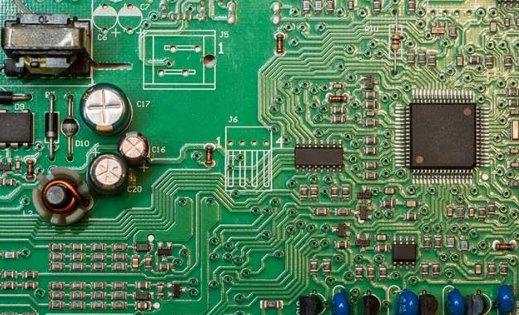
Basic Principles and Characteristics of Broadband Amplifier PCBs
Fundamentals of Working Principle
The working principle of a Broadband Amplifier PCB is based on the principle of total internal reflection and impedance matching technology. When an optical signal travels from a high-refractive-index medium to a low-refractive-index medium and the incident angle exceeds the critical angle, total internal reflection occurs at the interface, thus confining the signal to propagate within the core layer. The waveguide structure typically adopts a three-layer design: a high-refractive-index core layer is sandwiched between low-refractive-index cladding materials, forming a complete optical signal transmission channel.
Key Technical Characteristics
Broadband Amplifier PCBs possess the following key characteristics:
- Broadband Characteristic: Capable of normal operation across a very wide frequency range, handling signals from multiple frequency ranges. For example, video amplifiers for television image signals handle frequencies from low frequencies of a few Hz or tens of Hz to high frequencies of several MHz or tens of MHz.
- Gain Flatness: Within its operating broadband, it is essential to ensure the flatness and stability of the amplification factor (gain), enabling the output signal to accurately reflect the characteristics of the input signal and reduce signal distortion.
- High Linearity: Utilizing specialized circuit design and material selection to maintain high linearity across the entire operating frequency band, thereby avoiding signal distortion.
Design Essentials for Broadband Amplifier PCBs
Circuit Topology Selection
The design of a Broadband Amplifier PCB requires selecting an appropriate circuit topology, primarily including the following types:
- Cascode Structure: Using the common-base configuration as the load for the common-emitter configuration results in very low equivalent resistance and capacitance in the output circuit. This reduces the equivalent input capacitance caused by the Miller effect, increases the upper cutoff frequency of the common-emitter stage, and leverages the common-base configuration’s characteristic of having a higher upper cutoff frequency, resulting in a overall upper cutoff frequency higher than that of a basic common-emitter configuration.
- Stagger-Tuned Structure: Connecting several tuned resonant amplifier stages in series, with each stage tuned to a slightly different center frequency (staggered), can extend the passband. This type of amplifier is commonly used in the intermediate-frequency (IF) amplifier stages of receivers.
- Traveling-Wave Structure: Artificial transmission lines composed of LC networks are connected to both the input and output circuits. By making the propagation velocities of these two lines equal and matching the load resistances at the input and output ports to the characteristic impedance of the transmission lines, the current variation at the output becomes the sum of the current variations from each stage.
Material Selection and Process Requirements
Material selection for Broadband Amplifier PCBs is crucial, primarily considering the following factors:
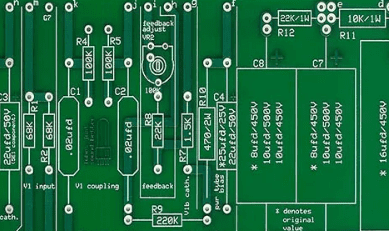
- Dielectric Constant Matching: Selecting substrate materials with stable dielectric constants, such as CER-10 material (dielectric constant 9.8, thickness 1.19mm). Increasing substrate thickness, where board size and loss permit, can prevent PCB warping.
- Thermal Expansion Coefficient Control: Waveguide materials need to have a thermal expansion coefficient (CTE) matching that of the PCB substrate. Typically, epoxy-based systems have a Z-axis CTE between 100-150 ppm, while the X and Y axes are between 16-18 ppm.
- Surface Finish Process: PCB surface finish options include Lead-Free HASL (Hot Air Solder Leveling) or ENIG (Electroless Nickel Immersion Gold). Lead-Free HASL is conventional, while ENIG is used for boards with BGA/fine-pitch components. The ENIG process offers a flat surface, good solderability, oxidation resistance, and allows for wire bonding, making it suitable for BGAs, fine-pitch components, keypads, test points, etc.
Manufacturing Process and Key Technologies
Core Manufacturing Flow
The manufacturing process for Broadband Amplifier PCBs mainly includes the following key steps:
- Registration and Drilling: Using the same drilling system to drill multiple core boards, creating different types of registration holes such as panel edge fiducials, inner-panel fiducials, outline fiducials, and pattern fiducials to ensure alignment accuracy in subsequent processes.
- Inner Layer Pattern Formation: Completing inner layer graphics processing through standard PCB processes like dry film lamination, exposure, development, and etching. For auxiliary core boards serving as optical waveguide substrates, the surface copper foil needs to be partially or completely etched away, leaving only the insulating substrate material.
- Organic Optical Waveguide Line Processing: Sequentially coating the optical waveguide substrate board with a low-refractive-index lower cladding, a high-refractive-index core layer, and a low-refractive-index upper cladding. The core layer is patterned into waveguide structures via UV lithography. This process can utilize a CCD positioning system, using inner-panel registration holes or copper pads as alignment targets.
Key Process Parameter Control
- Via Design: Conventional drill diameter is 0.3mm (12mil). The minimum drill diameter is 0.15mm (6mil), but this increases cost and reduces yield. The recommended design value is an inner diameter of 0.3mm and an outer diameter of 0.5mm (offering the best cost-performance ratio).
- Line Width Control: Conventional signal lines should be ≥ 0.15mm (6mil). Power line width should be increased based on current calculations. Controlled impedance lines require calculation based on the stack-up structure and core board parameters provided by the PCB manufacturer.
- Lamination Process: Thick PCB lamination faces three core challenges: uneven pressure transmission, difficult resin flow control, and thermal stress concentration, leading to variations in interlayer bonding strength up to 20%, thickness deviations exceeding 0.1mm, and warpage reaching 0.8mm/m.
Performance Optimization and Test Verification
Performance Optimization Strategies
Performance optimization for Broadband Amplifier PCBs primarily focuses on the following aspects:
- Bandwidth Extension Techniques: Employing low-frequency and high-frequency compensation measures. Low-frequency compensation involves connecting an RC parallel network in series with the amplifier load. At low signal frequencies, the RC network presents a higher impedance, increasing the load impedance and thus the gain, compensating for the gain drop caused by interstage coupling capacitors. High-frequency compensation involves connecting an inductor in series with the load. The inductive reactance increases with frequency, increasing the load impedance at high frequencies and compensating for the reduction in load impedance due to shunt capacitance.
- Negative Feedback Technology: By feeding a portion of the amplifier’s output signal back to the input, distortion can be reduced and bandwidth can be increased. Negative feedback can extend the passband by reducing the internal gain of the amplifier.
- Cascaded Amplifier Design: Connecting multiple amplifier stages, where each stage is responsible for amplifying a specific frequency range, can achieve a higher overall passband and ensure the amplifier operates over a wide frequency range.
Test and Verification Methods
Testing and verification of Broadband Amplifier PCBs require specialized test equipment and methods:
- Gain Test: Using a spectrum analyzer or network analyzer to measure the amplifier’s gain characteristics at different frequencies, ensuring gain flatness meets requirements across the entire operating band.
- Noise Figure Test: Using a noise figure analyzer to measure the amplifier’s noise performance, ensuring a low noise figure is maintained across the broadband.
- Linearity Test: Verifying the amplifier’s linearity performance through two-tone test or third-order intercept (TOI) test, ensuring good linear characteristics under large-signal input conditions.
Application Fields and Market Prospects
Main Application Fields
Broadband Amplifier PCBs have wide applications in several fields:
- Communication Systems: In wireless communication systems, broadband amplifiers are widely used in RF front-end modules. Their broadband characteristics enable wireless systems to achieve efficient and stable signal transmission over a wide frequency range. Simultaneously, the high gain and high output power characteristics of the amplifiers also help increase the transmission distance and coverage range of wireless communication systems.
- Radar Systems: In radar systems, broadband amplifiers are used to amplify echo signals, enhancing target detection capability. Broadband power amplifiers play a key role in radar system testing, used to simulate signals of different frequencies, amplitudes, and phases to evaluate radar system performance and accuracy.
- Test and Measurement Equipment: Broadband amplifiers are used in test and measurement equipment to accurately capture details of broadband signals and perform frequency response analysis. Broadband power amplifiers can be used to test and calibrate radio spectrum analyzers, ensuring accurate measurements across different frequency bands.
Market Prospects and Development Trends
According to market analysis, the Broadband Amplifier PCB market has broad prospects, with main development trends including:
- Technology Integration: With advancements in semiconductor technology, broadband amplifiers are developing towards higher integration and smaller sizes. Integrated broadband amplifier circuits combine multiple electronic devices and circuits into a complete broadband amplification circuit, offering advantages such as small size, low power consumption, and good stability.
- Frequency Extension: With the development of new-generation communication technologies like 5G and 6G, operating frequencies continue to extend to higher bands, placing higher demands on the bandwidth and performance of broadband amplifiers.
- Material Innovation: The application of new semiconductor materials like Silicon Carbide (SiC) and Gallium Nitride (GaN) provides better performance for broadband amplifiers. SiC wide-bandgap power devices feature high power, wide bandwidth, and high-temperature resistance, making them particularly suitable for manufacturing power devices used in high-temperature, high-frequency, high-power, and radiation-resistant environments.
Technical Challenges and Future Development Directions
Current Technical Challenges
The main technical challenges faced by Broadband Amplifier PCBs include:
- Thermal Management Issues: As power density increases, heat dissipation becomes a critical problem. Broadband amplifiers generate significant heat during high-power operation, requiring effective thermal design to ensure device reliability and lifespan.
- Process Consistency: Controlling process repeatability in mass production is difficult. Efficient coupling between waveguides and light sources/detectors requires precise alignment, posing higher demands on manufacturing processes.
- Cost Control: The manufacturing cost of high-performance broadband amplifiers is relatively high, especially when operating at high frequencies where requirements for materials and processes are stricter. Cost control becomes a key factor for industrial application.
Future Development Directions
The future development of Broadband Amplifier PCBs will focus on the following directions:
- New Material Applications: Developing new materials with low loss and high thermal conductivity, such as fluorinated polyimide, to improve waveguide transmission performance and thermal management capability.
- Manufacturing Process Innovation: Promoting the application of advanced manufacturing processes like laser direct writing and reactive ion etching to improve manufacturing precision and efficiency.
- System Integration: Moving towards higher levels of photoelectric hybrid integration, achieving monolithic integration of functions like sensors, processors, and amplifiers to enhance system performance and reliability.
- Intelligent Development: Integrating artificial intelligence algorithms to achieve adaptive adjustment and intelligent control of broadband amplifiers, improving system performance and power efficiency.
As a key component of modern electronic systems, the technological development of Broadband Amplifier PCBs will directly impact the progress of fields such as communications, radar, and test measurement. With the continuous emergence of new materials, processes, and technologies, Broadband Amplifier PCBs will enable higher performance, smaller size, and lower power consumption applications across wider frequency ranges, providing crucial support for the development of future electronic systems.
0 Comments