




IPC flexible PCB testing standards, such as IPC-2223 and IPC-9204, define how manufacturers should evaluate the electrical and mechanical reliability of Flexible Printed Circuit boards (FPCs). These standards provide a testing framework for assessing the performance of circuit boards under conditions like bending and high voltage.
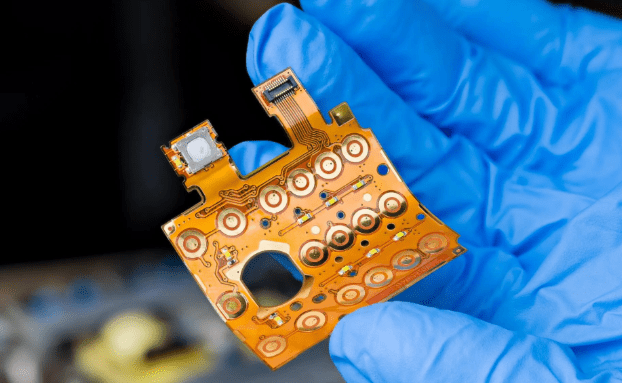
As a PCB designer, understanding these testing protocols is crucial for creating manufacturable designs that comply with IPC requirements. In this article, you will learn about the key IPC testing benchmarks that manufacturers should follow to ensure the quality and reliability of flexible and rigid-flex printed circuits.
Highlights:
IPC Flexible PCB Testing Standards Include:
- IPC-A-600: Establishes visual inspection criteria to detect defects like cracks or delamination, ensuring flawless flexible boards.
- IPC-TM-650: Provides methods such as Peel Strength (2.4.9) and High Voltage Testing (2.5.7.2) to confirm adhesive and dielectric reliability.
- IPC-TM-650 2.6.7: Evaluates resistance to thermal shock, ensuring flexible boards can withstand rapid temperature changes.
- IPC-TM-650 2.5.5.7: Employs TDR Impedance Testing to maintain signal quality in high-frequency flexible PCBs.
| IPC Standard | Scope | Use Case |
|---|---|---|
| IPC-6013 | Qualification and Performance Specification. | Implemented during prototyping to validate thermal cycling and bending performance early in development. |
| IPC-2223 | Component mounting and various interconnect systems. | Applied when designing mixed systems (e.g., RGB display interfaces, wearables, IoT devices) to ensure seamless integration. |
| IPC-9204 | Flexibility and Ductility. | Suitable for foldable smartphones, wearable health monitors, or other flexible electronics to verify mechanical toughness. |
| IPC-9257 | Electrical Test Procedures. | Verifying electrical performance before final production and deployment. |
| IPC-TM-650 | Standardized Test Methods for Assembly Electronic Materials and Processes. | Ensuring consistency and reliability of tests across production lines. |
| IPC-TM-650 2.6.21B | Use Temperature Evaluation of Metal-Clad Flexible Laminates, Cover Materials, and Bonding Films. | Assessing thermal reliability and guiding material selection for high-heat applications. |
7 IPC-Compliant Flexible PCB Testing Methods
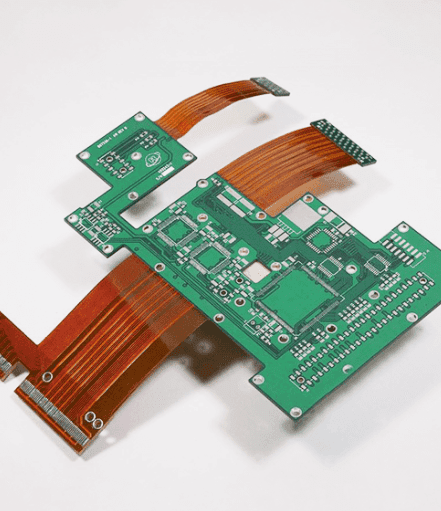
Manufacturers conduct these tests to ensure high-quality FPCs:
1. Visual Inspection for Physical Defects
This involves a comprehensive examination of the printed circuit board to detect any defects, such as delamination, cracks, or foreign objects. This type of inspection uses both manual and automated methods to identify issues early in the production process. The circuit board must comply with the criteria outlined in the IPC-A-600 document, which defines the acceptability standards for visual quality.
1.1 Manual Visual Inspection
- Involves examining the board with the naked eye or using magnification tools like microscopes or magnifying glasses.
- Compares the board against design files to confirm it meets all specifications.
- Common failures include scratches, cracks, oxidation, delamination, contamination, component misalignment, soldering defects (e.g., insufficient solder, solder bridges), and labeling errors.
1.2 Automated Optical Inspection (AOI)
- A non-contact inspection method using high-resolution cameras and advanced software to detect various defects.
- Can identify issues such as insufficient solder, bridging, missing or misaligned components, delamination, and foreign objects.
- AOI can detect pin-level defects on components with pitches as small as 16 mil, making it ideal for high-volume production requiring high consistency and accuracy.
1.3 Automated X-ray Inspection (AXI)
- AXI provides a non-destructive method for examining hidden defects inside the circuit board.
- It is used to inspect hidden solder joints under surface-mounted components and to verify through-hole connections.
- AXI can detect internal defects in multilayer boards, such as solder joint voids, wire bonding issues, and structural flaws.
1.4 Automated Laser Testing (ALT)
- ALT is part of the IPC rigid-flex PCB testing standards. It is a non-contact laser measurement method for high-precision measurement of critical PCB dimensions.
- A laser beam is projected onto the board surface, and the reflected light is analyzed to create a 3D profile.
- This data is compared with design files to detect dimensional deviations.
- ALT can be used in the pre-reflow stage to inspect solder paste volume, alignment, and surface irregularities.
- Highly recommended for rigid-flex assemblies.
14-Point Visual Inspection Checklist for FPCs
Sierra Circuits follows these inspection methods compliant with IPC flexible circuit standards.
You can use this checklist to perform a thorough quality check on boards received from your fabricator.
- Verify FPC dimensions against design specifications to ensure proper fit.
- Check hole diameters and spacing against the component placement design.
- Inspect component placement to confirm it matches the design requirements.
- Check for scratches, deformations, oxidation, and rough edges.
- Confirm that the FPC’s pads and pins are intact, complete, and free from soldering defects like voids or bridges.
- Assess the stiffness, roughness, and signs of lifting of the pad plating.
- Inspect the plating, checking for even distribution of plating aids, sufficient hardness, precise positioning, and bright color.
- Examine the substrate and coverlay for wrinkles, creases, or foreign objects.
- Measure pad and coverlay dimensions. Standard tolerance is ±0.3 mm (for dimensions less than 100 mm) or within 0.3% (for dimensions greater than 100 mm).
- The spread of adhesive or coating should be limited to a maximum of 0.2 mm. Ensure a total deviation of at least 0.05 mm between the adhesive/coating around the coverlay, punches, and connection points.
- Verify that part numbers and markings are legible and conform to the silkscreen specification.
- Check connectors for bent pins or misalignment.
- Inspect conductive traces for breaks, necking, or inconsistencies.
- Detect microcracks or any defects generated during the bending process.
2. Electrical Testing to Verify Circuit Integrity
This test confirms that the bare flexible PCB traces match their intended netlist. It checks for open circuits (Continuity Test) and short circuits (Isolation Test).
2.1 Continuity Test
- This test ensures all intended electrical connections are intact without breaks or open circuits. It checks for broken traces, incomplete etching, or poor plating.
- Steps for continuity testing:
- Mount the PCB onto a test fixture or system.
- Load the netlist or Gerber data to define expected connections.
- Apply a low voltage across each net and measure the resistance.
- Identify opens caused by physical damage or manufacturing issues.
- Generate a pass/fail report for traceability and quality control.
2.2 Isolation Test
- It verifies the absence of unintended electrical connections (shorts) between different conductive layers, traces, or components in the circuit.
- Steps for isolation testing:
- Apply a high voltage (typically 250-500 VDC) between isolated nets or conductors.
- Monitor the leakage current to evaluate insulation performance.
- Calculate the insulation resistance and compare it against IPC-TM-650 standards.
- Detect low-resistance paths or accidental shorts between nets.
- Ensure dielectric materials can withstand operating voltages without failure.
- Document all test results for compliance and traceability.
2.3 Flying Probe Test (FPT)
- It uses robotic arms equipped with precise probes that move over the flexible PCB to evaluate electrical connections and detect problems.
- This method is cost-effective and suitable for designs still in development or undergoing frequent changes, as it requires no custom test fixtures.
2.4 In-Circuit Test (ICT)
- This flexible PCB testing method uses a bed-of-nails fixture to contact predefined test points and evaluates circuit integrity after assembly.
- Steps for ICT:
- Align the flexible PCB with spring-loaded pins in the test fixture.
- Apply electrical signals and measure parameters like resistance, capacitance, and voltage levels.
- Detect shorts, opens, missing components, polarity issues, and component misplacement.
- Evaluate test coverage and generate comprehensive diagnostic reports.
- Ideal for high-volume production environments requiring repeatability and precision.
8-Point Electrical Testing Checklist for Flexible Printed Circuits
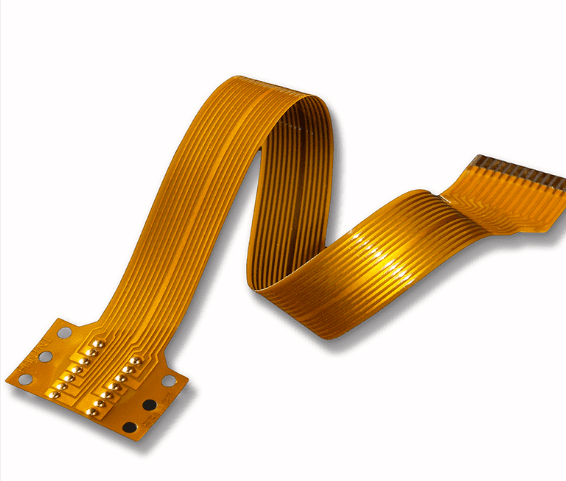
- Verify continuity for all nets to ensure conductivity.
- Measure expected voltages at all exposed test points.
- Check output voltages at connectors and terminals against expectations.
- Perform insulation resistance tests to verify dielectric strength.
- Check for uniform trace impedance.
- Simulate actual operating conditions to verify functional performance.
- Check that the FPC can handle required current levels without overheating or damage.
- Confirm all test equipment is calibrated for reliable measurements on flexible substrates.
3. Bend Testing to Assess Mechanical Reliability
This test is crucial for evaluating the mechanical durability of flexible circuit boards, especially in applications requiring continuous bending. It determines the board’s ability to withstand repeated bending cycles without breaking, cracking, or losing functionality. It ensures the board meets resilience requirements in IPC rigid-flex PCB testing standards. To enhance mechanical support for flexible circuits, it’s essential to use PCB stiffeners.
IPC-6013 outlines the qualification and performance requirements for flexible PCBs, while IPC-TM-650 Method 2.4.3 details the procedure for bend durability testing.
Commonly used bend test methods include:
3.1 Static Bend Test
- Evaluates the FPC’s response to tensile stress (concave bending) and compressive stress (convex bending).
- Uses a 3-point or 4-point support structure, where the board is supported at the ends and bent from the middle.
- Simulates tensile (concave) and compressive (convex) stresses.
- Measures cracking, delamination, deformation, and the maximum bend angle or radius before failure.
3.2 Dynamic Bend Test
- Simulates real-world conditions by applying cyclic loading conditions to the flexible board.
- The board is continuously bent at a preset radius for a set number of cycles to test its endurance.
- Evaluates fatigue failure, determining the number of cycles the FPC can withstand before performance degrades.
- It can be customized to simulate specific usage scenarios, such as frequent folding in smartphones or continuous bending in medical devices.
3.3 Push-Bend Test
- Evaluates the FPC’s response to alternating tensile and compressive forces.
- Force is applied from one or both sides of the flexible sample. This action creates alternating stresses, simulating real-world scenarios where the board bends in multiple directions.
- Helps identify weaknesses in adhesives, substrates, or conductive layers under different stress conditions.
3.4 Roll-Bend Test
- This test evaluates FPC performance under small-radius bending.
- The board is bent over rollers or cylinders, ensuring a consistent bend radius. This is crucial for evaluating thin flexible systems that undergo consistent bending radii.
- Often used in applications requiring high bending accuracy, such as wearable electronics.
Conducting bend tests helps identify weak points. By analyzing the collected data, manufacturers can make necessary adjustments to improve FPC durability.
4. Thermal Testing to Evaluate Performance Under Extreme Temperature Conditions
Differences in the Coefficient of Thermal Expansion (CTE) between polyimide PCB materials can lead to thermal stress and strain, causing failures. Specifically, these stresses can crack conductive traces or delaminate layers, while prolonged exposure to high temperatures can accelerate material degradation, shorten component lifespan, and increase failure risk.
To check if flexible boards can withstand temperature fluctuations, two tests are required: Thermal Cycle Testing and Thermal Shock Testing.
4.1 Thermal Cycle Testing
- Evaluates the FPC’s ability to withstand repeated thermal expansion and contraction without failure.
- The FPC is repeatedly exposed to alternating high and low temperatures (typically -40°C to +125°C).
- Tests for fatigue-related issues like microcracking, oxidation, embrittlement, and eventual electrical failure.
- Provides insight into long-term durability under fluctuating operating conditions.
4.2 Thermal Shock Testing
- Measures the ability to adapt to rapid temperature changes.
- The board is suddenly exposed to extreme temperature changes to uncover material or structural defects.
- IPC standards include IPC-TM-650 2.6.7 and MIL-STD-202G, Method 107.
IPC-TM-650 2.6.7 Thermal Shock Test
Defines general thermal shock test requirements:
- The upper test temperature should be set below the laminate material’s Glass Transition Temperature (Tg).
- Use IPC D coupons, simulate 6 reflow cycles using the corresponding temperature profile. Acceptance Criterion: Resistance change < 5%.
- After reflow simulation, subject the coupons to 100 thermal shock cycles using IPC-TM-650 Method 2.6.7.2. Acceptance Criterion: Resistance change < 5% after reflow and subsequent thermal shock testing.
MIL-STD-202G Thermal Shock Test
This standard outlines methods for thermal shock testing using air-to-air or liquid-to-liquid techniques. Each method controls the rate of heat transfer to the Device Under Test (DUT) and has unique characteristics.
Air-to-Air Thermal Shock Test
- The Device Under Test (DUT) is moved between hot and cold chambers.
- Slower heat transfer simulates real-world transitions.
- Temperature Range: -65°C to +500°C.
Liquid-to-Liquid Thermal Shock Test
- The DUT is transferred between temperature-controlled liquids.
- Rapid heat transfer; suitable for high-stress simulation.
- Temperature Range: -65°C to +200°C.
- Liquids are volatile and more expensive.
To learn how to design high-temperature flexible printed circuit boards (FPCs), refer to High-Temperature Flexible Printed Circuit Board Design: Six Challenges and Solutions.
5. Material and Adhesive Reliability Testing for Long-Term Durability
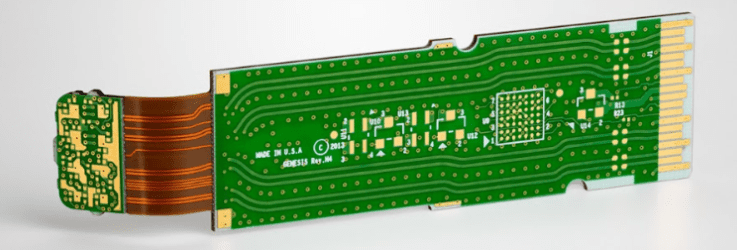
The long-term durability of flexible circuits heavily depends on the strength of adhesives and the material’s resistance to environmental stresses.
Here are some IPC-defined tests for evaluating these critical aspects:
5.1 Peel Strength Test
The peel strength test measures the adhesion strength between the copper layer and the flexible substrate in a flexible PCB. This assessment ensures the adhesive bond remains durable during bending and handling, guaranteeing long-term reliability. IPC-TM-650 Test Method 2.4.9 Revision E outlines the procedure for determining peel strength, primarily using a 90-degree peel test.
A standardized fixture holds the FPC at a consistent 90-degree angle while applying a controlled force to peel the copper layer from the substrate.
This test measures the force required to separate the layers and provides valuable data on adhesive bond strength.
Depending on the sample type, this test employs various conditions to assess bond strength under different stresses.
- Standard Peel Test
- This test measures the baseline adhesion strength between the copper layer and the substrate.
- The sample is secured in a peel fixture at a fixed 90° angle, and force is applied at a constant rate using a free-rolling drum or sliding plate fixture.
- During the test, the metal layer is peeled from the substrate along the sample’s length while the applied force is continuously recorded, identifying potential weaknesses in the bond.
- Heat Exposure Test
- Evaluates the effect of high temperature on adhesive bond strength over time.
- The sample is exposed to a controlled high temperature for a specific duration to simulate actual operating conditions.
- After cooling, the standard peel test is repeated to determine if heat exposure weakened the bond.
- Bond strength before and after heat exposure is compared to determine any degradation.
- Aged Sample Test
- Simulates long-term environmental exposure by subjecting samples to repeated temperature cycling.
- Samples undergo alternating high and low-temperature cycles to simulate prolonged field conditions.
- After cycling, a peel test is performed to determine if the adhesive strength has diminished over time. This helps predict the long-term performance of the adhesive under real-use conditions.
5.2 Surface Insulation and Moisture Resistance Test
This test evaluates the FPC’s ability to resist performance degradation caused by moisture, such as ionization, corrosion, and dendrite growth. It also assesses the material’s resistance to electrical leakage under high humidity conditions, simulating actual operating environments.
IPC-TM-650 Test Method 2.6.3.2 specifies the steps for conducting this test. These steps include:
This test provides a standard method for measuring the Surface Insulation Resistance (SIR) of copper-clad flexible dielectric materials in a humid environment. The test evaluates the durability of Flexible Printed Circuit Boards (FPCs) against moisture-related damage.
It applies to metal-clad dielectric materials and laminated adhesive materials conforming to IPC-4204. Its purpose is to simulate accelerated aging in a controlled high-temperature and high-humidity environment to assess these materials’ ability to maintain insulating properties over long-term use.
The steps outline the process for evaluating the FPC’s resistance to moisture and electrical leakage.
- Prepare test specimens and test equipment.
- Measure baseline insulation resistance.
- Conduct testing under high humidity and temperature conditions.
- Measure insulation resistance after the recovery period.
- Evaluate test results for moisture-induced degradation.
5.3 High Voltage Testing
- This test evaluates the FPC’s ability to resist electrical breakdown under high voltage. It ensures the dielectric layer can withstand operating voltage spikes caused by switching events or environmental factors without failure.
- Unlike Dielectric Withstand Voltage (DWV) testing, which pushes materials to failure, High Potential (HiPot) testing verifies insulation strength within safe voltage limits.
- IPC-TM-650 Test Method 2.5.7.2 provides a standardized process for verifying the reliability of thin dielectric layers in Flexible Printed Circuit Boards (FPCs).
The test process involves the following steps:
- Condition the test specimen to an appropriate relative humidity.
- Set up the test equipment, ensuring proper grounding and safety measures before applying voltage.
- Perform the high voltage test while monitoring leakage current.
- Interpret test results and conduct failure analysis.
6. Time Domain Reflectometry (TDR) Impedance Testing
Time Domain Reflectometry (TDR) Impedance Testing is used to evaluate the impedance consistency of flexible traces, ensuring signal integrity in high-frequency applications. It detects impedance variations caused by design flaws, material inconsistencies, or manufacturing defects (e.g., uneven etching).
IPC-TM-650, Method 2.5.5.7 defines the steps for this test:
- Identify the specific lines to be tested and their target impedance values and tolerances.
- Configure the TDR instrument with appropriate settings, cables, and probes.
- Connect the probes to the test sample.
- Initiate the TDR scan. The instrument sends a pulse along the line and detects reflected signals at impedance discontinuities.
- Monitor the real-time waveform or impedance profile generated by the TDR software.
TDR testing supports single-ended and differential traces and can use dedicated test coupons or actual test boards with fixtures. De-embedding is necessary if using test fixtures or long probe paths to remove the influence of the test setup on the results.
To learn how to design flexible stackups with controlled impedance, refer to How to Build a Flexible Stackup with Controlled Impedance.
7. Functional Testing
This testing method evaluates the functionality of the flexible PCB by simulating real-world operating environments, applying electrical signals to the circuit and measuring its resulting effects to ensure compliance with IPC specifications. Specific steps include:
- The circuit is powered and stimulated via interface connectors.
- A software application measures the electrical response at designated test points to ensure it meets design specifications.
- This test can identify anomalies that may only appear during circuit operation.
- Power absorption is measured at specific points to verify system performance.
Other functional testing techniques include:
- Contamination Test: This procedure aims to identify potential contaminants that could compromise the FPC’s integrity, leading to issues like corrosion. Detecting overall ionic contamination is crucial for maintaining long-term reliability.
- Microsectioning Analysis: This technique investigates defects, shorts, opens, and other failures by examining a cross-section of the FPC. It provides detailed information about the board’s internal structure, helping to identify manufacturing issues.
- Solder Float Test: This method determines the ability of a PCB’s holes to withstand thermal stress during soldering. It evaluates the heat resistance of plated through-holes under soldering conditions.
Sierra Circuits produces flexible PCBs capable of withstanding extreme bending and flexing for up to 200,000 cycles. Visit our Flexible PCB Manufacturing Capabilities page to learn more.
What are the FPC Testing and Acceptance Criteria for Different PCB Classes?
The IPC-6013 standard classifies flexible printed circuit boards based on their intended use and required reliability level. Here is a brief overview of the categories:
- Class 1 (General Electronic Products): For consumer electronics and general applications where reliability is important but not critical. Cost is often a higher priority for these products.
- Class 2 (Dedicated Service Electronic Products): Designed for products requiring higher reliability, such as industrial electronics and automotive applications. Performance and quality requirements are stricter than Class 1.
- Class 3 (High-Reliability Electronic Products): For critical applications like aerospace, medical devices, and military-grade circuit boards.
- These flexible PCBs must meet the highest standards, undergo rigorous testing, and have near-zero tolerance for defects.
The table below outlines the acceptance criteria defined by IPC flexible circuit standards:
| Test Type | Class 1 | Class 2 | Class 3 |
|---|---|---|---|
| Electrical Continuity & Isolation | Minor deviations acceptable if function unaffected. Simple pass/fail often sufficient. | Tighter tolerances, with documented results. | Zero defect tolerance. High-voltage testing, fully documented and traceable. |
| Thermal Cycle & Environmental Stress | Reduced cycles, lower temperatures. | Longer cycles at higher temperatures to ensure durability. | Harsh conditions, including rapid cycling and prolonged exposure, to simulate extreme environments. |
| Mechanical Bend & Flexibility | Minor wear acceptable if function unaffected. | No significant damage found in bend tests. | No cracks, delamination, or performance degradation allowed. Testing may include loaded multi-cycle tests with continuous monitoring. |
| Adhesion Test (Peel Strength) | Minor peeling acceptable. | Strong bond; no visible layer separation. | Maximum peel strength; zero tolerance for delamination. |
| Solderability & Thermal Stress | Basic testing, limited reflow cycles only. | Additional thermal stress tests, stricter monitoring for deformation or bond loss. | Must withstand multiple reflow cycles without any performance degradation. |
| Dielectric Withstand Voltage (DWV) | Standard voltage, short duration. | Higher voltage, longer duration testing. | Highest test voltages and longer durations to verify insulation material toughness under maximum stress. |
| Automated Optical Inspection | Minor cosmetic flaws acceptable if function unaffected. | Strict visual criteria; very minor flaws allowed. | Flawless visual quality, zero tolerance for any visible defects. |
| Time Domain Reflectometry Impedance | Basic impedance conformance check; deviations within general tolerances acceptable. | Tighter tolerance windows, typically within ±5%. | High precision required for impedance values; variations beyond ±2-5% are unacceptable. |
Key Takeaways:
For high-quality Flexible Printed Circuits (FPCs), your flexible PCB manufacturer should:
- Employ a combination of manual and automated inspections to detect surface and internal issues like cracks, delamination, and soldering problems that could affect performance or reliability.
- Perform continuity checks, isolation tests, flying probe tests, and in-circuit tests to ensure intended functionality.
- Assess mechanical toughness through bend tests (static and dynamic), thermal cycling, and thermal shock tests.
- Implement high-voltage testing to verify dielectric strength under voltage stress and conduct peel strength tests to verify copper-to-substrate adhesion.
- Perform functional testing by applying electrical signals to the FPC to simulate real-world operating conditions.
- Conduct contamination tests, microsectioning, and solder float tests to support detailed failure analysis.
0 Comments