



In recent years, the demand for lightweight, compact, and high-performance electronics has surged. Whether it’s smartphones, medical wearables, or aerospace and automotive electronics, Flexible Printed Circuit Board (PCB) technology is at the core of this transformation. If you are not yet familiar with the flexible PCB manufacturing industry, you’ve come to the right place.
Compared to traditional rigid boards, flexible PCBs can bend, twist, and adapt to various irregular shapes – making them perfectly suited for a new generation of electronic products that need to achieve more functionality within the same space. Manufacturing flexible PCBs isn’t simply about making ordinary boards bendable; it requires special materials, detailed planning, and a deep understanding of the production process.
This will be a comprehensive guide for beginners. In this article, we will start from scratch, taking you through the basics of flexible PCB manufacturing: what it is, how it’s made, potential challenges you might face, and best practices to guide you toward success.
What is Flexible PCB Manufacturing?
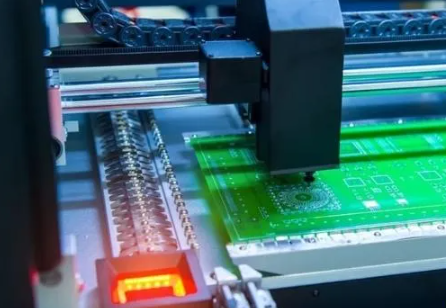
Flexible PCB manufacturing refers to the design and fabrication of flexible printed circuit boards. Typically, these boards are made using flexible materials like polyimide or PET, allowing them to bend and deform without interrupting electrical connections.
Traditional printed circuit boards (PCBs) are manufactured using glass fiber substrates (e.g., FR-4), whereas flexible printed circuit boards (PCBs) are made using ultra-thin insulating films and copper foil. This design allows them to be folded or bent, making them suitable for tight or free spaces. The main advantages of flexible printed circuit boards include:
- Lightweight and portable
- Excellent mechanical flexibility
- Reduced number of connectors and interconnects
- Higher reliability in vibration-prone environments
- Design freedom
Flexible PCB Manufacturing Step-by-Step Guide
1. Flexible PCB Design
It all starts with the design. ECAD tools like Altium Designer, KiCad, or Eagle allow engineers to generate circuit layouts, stack-ups, and board outlines, which are crucial for flexible PCB manufacturing.
Key Design Considerations:
- Identify bend areas and remove vias/traces from them.
- The bend radius should be kept within the recommended minimum bend radius (e.g., for dynamic flexing, the bend radius should be 10 times the board thickness).
- Solid copper should not be used in ground planes in bend areas: use hatched ground planes in bend areas instead.
- Stiffeners and fixtures should be installed in inert areas.
2. Material Selection
Any flexible PCB consists of multiple material layers. You need to handle the materials for the following layers:
- Substrate: Polyimide film is commonly used as the base material due to its high thermal stability and good flexibility.
- Copper Foil: Forms the conductive traces.
- Adhesiveless Lamination: Bonds the copper to the substrate.
- Coverlay: Forms the protective insulating layer that covers and protects the circuits (instead of standard solder mask).
- Stack-up Selection: The choice of material stack-up is a critical factor that predetermines the optimal limits for the final product’s mechanical adhesion, electrical performance, and lifespan.
3. Imaging and Etching
After the design and materials are ready, the copper layer is laminated with the substrate. Photolithography is then performed to form the circuit pattern, a key step in flexible circuit board manufacturing. Subsequent steps in flexible circuit board manufacturing ensure circuit precision, reliability, and readiness for further assembly. Specific steps are:
- Application of photoresist on the copper.
- Exposing the board to ultraviolet (UV) light.
- Developing the image.
- Etching away the unwanted copper with acid to reveal the desired circuit pattern.
4. Drilling and Plating
Next, vias and holes, which are necessary for connecting different layers or mounting components, are created – these processes are fundamental to flexible PCB manufacturing.
- Due to the flexible substrate, laser drilling is often used.
- After cleaning, the holes are plated with copper to establish conductivity.
5. Coverlay Application
Flexible circuits typically use a coverlay instead of a standard solder mask: a single-sided polyimide film with adhesive. This material choice highlights the unique requirements of flexible PCB manufacturing. In flexible circuit manufacturing, the coverlay is used to protect the copper traces, provide electrical insulation, and enhance the mechanical durability of the flexible circuit. What exactly does the coverlay do?
- Insulates the circuits.
- Prevents corrosion from environmental contaminants and mechanical wear.
- Makes the board bendable.
6. Stiffener Attachment
During the flexible PCB manufacturing process, there are often areas on the board where stiffeners need to be added (usually to provide mechanical support to the board or facilitate connector mounting). Common materials include:
- FR-4
- Polyimide
- Stainless steel or aluminum (for skeletal rigid support)
7. Surface Finish
The exposed copper on the pads should be coated with a protective layer to ensure solderability and prevent corrosion; this surface finish step is essential in flexible PCB manufacturing.
Common surface finish processes for flexible PCBs include:
- ENIG (Electroless Nickel Immersion Gold)
- OSP (Organic Solderability Preservative)
- Immersion Tin or Immersion Silver.
8. Component Assembly (SMT or Through-Hole)
With the bare flexible circuit board ready, we can now begin component assembly. Typically, the assembly process involves:
- Surface Mount Technology (SMT)
- Through-Hole Technology (THT)
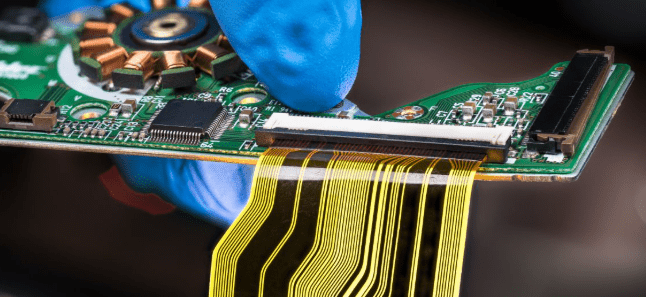
The flexibility of flexible PCBs requires special handling during SMT assembly. Mounting the flexible PCB onto a carrier prevents warping.
9. Electrical Testing and Quality Assurance
After assembly, the board undergoes rigorous testing and inspection:
- Continuity checks are performed to ensure all connections are secure.
- Insulation Resistance Testing.
- Automated Optical Inspection (AOI).
10. Routing and Final Evaluation
The final stage of the flexible PCB manufacturing process is where the flexible PCB is routed into its final shape. This ensures the board fits as intended when it needs to be folded or bent to fit into the product housing. Upon completion, the board undergoes a comprehensive final inspection for defects, cleanliness, and mechanical integrity.
How is Flexible PCB Manufacturing Different from Rigid PCB Manufacturing?
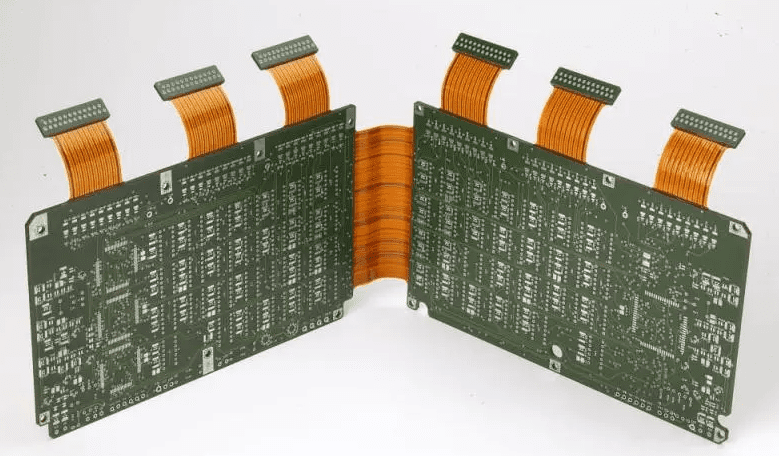
Although rigid and flexible PCBs share many production steps, such as copper etching, via drilling, and surface finish, flexible PCB manufacturing involves unique processes and design considerations that rigid PCBs do not require. Understanding these differences is key to successful flexible PCB design and production.
| Aspect | Flexible PCB Manufacturing | Rigid PCB Manufacturing |
|---|---|---|
| Core Material & Handling | Uses thin, flexible polyimide materials that can stretch or fold. | Uses stable, rigid FR-4 material, easy to handle. |
| Covering / Masking | Uses pre-cut polyimide coverlays. | Uses liquid photoimageable solder mask (LPSM). |
| Stiffener Attachment | Often crucial in areas like connectors or mounting points. | Not required. |
| Via Drilling | Often utilizes lasers for precision drilling. | Primarily relies on mechanical drilling. |
| Dimensional Stability | Flexible substrates can expand/contract with heat or moisture (imaging issues). | Rigid materials do not deform significantly. |
| Forming & Testing | Often folded and shaped for the final product; bend testing is critical. | Remains flat. |
| Adhesive Systems & Lamination | Flexible circuits rely on adhesive bonding layers. | Rigid boards use prepreg. |
| Mechanical Stress Analysis | Crucial for boards intended for repeated flexing (dynamic flex). | Not typically required. |
Conclusion
The flexible PCB manufacturing process is a fascinating field where electrical engineering, materials science, and precision manufacturing techniques converge. At first glance, it may seem daunting to a newcomer, but with a grasp of the complete process flow, access to dedicated tools, and help from professionals, it can be fully understood and mastered.
Flexible PCB boards allow you to push the boundaries of thinking, whether designing a wearable health monitor or the sensor-based car of the future.
Remember, the secret to success lies in excellent design, carefully selected materials, and collaboration with a qualified manufacturing partner. By paying attention to detail and following best practices, you can fully leverage the advantages of flexible PCB manufacturing technology.
Who would have thought that flexible PCBs aren’t merely bendable rigid PCBs? Flexible PCB is a distinct technology that should have its own design logic and rules, and be treated with the respect it deserves.
Thindry Technology specializes in providing cost-effective, high-quality PCB manufacturing and processing services, tailored to your project requirements. Get a free quote now or contact us to discuss your specific needs with our engineering team.
FAQ
What are the simple steps for flexible PCB manufacturing?
The main steps include substrate selection, forming the circuit pattern using processes like etching, drilling, and plating, and final cutting or routing.
How does the flexible PCB manufacturing process differ from rigid PCBs?
Flexible PCBs are made using thin, lightweight, and flexible materials, and must be handled carefully during manufacturing to prevent damage.
What makes flexible PCBs a common material in modern electronics?
They save space, reduce weight, and enable creative 3D designs for wearables, medical devices, and compact electronics.
0 Comments