



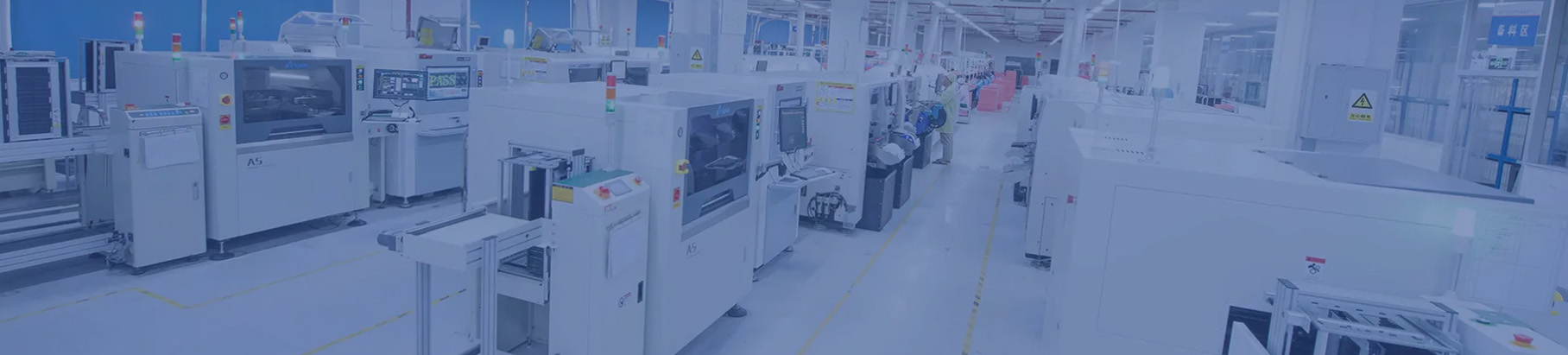
Solder is a critical component in electronic assemblies, responsible for connecting multiple elements. Its primary function is to join components on a Printed Circuit Board (PCB). Often mistaken for simple wire, it is actually a metallic tube, typically wire-shaped, that is melted to form connections between different components.
While seemingly straightforward, choosing the ideal solder can often be confusing. The selection involves choices between leaded and lead-free solder, as well as options across various price points. This article explores the most suitable solders for circuits and highlights some top-tier solder choices for electronics projects.
What is Soldering?
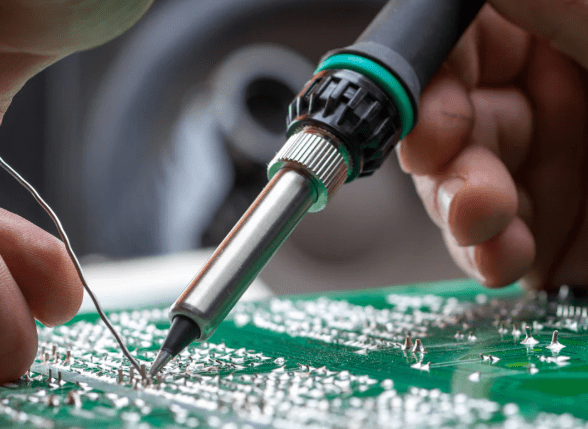
Soldering is the process of moving parts into place and melting solder to create a strong mechanical connection, facilitated by conductive solder. For solder itself, its role is crucial in attaching various components like resistors, capacitors, and integrated circuits to the conductive traces on a board, ensuring stability and functionality.
What is Circuit Board Solder?
Solder is a metallic alloy used to establish strong, conductive connections between electronic components and circuit boards. In Printed Circuit Boards (PCBs), soldering refers to the process of melting the solder alloy and applying it between the component leads or pins and the copper traces or pads on the circuit board to form a connection. Once the solder cools and solidifies, it establishes the electrical connection and mechanically secures the component in place.
Different forms of solder are available for various applications:
- Solder Wire: A thin wire made of solder alloy. It is commonly used with a soldering iron for manually attaching components to PCBs.
- Solder Paste: A mixture of tiny solder spheres and flux, used in Surface Mount Technology (SMT). The paste is applied to the board using a stencil or dispenser, after which components are placed. The assembly is then heated in a reflow oven, melting the solder to form the necessary connections.
Types of Circuit Board Solder
Tin-Lead Solder (SnPb)
Tin-Lead solder (traditionally with a ratio near 60:40 tin to lead, with 63:37 also common) has been used in electronics for decades. It remains one of the primary solders in the industry due to its excellent soldering properties, ease of use, and low melting point, making it a highly desirable material for processing. However, the use of lead poses health and environmental risks; growing concerns have led to its prohibition, an issue that is being progressively addressed through regulations.
Lead-Free Solder
As the world becomes increasingly aware of environmental impacts and certain health issues affecting humans, lead-free solder has become the new standard across various industries, including consumer electronics. Utilizing alloys like Tin-Silver-Copper (SnAgCu, or SAC) and Tin-Copper, it eliminates the use of lead. This type of solder is more environmentally friendly. However, its melting point is considerably higher, requiring reliable temperature-controlled equipment to provide the optimal solder for circuit boards.
Silver-Bearing Solder
Silver-bearing solders are known for their relatively high performance. SAC solders typically contain silver. While silver increases the cost of the solder, it enhances properties like joint strength, and improves thermal and electrical conductivity compared to some other lead-free alternatives. With these attributes, premium silver-bearing solders can offer reliability and high performance for demanding sectors like military and aerospace applications.
High-Temperature Solder
High-temperature solders are used in automotive or industrial electronics where high thermal stability is required. They possess a higher melting point, making them suitable for extreme high-temperature applications. High-temperature solder ensures that joints maintain good electrical conductivity even under the most demanding conditions.
Difference Between Leaded and Lead-Free Solder
Choosing between leaded and lead-free solder has significant implications, making it a critical decision:
Leaded Solder:
- Composition: Typically consists of 60% tin and 40% lead (SnPb 60/40) or 63% tin and 37% lead (SnPb 63/37).
- Melting Point: Lower melting point, around 183°C for 63/37, making it easier to work with.
- Workability: Better flow characteristics, facilitating the formation of tight, reliable joints.
- Conductivity: Excellent, ensuring good electrical pathways.
- Mechanical Strength: Strong joints with good mechanical properties.
- Health and Environmental Impact: Lead is a toxic substance to both humans and the environment. Prolonged exposure can lead to serious health issues, such as neurological damage.
- Regulation: The use of lead is regulated due to health concerns, e.g., by the EU’s Restriction of Hazardous Substances (RoHS) Directive, prompting industries to shift towards safer alternatives.
Lead-Free Solder:
- Composition: Primarily Tin, Silver, and Copper (SnAgCu – SAC) are common high-quality alloys.
- Melting Point: Higher melting range, typically around 217°C or higher, requiring precise temperature control.
- Workability: Can be somewhat more challenging to use, especially for beginners, due to a wider plastic range and less fluidity.
- Conductivity: Quite good, but generally slightly lower than leaded solder.
- Mechanical Strength: Can sometimes be more brittle, potentially leading to failure under mechanical stress or thermal cycling conditions.
- Health and Environmental Impact: More user-friendly and environmentally friendly, preventing the health risks associated with lead exposure.
- Regulatory Compliance: Meets current environmental and healthcare practice standards, making it the standard for use in consumer electronics and environmentally conscious companies.
Forms of Circuit Board Solder
Solder Wire
Solder wire designed for circuit boards is the most commonly used form for manual soldering; it comes in various diameters suitable for a multitude of applications. Many solder wires contain a flux core, which cleans the surfaces to be soldered and aids in smooth solder flow, making the soldering process easier.
Solder Paste
Solder paste is a mixture containing tiny solder spheres within a flux medium. It is stencil-printed onto PCBs for Surface Mount Technology and used with components placed by pick-and-place machines. The assembly then passes through a reflow oven, which heats the board, melting the solder paste and forming the solder joints.
Solder Bar
Solder bars, on the other hand, are utilized in wave soldering machines for large-scale, automated production. A molten wave of solder is used to solder multiple points on the bottom side of a circuit board simultaneously. These bars are highly efficient and useful in batch production and soldering processes, though the equipment used is highly specialized.
8 Best Circuit Board Solders
Soldering is an essential skill for all electronics enthusiasts. Selecting the right solder is crucial. The soldering process can seem daunting, but we are here to assist. We have conducted research and compiled a list of eight of the best solders for circuit boards.
Solder Brand 1: Kester 44 Rosin Core Solder
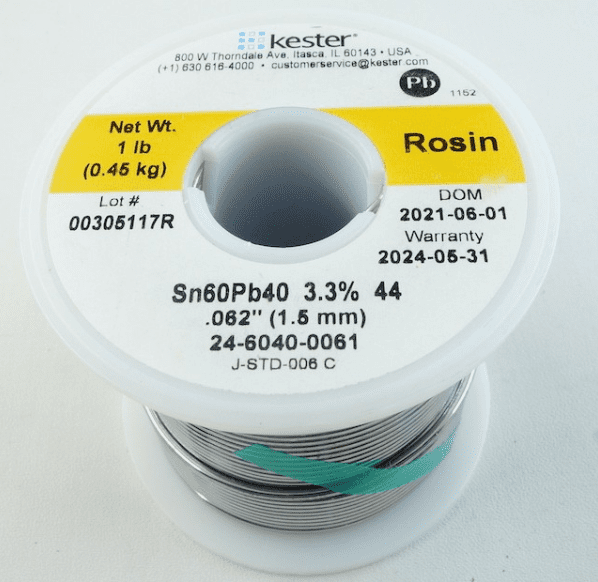
- A leader in the soldering field, the Kester 44 Rosin Core solder wire is not to be underestimated. Its 63/37 composition ensures a low melting point and strong solder joints. Combining consistency and reliability, it is an ideal choice for both hobbyists and professionals.
- Pros:
- Low melting point
- Strong, durable bonds
- Suitable for a wide range of applications
- Cons:
- Cost is higher than other options
Solder Brand 2: Alpha Fry AT-31604
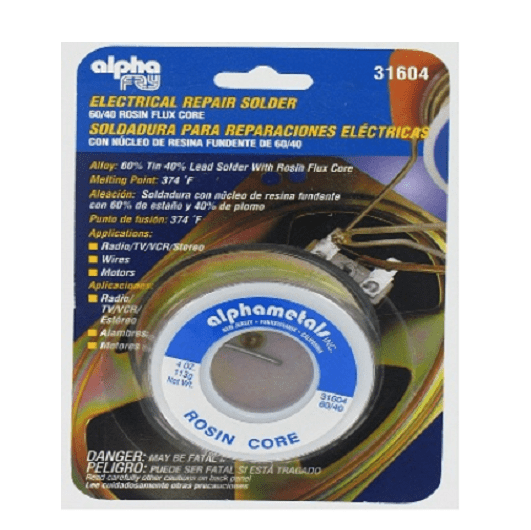
- The Alpha Fry AT-31604 is versatile and delivers excellent performance. Its 60/40 tin-lead ratio makes it ideal for electronic work. The rosin core of this solder eliminates the need for additional flux. Alpha Fry ensures clean, high-quality soldering.
- Pros:
- No additional flux required
- Works well on various surfaces
- Cost-effective
- Cons:
- Not suitable for lead-free applications
Solder Brand 3: MG Chemicals 63/37 No-Clean Solder
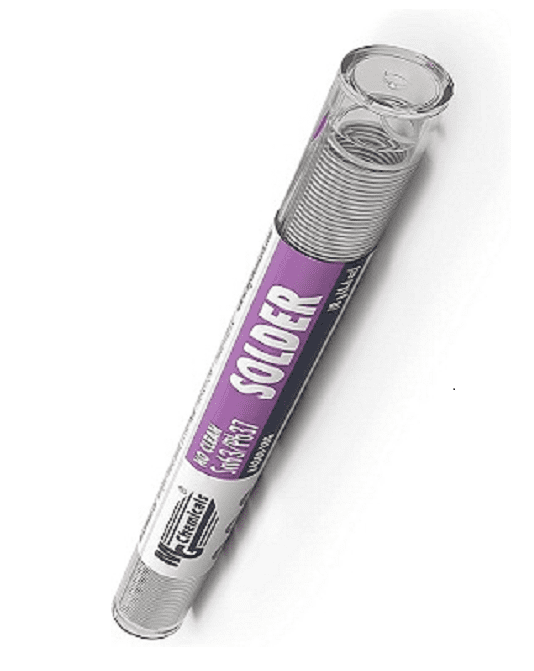
- The MG Chemicals 63/37 No-Clean solder is a dream come true for those who prefer cleanliness. Its no-clean formulation means you no longer have to clean up residue. It provides strong bonds and works wonders in various applications.
- Pros:
- No residue cleanup
- Strong bonding
- Versatile
- Cons:
- Slightly more expensive than others
Solder Brand 4: WYCTIN 60/40 Solder Wire
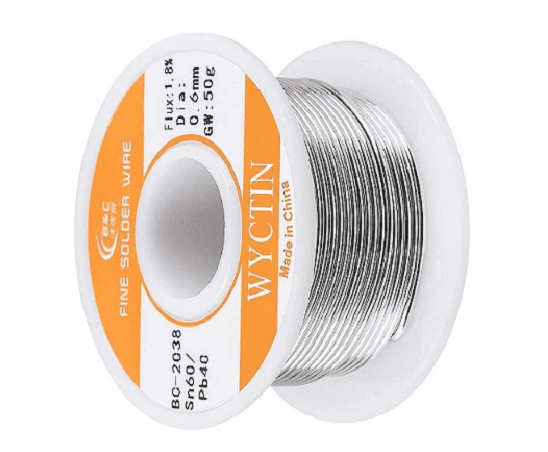
- The WYCTIN 60/40 Solder Wire offers both affordability and great performance. Its 60/40 formulation ensures a low melting point and a smooth soldering experience. It is perfectly suited for DIY enthusiasts and hobbyists.
- Pros:
- Low melting point
- Economical
- Suitable for hobbyists
- Cons:
- Not as strong as other options
Solder Brand 5: SRA Soldering Products Rosin Core Solder
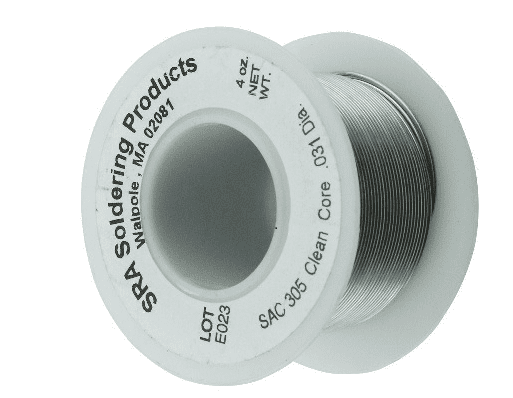
- The SRA Soldering Products Rosin Core Solder is favored for its lead-free composition. It is a safe and environmentally friendly option for those concerned about lead exposure. It provides strong bonds and is ideal for sensitive electronic components.
- Pros:
- Lead-free
- Environmentally friendly
- Suitable for sensitive components
- Cons:
- Higher melting point
Solder Brand 6: Cardas Solder Wire
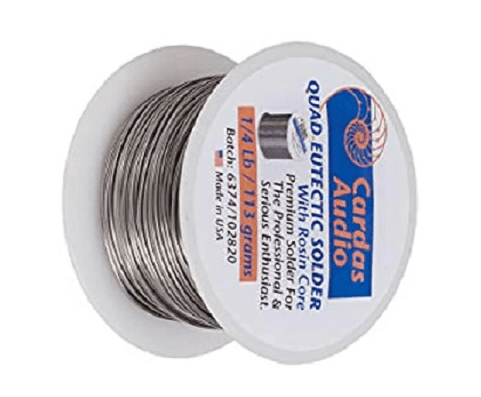
- Cardas Solder Wire is a premium choice for audio enthusiasts. It uses high-purity materials to ensure optimal signal transmission. It is perfectly suited for audio equipment and other high-end applications.
- Pros:
- High purity
- Ideal for audio equipment
- Superior performance
- Cons:
- Expensive
Solder Brand 7: Harris Stay-Brite Silver Solder
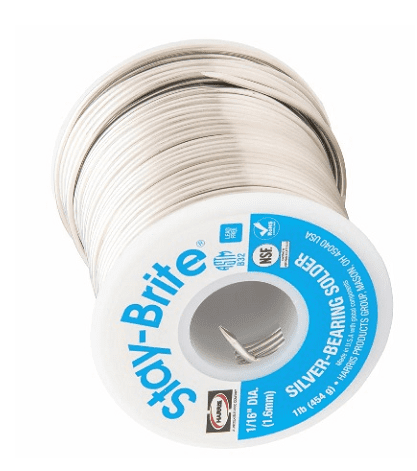
- Harris Stay-Brite Silver Solder offers the benefits of silver soldering without the typical high melting point of pure silver solders. Its low melting point makes it easy to work with. It is well-suited for high-temperature applications and provides strong, reliable connections.
- Pros:
- Low melting point
- Strong bond
- High-temperature applications
- Cons:
- Higher cost
Solder Brand 8: Worthington 60/40 Solder Wire
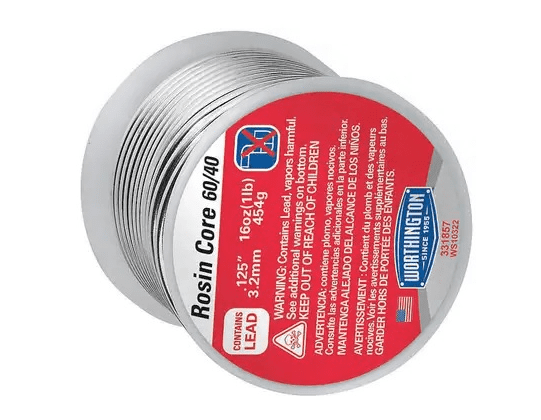
- The Worthington 60/40 Solder Wire offers a balance of cost-effectiveness and quality. Its rosin core ensures a smooth soldering experience. It is a reliable choice for both DIY enthusiasts and professionals.
- Pros:
- Rosin core
- Cost-effective
- Versatile
- Cons:
- Not suitable for lead-free applications
Difference Between Leaded and Lead-Free Solder
Soldering is a fundamental technique in electronics. A key decision in the soldering process is the choice of solder material. The debate between lead-based and lead-free solder continues, with each type having its own advantages and disadvantages. The following table compares these two solders concisely to help you easily understand their differences and select the right one for your needs.
| Attribute | Leaded Solder | Lead-Free Solder |
|---|---|---|
| Composition | Tin-Lead Alloy (Typically 60/40 or 63/37) | Tin-Silver-Copper Alloy (Typically SAC) |
| Melting Point | Lower (~361°F / 183°C) | Higher (~423°F / 217°C) |
| Wetting Ability | Excellent | Slightly Inferior |
| Strength | High strength, but prone to tin whiskers | Stronger, less prone to tin whiskers |
| Health Impact | Contains toxic lead; not RoHS compliant | Lead-free; RoHS compliant |
| Cost | Generally less expensive | Slightly more expensive |
| Application | Traditional electronic assemblies | Modern electronics and eco-friendly projects |
Tips to Consider When Soldering Circuit Boards
Creating strong, conductive bonds between components is essential for ensuring your projects are reliable and durable. Let’s look at some important tips to consider when soldering circuit boards.
Choose the Right Tools
Using the appropriate tools is key to successful soldering. Equip yourself with a soldering iron of suitable wattage, a soldering station, a sponge for tip cleaning, high-quality solder wire, and wire strippers or cutters. Investing in high-quality tools can significantly enhance your soldering experience.
Maintain a Clean Workspace
A cluttered workspace can lead to accidents and mistakes. Keep your work area clean, organized, and well-lit to ensure a comfortable and efficient soldering session. Systematically arrange your tools, components, and circuit boards to prevent misplacement or damage.
Prepare Components
Before soldering, bend the component leads at a 90-degree angle to align with the holes on the circuit board. This provides a more stable connection while you solder the joint.
Ensure Proper Temperature
Selecting the correct temperature is crucial for effective soldering. If the temperature is too low, the solder may not flow properly; if it’s too high, you risk damaging components. For optimal results, aim for a temperature between 350°C and 375°C (662°F to 707°F).
Clean the Soldering Iron Tip
A clean tip ensures efficient heat transfer and better solder joints. Frequently wipe the tip on a damp sponge to remove oxides and excess solder.
Inspect Your Work
Check the quality and consistency of your solder joints. A good solder joint should appear shiny and have a smooth, volcano-like shape. If a joint looks dull, granular, or has a poor shape, reheat it and apply a bit more solder to improve the connection.
Common Circuit Board Soldering Issues and How to Avoid Them
Cold Solder Joint
- Cause: Insufficient heat during soldering, or movement of the joint before the solder solidifies.
- Effect: Results in a weak, high-resistance connection that is unreliable both electrically and mechanically.
- Prevention: Ensure the soldering iron is at the correct temperature and hold it in place until the solder flows and solidifies completely, keeping the joint stationary.
Solder Bridges and Excess Solder
- Cause: Application of too much solder or accidental bridging between adjacent pads/pins.
- Prevention: Use an appropriate amount of solder. Use desoldering braid or a solder sucker to remove excess solder. Visually inspect your work to detect and fix bridges promptly.
Poor Wetting, Insufficient Bonding
- Cause: Contaminated or dirty component leads/pads, insufficient or incorrect flux, incorrect soldering temperature.
- Prevention: Thoroughly clean all surfaces to be soldered before starting. Use the correct type of flux. Ensure the soldering iron tip is hot enough and properly tinned to enable good wetting and strong bonding.
Conclusion
Soldering may seem intimidating at first glance, but with continuous practice and persistence, you will soon master this skill. As you explore this intricate world of connections, you will find that soldering is not just a technique, but a gateway to boundless innovation and creativity in the field of electronics.
0 Comments