




Overview of Information and Communication Technology Test Instruments
Information and Communication Technology (ICT) test instruments are a general term for instruments specifically used to verify, test, and analyze the performance of communication systems and equipment. They are indispensable foundational tools within the communication technology ecosystem.
Covering wired to wireless communication, and from physical layer signal quality to application layer data throughput, these testers provide comprehensive testing solutions, ensuring that communication equipment and networks comply with technical specifications, performance metrics, and industry standards.
In today’s rapidly evolving landscape of 5G, the Internet of Things (IoT), Industrial Internet, and next-generation network technologies, the importance of test instruments is increasingly prominent. They provide critical verification methods and quality assurance cornerstones for the innovation and development of communication technologies.
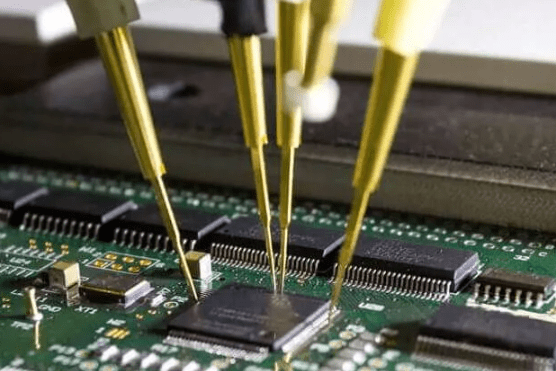
These test instruments are diverse and feature comprehensive functional coverage, capable of simulating various communication environments, service scenarios, and load conditions to conduct all-round testing of communication equipment. By precisely generating, capturing, and analyzing communication signals and data, test instruments can evaluate key indicators such as the radio frequency characteristics, protocol compliance, service performance, and network capacity of devices. This helps R&D personnel locate defects, assists manufacturers in improving quality, and supports operations staff in optimizing networks.
Classification and Functional Characteristics of ICT Test Instruments
ICT test instruments can be classified into several specialized categories based on their test objects and technical fields, each with its unique functional characteristics and applicable scenarios. The following is a detailed breakdown of the main types of test instruments:
Table: Overview of Major ICT Test Instrument Categories and Functions
| Test Instrument Category | Core Functions | Typical Application Scenarios | Representative Model/Series |
|---|---|---|---|
| Radio Communication Comprehensive Tester | Frequency hopping signal generation & analysis, Vector signal generation & demodulation analysis, Analog modulation signal generation & demodulation analysis, Audio signal analysis | Development, production, calibration, and maintenance testing of HF/VHF communication stations, wireless relay sets, etc. | 4945B/C Series |
| Data Communication Network Tester | Generate and analyze network data traffic, Verify network equipment functionality and performance, Support high-speed interfaces and protocols | Network equipment R&D and production, Equipment network access testing, Network construction and maintenance | Spirent TestCenter, XINERTEL BigTao Series |
| Signaling Test Instrument | Signaling capture, decoding, and analysis, Supports multiple communication protocols | Communication system development testing, Deployment testing, Operation and maintenance testing, Performance optimization | |
| Wireless Communication Test Platform | Signal modulation & demodulation, Channel characteristic emulation, Multiple access technology support, Channel coding & decoding | Mobile communication network (2G/3G/4G/5G) testing, IoT testing, Satellite communication testing | Rohde & Schwarz CMW Platform |
| Signal Transceiver | Wideband signal generation & Wideband signal analysis | RF chip testing, Production line comprehensive testing, Portable radar comprehensive testing | 6955BA/C/E Series |
| Wired Physical Layer Tester | Fiber optic/copper cable certification testing, Bit Error Rate Testing (BERT), Pulse waveform analysis | Data center cabling acceptance, E1 physical layer testing, Basic network connectivity testing | Fluke DSX-8000, EST-125 |
In addition to the main categories listed above, there are also test instruments focused on specific fields or technologies, for example:
- Portable Testers: Such as the 5201B Data Network Tester, featuring portability and supporting L2-L3 layer traffic testing, network access testing, and routing and switching tests.
- Production-Specific Testers: Such as the Rohde & Schwarz CMW100, designed specifically for production environments, supporting parallel testing (up to eight RF ports) and used for device calibration and verification, optimizing production processes with high measurement accuracy and test efficiency.
Key Technical Principles of ICT Test Instruments
Although ICT test instruments are diverse, their core technical principles primarily revolve around signal generation, capture, analysis, and protocol emulation and parsing. A deep understanding of these technical principles helps in better applying test instruments to solve practical problems.
1. Signal Simulation and Measurement Technology
In the field of wireless communication testing, the core technology of test instruments is built upon fundamental principles such as signal modulation/demodulation, channel characteristics, and channel coding.
- Signal Modulation and Demodulation: Test instruments use amplitude modulation, frequency modulation, phase modulation, and more complex digital modulation schemes (e.g., BPSK, QPSK, 16QAM) to load information onto an RF carrier at the transmitting end. At the receiving end, corresponding demodulation techniques are used to recover the information. For example, the 4945 series Radio Communication Comprehensive Testers integrate vector signal generation and demodulation analysis functions.
- Channel Emulation: Wireless signals experience multipath effects, fading, and interference in real-world environments. Advanced wireless test platforms can emulate these complex channel characteristics, thereby recreating various real-world scenarios in the laboratory to evaluate equipment performance under actual conditions.
- Frequency Domain Analysis: Spectrum analysis is fundamental to RF testing. Spectrum analyzers utilize technologies like full-band tracking preselector design and wideband signal high-sensitivity reception to observe and measure the spectrum of RF signals, verifying the spectral emission performance of base stations and other equipment.
2. Protocol Emulation and Analysis Technology
For data communication and signaling testing, the technical focus of test instruments shifts to the various layers of the protocol stack.
- Protocol Emulation and Traffic Generation: Data communication network testers exert pressure on the Device Under Test (DUT) by generating and analyzing network data streams. This requires overcoming key technologies such as high-speed signal integrity design and high-speed programmable arbitrary rate service traffic generation and identification to verify device performance and functionality under high load.
- Signaling Decoding and Analysis: Signaling test instruments capture raw signaling data through physical interfaces or wireless receivers. They then utilize built-in decoding libraries for various communication protocols (e.g., GSM, CDMA, LTE) to convert the raw data into readable signaling information according to protocol specifications. Based on this, the instruments can perform signaling monitoring, statistics, interaction analysis, and fault diagnosis.
- Multi-Layer Testing Capability: Modern complex communication equipment requires test instruments to possess comprehensive testing capabilities from the physical layer to the application layer. For instance, a high-end data communication tester can simultaneously perform physical cable certification (L1), network throughput and packet loss testing (L2-L3), and application layer service quality evaluation (L4-L7).
3.Automation and Intelligent Technology
With increasing test complexity, automation and intelligence have become key features of modern test instruments.
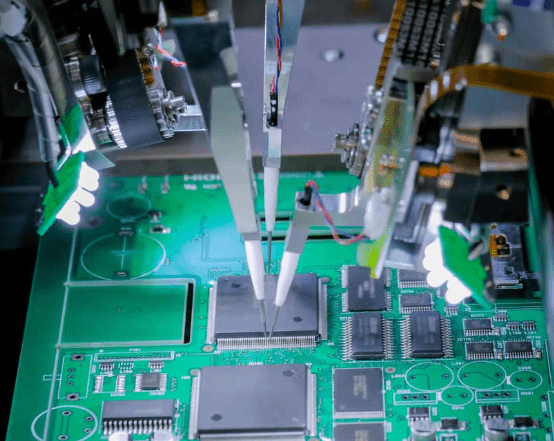
- Automated Testing: Many test instruments provide automated test suites and programming interfaces. For example, the 4945 series features automated test software that allows online editing of DUT parameters, execution of guided tests, and generation of test reports, significantly improving the efficiency of production calibration and maintenance testing.
- Multi-functional Integration and Parallel Testing: Through Software-Defined Radio (SDR) architectures or modular platform designs (e.g., PXIe systems), multiple test functions (such as signal generation, spectrum analysis, demodulation) are integrated into a single system or instrument, enabling one-stop testing. For example, the R&S CMW100 supports parallel testing of up to 8 RF ports, markedly enhancing production test throughput.
Advantages and Disadvantages of ICT
Understanding how ICT operates can help you determine whether you can incorporate its processes into your workflow. Simultaneously, its strengths and weaknesses can provide you with the qualitative information needed for decision-making.
Advantages of ICT
ICT is an extremely precise testing technique that enables engineers and manufacturers to obtain consistent results every time. Besides quality and reliability, ICT offers you more advantages, including:
- Time and Cost Efficiency: ICT is very fast compared to other PCB testing methods. It can test all components in minutes or even less. When you spend less time testing each PCB, your testing process costs are also lower. ICT provides manufacturers and engineers with a fast, economical testing method while still delivering consistent and accurate results.
- Bulk Testing: ICT is highly efficient, allowing manufacturers to test large quantities of PCBs using ICT. ICT provides comprehensive quality testing. Although it only tests individual components, you can still understand the operational status of the device. Manufacturers producing higher volumes of PCBs can test devices quickly without compromising quality.
- Customization and Updates: Your hardware and software will include specific designs tailored to each PCB model, optimizing your testing. With ICT, you understand that every test and piece of equipment used is designed for that specific product, aiming to provide the most accurate testing. Furthermore, you can update standards and tests through software updates.
Disadvantages of ICT
While ICT is an excellent choice for many companies, understanding its associated challenges is crucial when determining its suitability for you and your product. Some disadvantages of ICT include:
- Upfront Cost and Development Time: Due to the need to program and customize ICT hardware and software for each PCB configuration, the price and development time can be higher. You must wait for engineers to create nodes connecting to each component in the device and write software according to the product’s standards and specifications.
- Isolated Testing: Although ICT can provide more comprehensive testing, it only tests the independent functionality of each component. You need to use other testing techniques to understand how components work together or the overall unit functionality.
Major Brands and Selection Guide
Faced with a multitude of test instrument brands and models on the market, selecting the appropriate equipment based on specific needs is a critical task.
Overview of International Brands
| Brand | Country | Main Product Lines / Characteristics | Typical Model Examples |
|---|---|---|---|
| Keysight Technologies | USA | High-end wireless communication & data communication testing, Wide range of solution coverage | IXIA XGS12-HL |
| Rohde & Schwarz | Germany | Wireless communication testing, Broadcast & TV testing, Secure communication | CMW100, CMW500 |
| Spirent Communications | UK | Data communication network testing, 5G core network emulation, High-precision positioning testing | Spirent TestCenter N4U |
| Fluke Networks | USA | Network cable certification, Electrical safety testing, Portable maintenance tools | Fluke DSX-8000, LinkIQ |
| XINERTEL | China | Network testing, Domestic substitution, Cost-effective | BigTao Series |
| China Electronics Technology Group Instruments | China | Radio communication comprehensive testers, Localized instruments in China | 4945 Series, 5201B |
Selection Considerations and Recommendations
When selecting an ICT test instrument, comprehensive consideration should be given, avoiding a “brand-only” or “price-only” approach.
- Select Based on Need, Define the Scenario:
- Basic Operations & Cabling Certification: For enterprise network operations, data center cabling acceptance, choose user-friendly, intuitive cable certification testers like the Fluke DSX-8000 or LinkIQ.
- High-end Protocol & Performance Testing: For carrier 5G core network validation, cloud service provider performance testing, high-end models supporting 400G/800G high-speed ports and complex protocol emulation, like Spirent TestCenter or IXIA, are required.
- Wireless Device Production Testing: Choose instruments optimized for production environments, like the R&S CMW100, which supports parallel testing to significantly improve test efficiency.
- Field Radio Testing & Maintenance: Require portable, rugged, and functionally integrated radio communication comprehensive testers, like the 4945 Series.
- Balance Budget and Performance:
- Below 100k RMB: Consider Chinese brands (e.g., XINERTEL, Jietong) or Fluke’s mid-to-low end models, suitable for university labs, SME operations, and simple verification scenarios.
- 100k – 500k RMB:Can choose mid-range models from Fluke, IXIA, or some high-end Chinese instruments, capable of meeting most R&D and certification needs.
- Above 500k RMB: Mainly used for high-end R&D and complex scenarios, such as high-end models from Spirent, IXIA, supporting the latest high speeds and complex protocols.
- Consider Scalability and Longevity: Communication technology continues to evolve. When selecting a test instrument, consider its software upgradeability, hardware expansion space (e.g., adding new features via options), and potential support for emerging technologies (e.g., 6G, next-gen Wi-Fi). Modular PXIe platforms often offer greater flexibility in terms of scalability.
Conclusion
As indispensable foundational tools in the field of communications, ICT test instruments and their related technologies and markets are constantly evolving.
In the future, test instruments will develop towards higher frequencies (supporting mmWave), higher bandwidths (coping with 800G and even Terabit rates), deeper integration (achieving cross-domain, cross-layer integrated testing), and greater intelligence and automation (utilizing AI to empower test analysis and optimization).
Regardless of how technology changes, these sophisticated instruments will continue to play the role of “Guardians of Communication Quality,” working behind the scenes to ensure the smooth operation of global communication networks and propelling information and communication technology to ever new heights.
0 Comments