



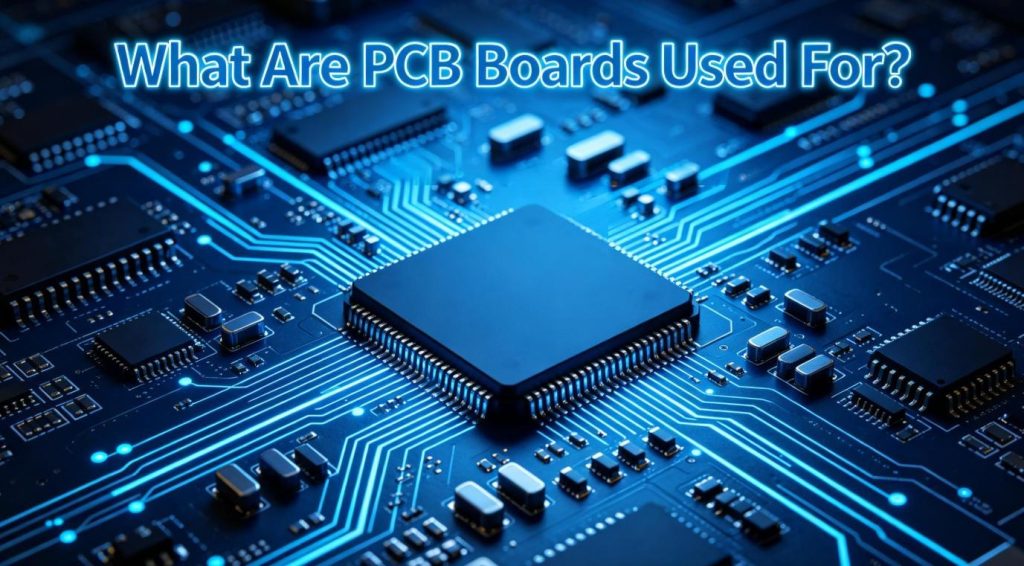
What Are PCB Boards Used For in Modern Electronic Devices?
PCB boards serve as the core structural and electrical foundation of all modern electronic devices, offering a stable carrier for mounting, connecting, and powering electronic components. Understanding what are PCB boards used for helps hardware designers, procurement specialists, and technical researchers select suitable circuit boards for diverse projects and industrial scenarios. Mastering what are PCB boards used for is a prerequisite for building stable, functional circuits for prototypes, commercial products, and industrial-grade electronic systems.
Beyond basic circuit connection capabilities, PCB boards standardize electronic assembly workflows, eliminate messy manual wiring and connection errors, and support miniaturized product design. Optimized PCB layouts greatly enhance product durability, mass production compatibility, and manufacturing efficiency, making standard and custom PCB boards indispensable across consumer, automotive, industrial, and medical electronics industries.
Why Are PCB Boards Indispensable for Electronic Product Development?
PCB boards accelerate electronic product iteration and improve manufacturing efficiency through standardized component layout, uniform circuit routing, and integrated structural design. They eliminate the instability of traditional point-to-point wiring and support automated assembly for both small-batch prototyping and large-scale commercial mass production. All electronic development processes rely on high-quality PCB boards to guarantee consistent circuit performance.
Well-designed PCB boards also optimize power consumption, signal integrity, and thermal dissipation. Reasonable trace width configuration, layered stacking structures, and strategic component placement reduce electromagnetic interference and heat accumulation, effectively extending the overall service life of electronic products.
What Core Functions Do PCB Boards Deliver in Electronic Circuits?
To fully understand what are PCB boards used for, you need to recognize four core circuit functions of PCB boards: structural component support, stable power distribution, precise signal optimization, and standardized production compatibility. These core capabilities directly determine the operational stability and performance ceiling of any electronic circuit system.
Structural Support for Electronic Components
PCB boards securely fix resistors, capacitors, integrated circuits, sensors, and other electronic components in place. The rigid substrate structure prevents component displacement and circuit damage caused by equipment vibration or external physical impact.
Stable Power Distribution
Copper traces on PCB boards deliver uniform power transmission to all mounted components. Professional power layer design avoids voltage drop issues and maintains stable power supply for high-precision electronic modules.
Precise Signal Transmission
Optimized routing layouts minimize signal loss, crosstalk, and transmission delay. High-speed PCB boards fully meet the high-frequency signal transmission requirements of communication and computing devices.
Thermal Dissipation and Anti-Interference Performance
Multi-layer PCB structures and dedicated thermal pads efficiently dissipate heat generated during device operation. Integrated ground layer design suppresses external electromagnetic interference and ensures continuous, stable circuit operation.
What Are the Key Industrial Applications of PCB Boards?
The practical value of what are PCB boards used for is fully reflected in various industrial electronic scenarios. Standard and custom PCB boards adapt to diverse operating environments, performance standards, and functional requirements across industries. The following four high-demand industry cases illustrate how professional PCB boards solve practical technical and manufacturing challenges.
Consumer Electronics
High-density compact PCB boards are widely adopted in smartphones, Bluetooth earphones, smartwatches, and smart home devices. Miniaturized PCB layouts save internal device space, reduce overall product weight, and support low-power operation to extend battery life effectively.
Automotive Electronics
Automotive-grade PCB boards are applied to battery management systems, ADAS sensors, in-vehicle entertainment units, and engine control modules. They withstand extreme temperatures, continuous vibration, and voltage fluctuations to ensure driving safety and long-term operational stability.
Industrial Control and Automation
Industrial-grade PCB boards are commonly used in PLC controllers, automated sensing modules, and factory monitoring equipment. Featuring strong anti-interference capability and dust resistance, these boards support 24/7 uninterrupted operation in complex industrial environments.
Medical Electronics
High-precision, low-noise PCB boards are essential for patient monitors, portable diagnostic devices, and medical sensing equipment. Calibrated PCB layouts ensure accurate signal collection and stable data output, guaranteeing reliability for medical diagnosis and treatment.
Which Type of PCB Board Suits Different Electronic Projects?
Different electronic project types require matched PCB board designs, and selecting the appropriate board type is critical to improving product yield and operational stability. To further clarify what are PCB boards used for and their scenario adaptability, the table below compares mainstream PCB types, core features, and optimal application scenarios.
| PCB Board Type | Core Features | Best Application Scenarios |
|---|---|---|
| Single-Layer PCB | Simple structure, low cost, easy and fast production | Low-power miniature devices, basic lighting modules, simple control circuits |
| Double-Layer PCB | Dual-sided routing, higher circuit density, improved functionality | Medium-complexity consumer electronics, industrial sensors, communication modules |
| Multi-Layer PCB | High circuit density, high-speed signal support, superior stability | Smartphones, servers, automotive core control systems, precision medical devices |
| Flexible PCB | Bendable, ultra-lightweight, ultra-thin form factor | Wearable electronics, foldable devices, curved structural equipment |
How Do PCB Boards Enhance Electronic Product Reliability?
PCB boards significantly improve the operational reliability of electronic products through standardized layout design, high-stability substrate materials, and professional anti-interference structural optimization. This explains why what are PCB boards used for is always closely associated with product stability and long-term durability.
Formal PCB manufacturing follows strict industrial specifications, ensuring uniform board thickness, strong copper foil adhesion, and stable insulation performance. Qualified PCB boards effectively prevent short circuits, open circuits, and signal drift during long-term device operation.
What Common Design Flaws Restrict PCB Board Performance?
Most electronic device instability and circuit failures stem from unreasonable PCB design rather than defective components. Fully understanding what are PCB boards used for and avoiding common design flaws can effectively boost PCB performance and long-term operational reliability.
- Improper trace width design causing overheating or insufficient current-carrying capacity
- Overly dense routing leading to signal crosstalk and electromagnetic interference
- Mismatched layer stacking structures resulting in poor high-speed signal integrity
- Missing thermal relief pads leading to soldering defects and insufficient heat dissipation
How to Select a Suitable PCB Board for Your Project?
PCB board selection depends on project complexity, operating environment, and performance standards, all based on a clear understanding of what are PCB boards used for. Professional designers match layer counts, substrate materials, and structural parameters to meet specific project and application requirements.
Single-layer or double-layer PCBs fully meet the needs of simple low-power devices. High-speed, high-precision, and harsh-environment equipment requires multi-layer or industrial-grade high-performance PCB boards. Customized parameter tuning achieves perfect compatibility with diverse project demands.
FAQ: Frequently Asked Questions About PCB Board Applications
1. Do all electronic devices require PCB boards?
Nearly all modern electronic devices rely on PCB boards for circuit connection and structural fixation. Only a small number of simple experimental circuits use temporary wiring instead of standardized PCB boards.
2. What is the difference between PCB and PCBA?
A PCB refers to a blank, component-free circuit board that only serves as a circuit carrier. PCBA represents a fully assembled and soldered circuit board with complete electronic components, capable of realizing full circuit functions directly.
3. Can PCB boards be customized for special industrial requirements?
Yes. Professional PCB manufacturers customize substrate materials, layer counts, dimensions, and functional structures to meet specialized requirements for automotive, medical, industrial, and high-speed communication applications.
4. Do high-frequency devices require specialized PCB boards?
High-frequency communication and computing devices require professional high-frequency PCB materials with low dielectric loss. Standard FR4 substrates cannot guarantee stable high-speed signal transmission.
Get Custom PCB & PCBA Solutions From Thindry
Whether you need prototype PCB fabrication, custom circuit board design, or full PCBA assembly services, Thindry provides reliable one-stop electronic manufacturing solutions for all PCB application scenarios. We support on-demand customization for all industrial-grade PCB products to match your unique project specifications.
We also offer a free DFM report for every custom order to detect layout conflicts, structural defects, and compatibility risks in advance, greatly improving production yield and product operational stability.
If you have any PCB or PCBA manufacturing and customization requirements, feel free to contact our professional team for technical consultation and business cooperation. Email: sales@pcbtry.com
0 Comments