



What Is PCB Recycling & Why Does It Matter?
PCB recycling is the process of recovering valuable materials (metals, substrates) from waste printed circuit boards while meeting environmental standards. It reduces pollution, conserves resources, and ensures regulatory compliance for businesses.
Improper disposal (e.g., burning, dumping) releases toxic substances like lead and mercury, harming ecosystems and human health. Recycling also recovers high-value metals: copper (98% recovery rate), gold, silver, and palladium.
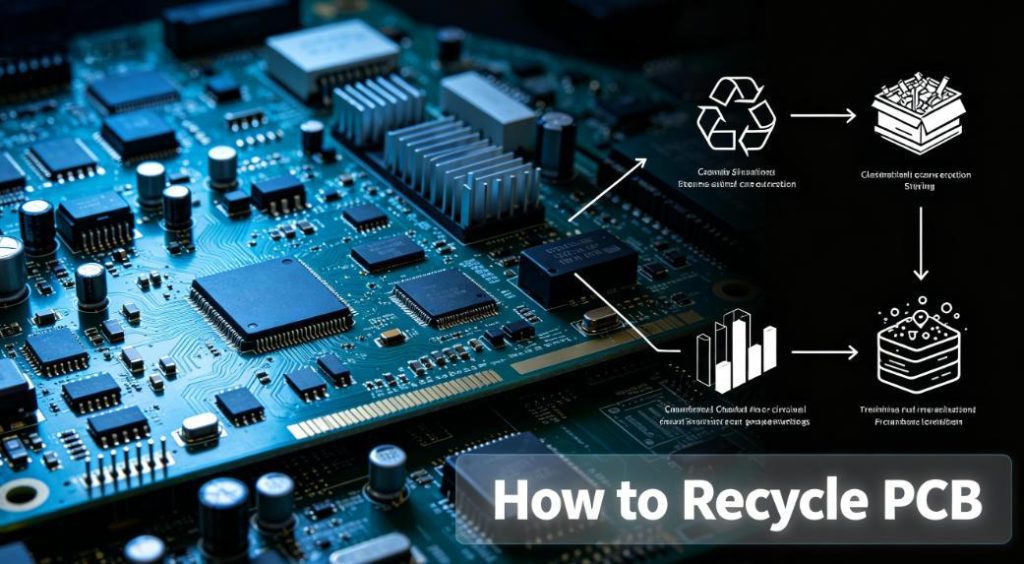
How to Recycle PCB: Step-by-Step Process
Step 1 – Collection & Sorting
Sort waste PCBs by type (bare boards, populated PCBA, high-layer boards) and condition. Separate functional components (chips, capacitors) for reuse when possible.
Common categories include consumer electronics boards, telecom PCBs, industrial control boards, and automotive electronics PCBs.
Step 2 – Preprocessing (Disassembly & Crushing)
Remove large components (heat sinks, connectors) either manually or mechanically. Crush boards into small particles (20–50mm) using industrial crushers.
This step separates metal foils from non-metallic substrates (epoxy, fiberglass).
Step 3 – Material Separation (Metal vs. Non-Metal)
Use physical separation methods:
– Magnetic separation: Extract iron-based metals efficiently.
– Eddy current sorting: Recover non-ferrous metals (copper, aluminum) with high precision.
– Gravity separation: Separate dense metals from lightweight substrates.
Copper purity reaches 99.2%, while non-metals are repurposed as construction materials.
Step 4 – Metal Purification & Refining
Refine metal concentrates using two primary methods:
– Hydrometallurgy: Use eco-friendly solvents to extract gold, silver, and palladium (recovery rate >90%).
– Pyrometallurgy: High-temperature smelting (1300°C) for copper alloy purification.
The final products are high-purity metals (99.99% gold) suitable for electronics manufacturing.
Step 5 – Non-Metal Recycling
Process epoxy/fiberglass particles into usable materials:
– Construction materials (bricks, aggregates) for building projects.
– Recycled plastic fillers for composite products.
This achieves 100% material diversion from landfills.
What Are the Best PCB Recycling Methods?
| Method | Core Process | Recovery Rate | Best For |
| Mechanical Physical | Crushing + magnetic/eddy sorting | 95%+ | Bulk low-to-medium value PCBs |
| Hydrometallurgical | Leaching + solvent extraction | 98% (precious metals) | High-value boards (medical, aerospace) |
| Pyrometallurgical | High-temperature smelting | 98% (base metals) | Mixed industrial waste PCBs |
| Closed-Loop Recycling | In-house recovery + reuse | 100% | Large manufacturers (automotive, consumer) |
Key Takeaway: Combine mechanical preprocessing with hydrometallurgy to achieve maximum efficiency and sustainability in PCB recycling.
Why Is PCB Recycling Critical for Industries?
Consumer Electronics (Smartphones, Laptops)
PCB Type: 4–8 layer FR-4 boards with high-density components.
Problem: High e-waste volume (15 tons/month for mid-sized manufacturers).
Solution: Modular recycling lines recover copper and gold; substrates are repurposed as plastic fillers.
Automotive Electronics (ECUs, Sensors)
PCB Type: Rigid-flex boards with high-temperature resistance.
Problem: Strict ESG regulations require 85% material recovery (WEEE 2025).
Solution: Customized disassembly separates automotive chips; metals are reused in new ECUs.
Industrial Control (PLCs, Robotics)
PCB Type: Thick-copper (2–4oz) boards for high-power applications.
Problem: Risk of toxic components (lead-based solders).
Solution: Certified recycling removes hazardous materials; copper is recycled for power circuits.
Medical Electronics (Diagnostic Devices)
PCB Type: High-reliability ceramic/FR-4 hybrid boards.
Problem: Strict compliance (ISO 13485) and data security requirements.
Solution: Secure data wiping + precious metal recovery; substrates are incinerated safely.
What Are the Risks of Improper PCB Recycling?
– Compliance Violations: Fines up to $100,000+ for violating WEEE/RoHS standards, plus potential license revocation.
– Environmental Damage: Heavy metal leakage contaminates soil and water; toxic fumes from burning harm air quality.
– Financial Loss: Unrecovered precious metals (1 ton of PCB contains ~10g gold and 300kg copper).
– Reputational Harm: Failed ESG audits can damage partnerships with global brands and erode customer trust.
How to Choose a Reliable PCB Recycling Partner?
Check Certifications
– Mandatory: Hazardous Waste License, ISO 14001 (environmental management).
– Preferred: WEEE compliance, RoHS certification, and third-party audit reports (e.g., SGS).
Verify Technical Capabilities
Confirm the recycler has both mechanical and chemical processing lines to handle mixed PCB types.
Ask for metal recovery data (target: 95%+ for copper, 96%+ for gold).
Ensure Transparency
Require detailed recycling reports (material breakdown, recovery rates) for full accountability.
Avoid “cash-only” buyers—they often use unregulated, polluting methods that violate environmental laws.
FAQ: Common Questions About PCB Recycling
Q1 – Is PCB recycling profitable?
A1: Yes. One ton of waste PCBs yields approximately 300kg of copper, 10g of gold, and 500kg of recyclable substrates. Net profit varies based on metal prices and PCB type.
Q2 – Can I recycle PCBs myself?
A2: No. PCBs are classified as hazardous waste; DIY methods (e.g., burning, acid soaking) are illegal and toxic. Always use certified recyclers.
Q3 – What’s the difference between recycling and disposal?
A3: Recycling recovers materials for reuse in new products, while disposal (landfill/incineration) destroys waste. Regulations prioritize recycling (85% recovery target under WEEE 2025).
Q4 – How should businesses store waste PCBs before recycling?
A4: Store PCBs in sealed, dry containers to avoid moisture damage. Separate them by type (bare vs. populated) and label them as hazardous waste.
Q5 – What happens to components on populated PCBs?
A5: Functional components (chips, capacitors) are tested and reused. Damaged components are recycled to recover their metal content.
Q6 – Does PCB recycling comply with global environmental standards?
A6: Yes, when done by certified recyclers. Compliance includes adherence to WEEE, RoHS, and ISO 14001 standards to minimize environmental impact.
How to Implement Sustainable PCB Recycling in Your Business
1. Audit Waste Streams: Track PCB waste volume, type, and generation sources (production, testing, returns).
2. Design for Recycling (DfR): Use modular designs, lead-free solders, and easily separable components to simplify recycling.
3. Partner with Certified Recyclers: Select vendors with proven recovery rates and transparent reporting practices.
4. Train Teams: Educate staff on proper sorting, storage, and hazardous waste handling protocols.
5. Monitor & Optimize: Review recycling reports quarterly to improve efficiency and reduce waste.
Thindry’s PCB Recycling & Circular Solutions
Thindry delivers sustainable, compliant PCB recycling tailored to your business needs. Our expertise spans consumer electronics, automotive, industrial control, and medical sectors—handling all PCB types from bare boards to complex PCBA.
We offer:
– Custom Recycling Programs: Scalable solutions for small batches to industrial volumes.
– Free DFM Reports: Design optimization for recyclability (DfR) and cost savings.
– Full Compliance: Adherence to WEEE, RoHS, and ISO 14001 standards.
– Transparent Reporting: Detailed breakdowns of material recovery and environmental impact.
Support on-demand customization for unique PCB recycling challenges. Contact our team today to align your waste management with global sustainability goals.
Need reliable PCB recycling services? Reach out to us at sales@pcbtry.com to place your order.
0 Comments