



What Exactly is Electronic Assembly?
In today’s rapidly evolving electronics industry, the importance of electronic assembly as a critical process cannot be overlooked. Ensuring the functionality and reliability of electronic products necessitates precise and error-free assembly processes. From smartphones to medical devices and automotive systems, the creation of almost all electronic products relies on electronic assembly. This article delves into the definition of electronic assembly, its process flow, and contract assembly services. Whether you are a startup or an established company, mastering knowledge of electronic assembly can help optimize production processes, reduce costs, and enhance product quality.
Core Definition of Electronic Assembly
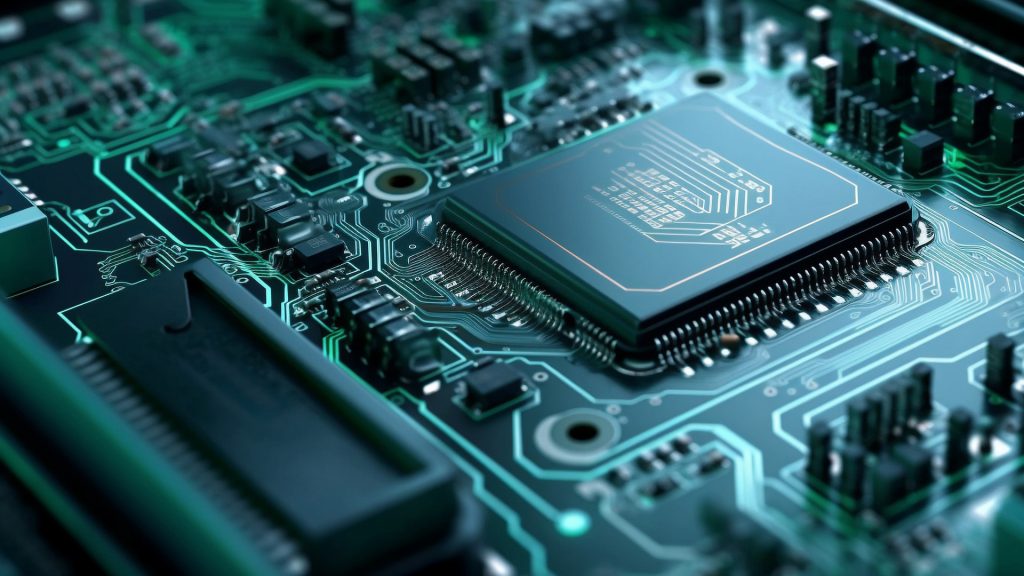
Electronic assembly refers to the manufacturing process of mounting electronic components onto a Printed Circuit Board (PCB) to create a modular PCBA (Printed Circuit Board Assembly). These PCBAs can be further processed into final products or complete systems. The current mainstream electronic assembly service models are primarily divided into three categories:
- OEM Contract Assembly: Provides only customized PCB assembly services, with the client retaining full R&D authority.
- ODM (Original Design Manufacturing): Offers integrated product development and electronic component assembly services.
- EMS (Electronic Manufacturing Services): Provides a complete solution encompassing component procurement, product R&D, PCB design, mechanical design, and full-process assembly.
Regardless of the service model, the essence of electronic assembly lies in integrating discrete components into functional electronic modules through precise processes.
Analysis of the Full Electronic Assembly Process
Electronic assembly is the process of mounting electronic components onto a circuit board to ultimately form a functional electronic device. This process of transforming individual parts into a complete product involves several key steps: component installation on the PCB, soldering, testing, and final product assembly. Understanding the electronic assembly production line is crucial for mastering the manufacturing process of electronic devices. The following sections introduce the key stages essential for ensuring the reliability of electronic assembly products:
| Process Stage | Core Content |
|---|---|
| PCB Fabrication | Manufacturing circuit boards according to Gerber files, providing the foundational platform for assembly. |
| Component Sourcing | Procuring electronic components like resistors, capacitors, microchips, etc., ensuring component quality and compatibility. |
| Assembly Process | Mounting components onto the PCB using SMT (Surface Mount Technology) or THT (Through-Hole Technology). |
| Testing & Validation | Ensuring quality through visual inspection, functional testing, flying probe testing, and X-ray inspection. |
| System Integration | Integrating sub-assemblies into a complete system, including wiring, cabling, and power supply configuration. |
| Final Packaging | Employing professional packaging to ensure product safety and integrity during transportation. |
PCB Fabrication
Upon design completion, manufacturing the PCB based on Gerber files is the first critical step in electronic assembly. Without the PCB, electronic components lack their physical carrier platform. Professional teams create circuit boards by etching conductive pathways onto high-strength substrates, ensuring accurate component placement and signal transmission.
Component Sourcing
After the circuit board is manufactured, it is necessary to procure electronic components that meet specifications. Technical parameters, operating environment, and compatibility of components must be strictly evaluated. Sourcing from reputable suppliers is recommended to ensure a smooth electronic PCB assembly process.
Component Assembly Technologies
Modern electronic assembly primarily utilizes two technologies:
- SMT (Surface Mount Technology)
By mounting components directly onto the surface of the PCB, SMT enables faster assembly speeds and higher precision, making it suitable for assembling smaller components. - THT (Through-Hole Technology)
Although SMT is more widely used, THT still holds advantages in scenarios requiring greater mechanical strength. By inserting component leads into plated through-holes in the PCB and soldering them, THT provides more robust connections for specific component types.
Quality Inspection System
During the electronic assembly process, visual inspection, functional testing, flying probe testing, and X-ray inspection are standard practices for verifying assembly quality. Whether on an assembly line or in contract manufacturing, passing these inspections is necessary to ensure that the assembled board meets required standards.
System Integration
As the final stage of electronic assembly, system integration involves consolidating all components into a complete system. This includes installing the PCBA into the enclosure or housing and integrating necessary wiring, cables, and power units. The professional skills of electronic assembly technicians are crucial here, ensuring all components are correctly assembled and tested.
Professional Packaging Solutions
Fully assembled electronic products require professional packaging. Proper packaging not only protects the product during transit but also prevents static electricity or physical damage to sensitive components.
Core Technology Comparative Analysis: SMT & THT
Characteristics of SMT:
- Solder Paste Printing: Precise application of solder paste using a laser-cut stencil.
- SPI (Solder Paste Inspection): 3D inspection of solder paste thickness and volume.
- Precision Placement: High-speed pick-and-place machines achieve micron-level positioning.
- X-Ray Inspection: Verification of solder joint quality for BGA/CSP packaged components.
- Reflow Soldering: Formation of reliable solder joints through precise temperature zone control.
- AOI (Automated Optical Inspection): Automated optical inspection of assembly quality.
Value of SMT:
- Miniaturization of component size.
- Maximization of assembly density.
- Full automation of the process flow.
- Significant improvement in production efficiency.
Characteristics of THT:
- Component leads are inserted into pre-drilled holes in the PCB.
- Wave soldering process enables mass soldering of connections.
- Provides superior mechanical strength compared to SMT.
- Suitable for high-power and high-reliability applications.
Value of THT:
- High mechanical connection strength.
- Excellent resistance to vibration.
- Good repairability and ease of maintenance.
- Strong power carrying capacity.
Core Capabilities of Professional Electronic Assembly Service Providers
Taking industry-leading companies as an example, professional service providers should possess:
Technical Team Composition:
- Experienced hardware development teams.
- Professional software development talent.
- Process engineering teams.
- Quality control experts.
Intelligent Manufacturing System:
- Intelligent Manufacturing System (IMS).
- Precision Supply Chain Management (SCM).
- Full-process quality traceability.
- Continuous R&D investment mechanism.
Differentiated Service Offerings:
- Low-Volume Rapid Response (5-2,000 pieces): Supports prototype verification and design iteration.
- High-Volume Mass Production (10,000+ pieces): Ensures quality consistency and cost optimization.
- One-Stop Turnkey Solution: Complete service chain from concept to finished product.
Electronic Assembly Engineer Competency Matrix
Modern electronic assembly engineers need to possess:
- Ability to operate and program automated equipment.
- Skills in precision manual assembly and rework.
- Expertise in electrical connections and wire harness processing.
- Capability for fault diagnosis and root cause analysis.
- Quality awareness and continuous improvement mindset.
Industry Certification Standard System
Professional electronic assembly service providers should establish a comprehensive quality management system, certified to standards like ISO 9001, IATF 16949, ISO 13485, etc. Products should comply with environmental directives such as RoHS and REACH, and the manufacturing process should meet industry standards like IPC-A-610.
Core Advantages of Electronic Assembly Services
Outsourcing electronic assembly to professional service providers offers significant benefits:
- Cost-Effectiveness
Outsourcing avoids the costs associated with setting up and maintaining in-house production lines and equipment, effectively saving on labor, tools, and facility overhead. - Scalability and Flexibility
Professional electronic assembly manufacturers can flexibly adjust services according to demand, whether for high-volume production or low-volume custom orders. - Quality Assurance
Electronic assembly service providers employ stringent quality control measures like functional testing and flying probe testing to ensure all products comply with industry standards. - Faster Time-to-Market
Leveraging experienced contract electronic assembly manufacturers can significantly shorten the product development cycle, avoiding delays associated with establishing in-house production lines.
Conclusion
With advancements in automation, artificial intelligence, and smart manufacturing technologies, the prospects for the electronic assembly industry are vast. Faced with increasingly complex product demands, electronic assembly services will continue to evolve, helping enterprises meet market challenges while ensuring quality and precision.
As electronic products trend towards miniaturization and higher performance, professional electronic assembly service providers, through technological innovation and process optimization, offer customers comprehensive solutions from concept to mass production. Choosing a partner with technical depth and quality assurance capabilities will be a critical factor for the successful launch of electronic products.
0 Comments