




What is In-Circuit Testing (ICT)?
In-Circuit Testing (ICT) is a method used for testing electronic components and connections on a PCB to ensure their proper functionality. It is typically conducted early in the manufacturing process to detect and rectify any issues before defective products are delivered to customers. ICT involves connecting the PCB to specialized test equipment that places test probes or pins at key test points on the board. These probes can measure various parameters such as resistance, capacitance, inductance, and shorts. Additionally, ICT verifies whether electronic components are correctly installed and connected.
This testing method involves measuring and testing individual components on the PCB. Specifically, the PCB is connected to dedicated test equipment, and test probes or pins are placed at critical test points on the board. These probes measure parameters like resistance, capacitance, inductance, and shorts. The primary objective of ICT is to identify manufacturing defects such as open connections, solder shorts, and incorrect or missing components.
ICT is designed to detect manufacturing defects on PCBs, including open connections, solder shorts, and incorrect or missing components. It can perform comprehensive checks on circuits and detect power and ground shorts within a relatively short time frame. The testing process is controlled by specialized software, ensuring accurate measurements and reducing the risk of false judgments. With ICT, manufacturers can identify connected components or circuits, making it easier to troubleshoot and maintain PCB assemblies. This not only accelerates the production process but also enhances product quality.

What are the Advantages of ICT?
Utilizing ICT for PCB assembly testing offers several advantages:
- Detection of Manufacturing Defects: ICT quickly identifies defects in PCB assemblies, ensuring the final product meets the required quality standards.
- Rapid and Accurate Testing: ICT is renowned for its speed and accuracy. The testing process can be completed within seconds, enabling efficient testing of large volumes of PCB assemblies.
- Computer-Controlled Testing: ICT is controlled by computer programs, ensuring accurate measurements and reducing the risk of false judgments or missed measurements.
- Ease of Maintenance and Troubleshooting: ICT provides valuable information on the connectivity of different components or circuits on the PCB. This information can be used for maintenance purposes and to expedite the production process.
Disadvantages of In-Circuit Testing:
- The creation and development of an In-Circuit Test setup can be costly, especially for low-volume production.
- In high-density, small-package-size Surface Mount Technology (SMT) assemblies, ICT may not always reliably identify connector faults.
- Proper contact between the test pins and the corresponding test pads is crucial for obtaining consistent results in In-Circuit Test programming. Otherwise, inconsistent results may occur.
- Failure to regularly clean or replace test pins can lead to malfunctions and false positives, compromising the accuracy of the testing process.
- Implementing ICT can be challenging or even impossible for densely populated PCBs due to limited access to test points.
- Creating ICT test programs can be a time-consuming process, particularly for complex designs.
- ICT primarily focuses on detecting manufacturing defects and may be less effective in identifying design or functional issues.
- Any modification to a new circuit board may necessitate redesigning the test fixtures and programs, increasing overall costs and lead times.
- ICT is less effective in detecting intermittent faults, as these may only occur under specific conditions.
- Certain components, such as sensitive analog circuits and high-speed digital designs, might be adversely affected by the test procedures, leading to false failures or component damage.
When to Use ICT?
- Use ICT when you need to identify manufacturing defects such as open connections, solder shorts, or missing components.
- ICT is highly valuable for rapidly and accurately testing large volumes of PCB assemblies.
- When you need to ensure the connectivity of different components or circuits on a PCB for maintenance and troubleshooting purposes, ICT can provide valuable insights.
What are the Common Types of ICT Testers?
There are several types of In-Circuit Testers used for printed circuit board testing:
- Standard ICT: Traditional ICT systems use fixed probes to contact test points on the PCB to check for defects. It offers basic test coverage at a low cost but requires test points to be incorporated into the board design.
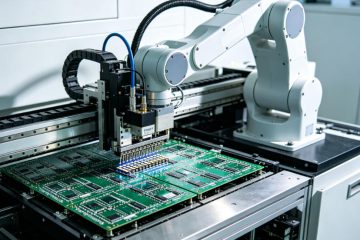
- Flying Probe Tester: This tester uses movable probes that can access components without fixed test points. It offers greater flexibility in test access but at a higher cost. Flying probe testers are ideal for boards where accessing test points is difficult.
- Manufacturing Defect Analyzer (MDA): MDA uses non-contact probing technology to detect manufacturing and design defects. It employs electromagnetic sensors to inspect issues such as wrong components, solder defects, and track/pad failures. MDA provides fast, comprehensive testing without requiring test points but has higher upfront costs.
- Wire Form Tester: For flexible or rigid-flex PCBs, a Wire Form Tester can be used. This tester is equipped with motorized probes that access both sides of the PCB and check for defects specific to flexible circuits, such as exposed or broken conductors. Wire Form Testers provide specialized testing for flexible PCBs but are relatively costly.
Selecting the appropriate ICT system requires consideration of several factors:
- PCB Complexity and Density: Complex boards with limited test access require more advanced Flying Probe or MDA testers. Simpler boards can utilize Standard ICT.
- Required Test Coverage: To detect a wide range of potential defects, MDA offers the highest test coverage. Standard ICT provides basic coverage.
- Production Volume and Cost: For high-volume production, Standard ICT is often the most cost-effective. MDA and Flying Probe testers are better suited for low-volume, high-quality testing.
- Flexibility: Flying Probe testers offer the greatest flexibility for testing hard-to-reach components. Standard ICT requires pre-defined test points.
- Available Test Access: The number and location of test points should guide the choice between a Standard ICT system or Flying Probe/MDA testers.
Conclusion
Despite its limitations, ICT remains a reliable and widely used testing method, providing manufacturers with confidence that their PCBs meet the required quality standards.
0 Comments